


GulfHost 2026 Brings 350+ Hospitality and Foodservice Suppliers to Dubai
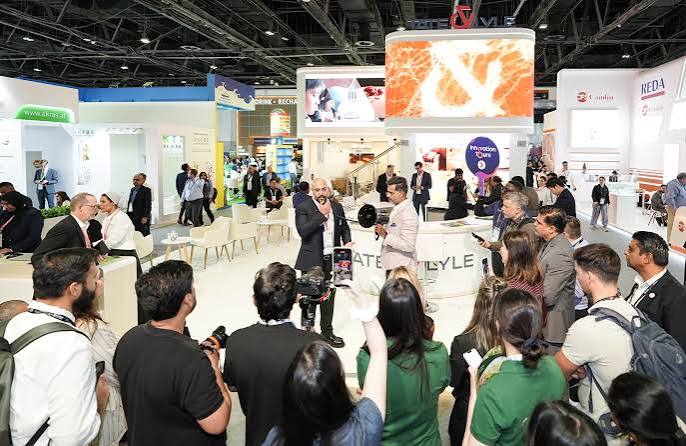
Hotels, restaurants, catering companies and foodservice operators will gather at Dubai World Trade Centre from 3 to 5 November 2026 when GulfHost returns with one of the region’s largest showcases of professional hospitality equipment and technology.
The three-day trade exhibition is expected to bring together more than 350 exhibitors from over 35 countries, presenting thousands of solutions for commercial kitchens, restaurants, hotels, cafés, bakeries and catering operations.
Organisers expect more than 25,000 qualified buyers, with visitors representing approximately 150 countries.
GulfHost takes place at a particularly important moment for the hospitality industry.
Restaurants are facing rising operating costs.
Hotels need greater efficiency.
Labour shortages are encouraging automation.
Customers expect faster service and increasingly personalised experiences.
Energy costs and sustainability targets are influencing equipment decisions.
Digital technology is becoming part of almost every hospitality operation.
GulfHost brings these pressures together in one place by connecting hospitality businesses with the companies developing equipment and technology intended to solve them.
The Event Runs From November 3 to 5
GulfHost 2026 takes place in Za’abeel Hall 6 at Dubai World Trade Centre.
It runs alongside Gulfood Manufacturing, ISM Middle East and Private Label Middle East, creating a much larger ecosystem around food production, hospitality, confectionery and retail.
This combination is particularly useful for professional visitors.
A restaurant group may attend GulfHost to investigate new kitchen equipment while also meeting food manufacturers.
A hotel operator may explore commercial refrigeration before examining private-label food opportunities.
A distributor may search across multiple related exhibitions during the same trip.
For hospitality businesses based in Dubai and across the wider Middle East, that concentration can make sourcing significantly more efficient.
Commercial Kitchens Are Becoming Smarter
The modern professional kitchen is increasingly becoming a technology environment.
Traditional cooking equipment remains essential, but digital controls, automation and connected systems are expanding rapidly.
Smart ovens can store cooking programmes.
Equipment can monitor temperature automatically.
Connected devices can provide maintenance information.
Energy-management systems can identify inefficient operation.
Some kitchens are beginning to use automation for repetitive food preparation.
The objective is not simply to add technology.
Operators want greater consistency.
A restaurant serving hundreds of customers needs dishes to remain consistent regardless of which employee is working.
Smart equipment can help reduce variation.
Automation Could Help Address Labour Shortages
Hospitality remains heavily dependent on people.
Chefs cook.
Servers interact with customers.
Housekeeping teams maintain hotels.
But certain repetitive tasks are increasingly suitable for automation.
Food preparation is one area.
Dishwashing is another.
Inventory monitoring can be automated.
Ordering systems already reduce manual work.
Robotic solutions are being tested for specific kitchen functions.
The goal is rarely to eliminate employees entirely.
More often, businesses want employees to spend less time on repetitive processes and more time on tasks requiring judgement, creativity or customer interaction.
Energy Efficiency Is Becoming a Purchasing Priority
Commercial kitchens consume substantial amounts of energy.
Ovens operate for long periods.
Refrigerators run continuously.
Dishwashing equipment requires electricity and water.
Ventilation systems remove heat.
For a large restaurant group or hotel, these costs add up quickly.
Energy-efficient equipment can therefore deliver measurable financial benefits.
An appliance with a higher purchase price may ultimately cost less to operate over several years.
Hospitality companies increasingly evaluate total operating cost rather than only the initial price.
That shift creates opportunities for suppliers offering more efficient systems.
Water Efficiency Matters Too
Hospitality operations also use significant amounts of water.
Kitchens require cleaning.
Dishwashers consume water.
Hotels have large laundry requirements.
Food preparation itself may require water.
Suppliers are therefore developing equipment designed to reduce unnecessary consumption.
More efficient dishwashers can use less water per cycle.
Cleaning systems can improve performance while reducing waste.
Smart monitoring can identify unusual consumption.
These improvements benefit both sustainability targets and operating budgets.
Refrigeration Is Critical to Food Safety
Few hospitality systems are more important than refrigeration.
Restaurants depend on reliable cold storage.
Hotels may manage enormous quantities of ingredients across multiple kitchens.
A refrigeration failure can result in wasted inventory and food-safety risks.
Modern systems increasingly include monitoring technology capable of alerting staff when temperature moves outside acceptable ranges.
Predictive maintenance can potentially identify problems before complete failure.
This is one example of how digital technology can create practical value rather than simply adding complexity.
Coffee Equipment Remains a Major Category
Coffee has become a significant hospitality business across the Middle East.
Independent specialty cafés continue expanding.
Hotels operate premium coffee concepts.
Restaurants invest in higher-quality beverages.
Consumers have become more knowledgeable about beans, brewing and preparation.
That creates demand for professional espresso machines, grinders, water-treatment systems and other specialised equipment.
For operators, choosing coffee equipment involves more than appearance.
Capacity matters.
Reliability matters.
Maintenance matters.
Training matters.
A machine that performs beautifully in a small café may not be suitable for a high-volume hotel breakfast operation.
Bakery and Pastry Equipment Is Becoming More Sophisticated
Bakeries, patisseries and hotel pastry departments require another category of specialised technology.
Mixers.
Ovens.
Proofing systems.
Dough-processing equipment.
Chocolate machinery.
Display refrigeration.
Precision becomes especially important in baking, where small variations in temperature or timing can change the final product.
Automation can help improve consistency while allowing skilled pastry chefs to focus on creativity and product development.
Hotels Need Scalable Equipment
Hotel kitchens operate differently from small restaurants.
A large property may serve breakfast to hundreds of guests, operate several restaurants, provide room service and support banqueting at the same time.
Equipment needs to handle volume.
Reliability becomes essential.
Downtime during a major event can affect thousands of meals.
Hotel procurement teams therefore evaluate equipment from a long-term operational perspective.
Service networks, spare parts and maintenance support can matter as much as technical features.
Restaurant Groups Want Standardisation
Chains face a different challenge.
A restaurant brand operating ten or fifty locations needs to reproduce the same customer experience everywhere.
That requires standard procedures and often standard equipment.
Equipment capable of storing precise programmes can help.
Centralised data can allow managers to compare performance across branches.
Inventory software can monitor purchasing.
Digital systems can provide greater visibility into restaurant operations.
GulfHost gives multi-site operators access to suppliers capable of supporting this scale.
Ghost Kitchens Have Changed Foodservice
Delivery platforms helped accelerate the development of cloud kitchens and delivery-only restaurant concepts.
These operations have different equipment requirements from traditional restaurants.
There may be no dining room.
Several brands may operate from one facility.
Kitchen layout needs to maximise production efficiency.
Order-management software becomes critical.
Packaging is more important because every dish must travel.
The economics depend heavily on operational efficiency.
Suppliers serving this market therefore need to understand workflows very different from conventional restaurants.
AI Is Beginning to Enter Hospitality
Artificial intelligence is also reaching restaurant and hotel operations.
Demand forecasting can help businesses purchase ingredients more accurately.
Systems can analyse historical sales.
Hotels can forecast occupancy.
Restaurants can study ordering patterns.
AI-powered customer-service tools can answer routine questions.
Dynamic pricing systems may improve revenue management.
But the best hospitality AI usually works in the background.
Customers rarely visit a restaurant because it uses artificial intelligence.
They care about food, service, value and experience.
Technology succeeds when it helps businesses provide those things more effectively.
Food Waste Is a Major Cost
Restaurants regularly struggle with food waste.
Over-ordering ingredients wastes money.
Incorrect forecasting creates excess preparation.
Large buffet operations can generate significant waste.
Technology can help businesses measure what is discarded and identify patterns.
Better inventory systems can improve ordering.
Demand forecasting can help kitchens prepare more accurately.
This creates both financial and environmental benefits.
Reducing food waste is one of the rare sustainability initiatives that can directly improve profit.
Equipment Design Affects Staff Performance
Kitchen design influences how employees work.
Poor layouts force staff to walk unnecessary distances.
Incorrect equipment placement creates bottlenecks.
Limited preparation space reduces productivity.
Heat makes working conditions uncomfortable.
Commercial kitchen suppliers increasingly consider workflow rather than selling isolated machines.
The best kitchen is not necessarily the one containing the most expensive equipment.
It is the one where equipment supports the movement of people and food efficiently.
Food Safety Technology Continues to Improve
Professional hospitality operations need strong food-safety processes.
Temperature monitoring is essential.
Cleaning schedules matter.
Cross-contamination must be prevented.
Digital systems can support these procedures.
Wireless sensors can monitor cold storage.
Records can be stored automatically.
Managers can receive alerts.
This creates clearer accountability and reduces dependence on manually written records.
Technology cannot replace good hygiene culture, but it can make compliance easier to monitor.
Sustainability Is Moving Into Everyday Operations
Hotels and restaurants face increasing expectations around sustainability.
Single-use products are being reduced.
Energy consumption is receiving scrutiny.
Water efficiency matters.
Food waste is monitored.
Equipment suppliers need to respond.
An operator replacing an oven today may expect that machine to remain in use for many years.
Its energy performance therefore influences sustainability long after the purchasing decision.
Trade shows allow buyers to compare these long-term costs.
25,000 Buyers Create a Serious B2B Marketplace
GulfHost is fundamentally a business event.
The organiser expects more than 25,000 qualified buyers and over 350 exhibitors.
That means suppliers are not attending simply to demonstrate equipment.
They are searching for distributors, hotel groups, restaurant companies and major project opportunities.
Buyers may be planning new kitchens.
Hotel developments need equipment.
Restaurant chains may be expanding internationally.
Distributors can add new product lines.
The exhibition creates the connections needed to move these projects forward.
The Middle East Hospitality Market Keeps Expanding
The wider regional environment makes the event particularly important.
Tourism investment continues across the Gulf.
New hotels are opening.
Restaurant brands are expanding.
Large entertainment developments create foodservice demand.
Saudi Arabia’s hospitality market is growing rapidly.
The UAE remains a major tourism hub.
Qatar and other regional markets continue developing their visitor economies.
Every new hotel, restaurant, resort and entertainment destination requires equipment.
That creates significant commercial opportunity.
Three Days Focused on the Business Behind Hospitality
Guests normally experience only the visible side of hospitality.
They see the hotel room.
The restaurant table.
The coffee.
The buffet.
Behind that experience sits an enormous operational system.
Commercial ovens.
Refrigeration.
Dishwashing.
Coffee equipment.
Food preparation.
Inventory.
Ventilation.
Cleaning.
Technology.
Maintenance.
GulfHost exists for that hidden infrastructure.
From 3 to 5 November 2026, Dubai World Trade Centre will become a marketplace for the equipment and technology keeping hotels, restaurants and catering operations running.
The hospitality industry may ultimately be about people and experiences.
But delivering those experiences consistently requires the right systems behind them.
That is the business GulfHost 2026 is built around.