


China HomeLife Dubai 2026 Brings 3,000+ Verified Suppliers and 60,000 Products to DWTC
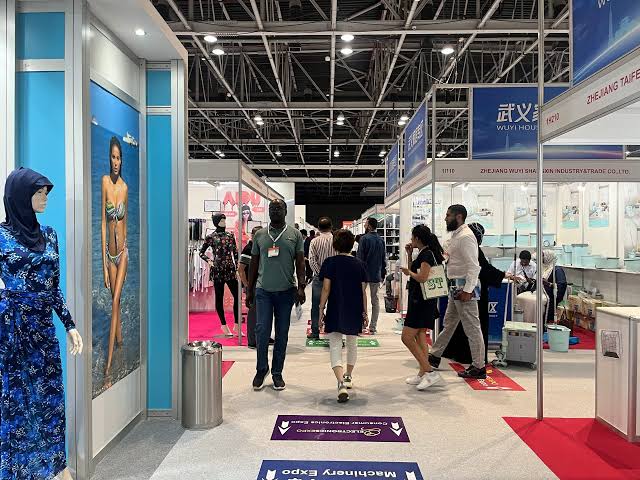
Importers, wholesalers, distributors, retailers, construction companies and procurement professionals will gather at Dubai World Trade Centre from 15 to 17 December 2026 when the 20th China HomeLife UAE Expo brings one of the region’s largest Chinese-manufacturer sourcing platforms back to Dubai.
The scale of the December edition is substantial.
Organisers list more than 3,000 verified suppliers, over 60,000 products and approximately 50,000 square metres of exhibition space.
The show stretches across multiple Dubai World Trade Centre halls and specialist pavilions.
Product categories include household goods.
Furniture.
Building materials.
Textiles and apparel.
Lighting.
Tools.
Machinery.
New energy.
Stationery.
Kitchen products.
Beauty and personal care.
Outdoor products.
Pet supplies.
Interior decoration.
For buyers, the appeal is straightforward.
Instead of travelling across multiple Chinese manufacturing regions and arranging dozens of factory meetings, businesses can compare thousands of products and suppliers during one sourcing trip.
China Remains Central to Global Manufacturing
Few countries influence global consumer and industrial supply chains as much as China.
Its manufacturing ecosystem covers almost every product category.
Large factories produce enormous volumes.
Specialised clusters manufacture highly specific components.
Supplier networks operate close to factories.
Ports connect exporters with international markets.
This scale allows Chinese manufacturers to compete across price levels ranging from basic commodity products to advanced technology.
China HomeLife brings a small representation of this enormous industrial base directly into Dubai for MENA buyers.
The Event Is Designed for B2B Sourcing
China HomeLife is not primarily a consumer shopping festival.
Its value is commercial sourcing.
Wholesalers search for products they can distribute.
Retailers find suppliers.
Importers compare factories.
Property developers identify building materials.
Private-label businesses explore manufacturing.
Entrepreneurs can investigate new categories.
The real output is not necessarily what visitors carry home.
It is purchase orders and supplier relationships that may continue for years.
3,000+ Verified Suppliers Create Huge Choice
A large supplier base gives buyers leverage.
They can compare pricing.
Minimum order quantity.
Lead time.
Certifications.
Packaging options.
Customisation.
Manufacturing capability.
A buyer who speaks with only one factory has little basis for comparison.
A sourcing exhibition makes the market more transparent by placing competing suppliers in the same venue.
That does not eliminate the need for due diligence.
It makes the first stage more efficient.
60,000 Products Make Preparation Essential
The scale also creates a problem.
No buyer can examine 60,000 products seriously in three days.
Preparation matters.
A visitor sourcing hotel furniture should not spend hours examining consumer electronics.
Companies need category priorities.
Target suppliers.
Specification sheets.
Estimated quantities.
Required certifications.
Budget expectations.
A trade show becomes far more productive when buyers arrive knowing what they need.
One-to-One Matchmaking Helps Reduce the Noise
The official 2026 programme includes structured one-to-one business matchmaking.
This allows buyers and suppliers to schedule focused meetings rather than relying entirely on random booth traffic.
A retailer looking for kitchen appliances can be matched with relevant manufacturers.
A building contractor can target doors, lighting or bathroom suppliers.
This saves time on both sides.
Digital matchmaking is becoming an increasingly important part of large sourcing fairs because scale without relevance can become overwhelming.
Building Materials Form a Major Pavilion
The December exhibition includes the BDE Pavilion focusing on building and decoration.
Building materials.
Doors and windows.
Bathroom and kitchen products.
Lighting and electrical systems.
Tools.
Interior finishes.
Smart-building solutions.
Marble and stone.
Safety products.
The sector has obvious relevance to Gulf markets where construction, hospitality and property development continue generating significant demand.
Construction Buyers Need More Than the Lowest Price
A building material may remain installed for decades.
Quality therefore matters.
A cheaper door that fails quickly creates replacement cost.
An electrical component with inadequate certification creates safety risk.
Bathroom products need durability.
Exterior materials need to tolerate heat.
Construction buyers should evaluate total value rather than simple unit price.
Supplier documentation and testing are critical.
Regional Standards Matter
A product manufactured successfully for one country may not automatically meet requirements in another.
Electrical standards differ.
Fire requirements differ.
Building codes differ.
Certification requirements differ.
Importers need to verify compliance before placing major orders.
A trade show is useful for identifying suppliers.
Compliance checks still need to happen before products are installed or sold.
Furniture and Soft Decoration Create Another Major Sourcing Area
The DEFU Pavilion focuses on furniture and interiors.
Outdoor furniture.
Upholstered furniture.
Hospitality furniture.
Office furniture.
Lighting.
Gaming desks and chairs.
Rugs.
Furniture fabrics.
Accessories.
Custom soft furnishings.
The category connects directly with hotels, restaurants, offices, property developers and furniture retailers.
China has enormous manufacturing capacity in these sectors.
Hospitality Furniture Has Demanding Requirements
Hotel products need more than visual appeal.
Chairs receive constant use.
Fabrics need durability.
Finishes need appropriate fire characteristics.
Replacement products may be required years later.
Large projects need consistency across hundreds of rooms.
Commercial buyers need confidence that factories can produce the same quality at scale.
A perfect showroom sample means little if bulk production differs.
Outdoor Products Need to Survive Gulf Conditions
Heat and sunlight create demanding conditions.
Outdoor furniture materials can fade.
Plastics may deteriorate.
Metal components can become extremely hot.
Fabrics need UV resistance.
Buyers sourcing for Gulf markets therefore need product specifications appropriate to regional climate.
Supplier selection needs to account for where the product will actually be used.
Household Products Provide Large Retail Opportunities
Home and lifestyle products are another core category.
Kitchen tools.
Cleaning products.
Storage.
Dining.
Decorative objects.
Pet products.
Outdoor items.
These categories suit supermarkets, department stores, e-commerce businesses and specialist retailers.
Private-label opportunities are especially significant because many factories can customise packaging and branding.
Private Label Allows Retailers to Build Their Own Brands
A retailer does not always need to invent a completely new product.
Existing factory designs can sometimes be customised.
Colours.
Packaging.
Logos.
Specifications.
This allows businesses to create own-brand ranges more quickly.
Greater customisation can provide stronger differentiation.
It also increases development complexity and minimum order requirements.
Buyers need to understand whether they are purchasing a standard white-label product or commissioning genuine OEM production.
Textiles and Apparel Add Another Supply Chain
China remains one of the world’s major textile and clothing manufacturing countries.
The show gives regional buyers access to apparel, fabrics and associated products.
Retailers can explore finished goods.
Brands may investigate manufacturing partnerships.
Hospitality businesses can source textiles.
The same quality principles apply.
Fabric specification.
Colour consistency.
Construction.
Sizing.
Testing.
Ethical sourcing.
An attractive sample needs to be reproducible across thousands of units.
New Energy Reflects China’s Industrial Transformation
China HomeLife is increasingly broader than conventional consumer goods.
New-energy products reflect China’s rapid development in solar, battery and electric technologies.
Chinese companies now operate across photovoltaic manufacturing, energy storage and electric mobility supply chains.
For MENA buyers, this category can provide access to rapidly evolving technologies.
Technical products require much stronger due diligence than household goods.
Warranty support.
Safety certification.
Installation expertise.
Long-term service.
These factors need evaluation before purchasing.
Machinery Buyers Need Long-Term Support
Industrial equipment represents a very different purchase from a low-cost consumer product.
Factories buying machinery may depend on it for years.
Installation matters.
Training matters.
Spare parts matter.
Software matters.
After-sales service becomes critical.
The lowest purchase price can become expensive if a machine sits idle waiting for components.
Buyers should ask suppliers about service capability before signing contracts.
AI Is Entering the Sourcing Process
China HomeLife’s 2026 platform promotes an AI assistant as part of its smart-expo solution.
This reflects a wider change in B2B exhibitions.
AI can help buyers search categories.
Identify suppliers.
Compare products.
Translate information.
Prepare meetings.
For an exhibition with thousands of suppliers, discovery technology can reduce the time spent navigating irrelevant options.
But algorithms should support rather than replace commercial verification.
Translation Technology Reduces Communication Barriers
International sourcing historically required significant language support.
Translation apps and AI are improving communication.
Product questions can be translated instantly.
Documents can be reviewed more easily.
This helps smaller businesses engage internationally.
However, contracts and technical specifications require precision.
Automatic translation should not be the only safeguard when misunderstandings could create major financial consequences.
Samples Are Useful but Not Enough
A factory can produce one excellent sample.
The real question is whether it can manufacture 10,000 units consistently.
Buyers need quality-control systems.
Pre-production samples.
Inspection plans.
Clear specifications.
Random checks.
Factories should understand what constitutes an acceptable product.
Quality assurance needs to be designed before mass production begins.
Factory Verification Still Matters
Trade-show participation creates an introduction.
Large purchases require stronger due diligence.
Does the supplier actually manufacture the product?
How large is the facility?
Which certifications exist?
Who are existing customers?
What is production capacity?
Can a third-party inspection be arranged?
Buyers should verify important claims independently.
This is particularly important for new relationships involving large advance payments.
Minimum Order Quantities Influence Small Businesses
Factories operate most efficiently at certain production volumes.
This creates minimum order quantities.
Large retailers may accept them easily.
Small businesses can struggle.
Ordering too much creates inventory risk.
Some suppliers offer smaller quantities at higher unit prices.
Others specialise in large orders.
Finding a factory whose scale matches the buyer is often more important than negotiating the absolute lowest unit cost.
Negotiation Should Cover More Than Price
Commercial terms include many variables.
Payment schedule.
Incoterms.
Packaging.
Tooling.
Sample charges.
Delivery time.
Warranty.
Quality tolerance.
Replacement policies.
Intellectual-property rights.
A buyer negotiating only unit price may overlook risks worth far more.
Good sourcing requires understanding the complete transaction.
Incoterms Determine Who Handles Logistics
International purchasing involves responsibility for transportation.
Is the supplier delivering to a Chinese port?
To Jebel Ali?
To the buyer’s warehouse?
Who pays freight?
Who buys insurance?
Who handles customs?
Incoterms define these responsibilities.
Misunderstanding them can create unexpected costs.
Importers should calculate landed cost rather than looking only at factory price.
Freight Can Transform Product Economics
A large lightweight product may occupy significant container space.
A heavy product can increase transportation costs.
Fragile goods need additional packaging.
A factory quotation may look attractive until freight and duties are included.
Efficient packaging therefore affects competitiveness.
Suppliers experienced in export markets often understand how to optimise container loading.
Jebel Ali Strengthens Dubai’s Sourcing Role
Dubai’s logistics infrastructure makes it a natural venue for international sourcing.
Jebel Ali provides major maritime connectivity.
Air cargo supports faster shipments.
Free zones facilitate trade.
Products arriving in the UAE can also be redistributed into surrounding markets.
This allows importers to think regionally rather than only domestically.
Dubai Connects China With MENA Buyers
The expo specifically targets importers and wholesalers across the Middle East and North Africa.
That geographic role is important.
Travelling to individual factories across China can be expensive and time consuming.
Bringing thousands of suppliers into one Dubai venue reduces the first stage of supplier discovery substantially.
Buyers can then travel to selected factories later if relationships become serious.
The Show Includes Several Specialist Pavilions
The December programme does not function as one undifferentiated exhibition.
Specialised areas focus on household products, building materials and furniture.
This makes navigation easier.
A construction buyer can remain within relevant zones.
Furniture businesses can concentrate on interior suppliers.
Retail buyers can explore household categories.
Sector organisation improves a very large sourcing event.
Product Trends Can Be Identified Quickly
Trade shows provide one additional advantage: comparison.
When dozens of factories display similar innovations, buyers can identify trends.
Smart-home products appearing everywhere indicate growing manufacturing demand.
Sustainable materials appearing across several suppliers suggest wider market change.
Colour and design patterns become visible.
The exhibition becomes a form of market intelligence.
Chinese Manufacturers Are Moving Up the Value Chain
The old stereotype of Chinese manufacturing being focused only on low-cost production is increasingly inaccurate.
Chinese companies now lead or compete strongly in numerous advanced sectors.
Electric vehicles.
Batteries.
Solar.
Consumer electronics.
Smart-home technology.
Automation.
Manufacturing competitiveness increasingly combines scale with engineering capability.
Buyers need to evaluate suppliers individually rather than relying on outdated assumptions about country of origin.
Intellectual Property Requires Attention
Custom products often involve designs, packaging and branding.
Contracts should clarify ownership.
Can the factory sell the same design to competitors?
Who owns the tooling?
What happens if the commercial relationship ends?
International sourcing can create intellectual-property complexity.
Businesses commissioning distinctive products should address these issues before mass production.
E-Commerce Businesses Can Use China HomeLife to Build New Categories
Online retailers continuously look for products with sufficient margin and differentiated demand.
Trade exhibitions allow them to move beyond sourcing only through public online marketplaces.
Meeting factories directly may create stronger customisation opportunities.
However, e-commerce sellers also need to understand inventory and customer acquisition.
Finding a product is only the beginning of building a viable business.
The Sample Promotion Fair Adds a Final-Day Opportunity
The official schedule lists a sample promotion fair on 17 December alongside B2B sourcing and order discussions.
For suppliers, samples do not need to be shipped back unnecessarily.
For buyers, the final day can provide opportunities to examine or acquire products directly.
More importantly, it creates a natural point for final commercial conversations before the exhibition closes.
50,000 Square Metres Creates a Huge Sourcing Environment
The organiser lists approximately 50,000 square metres of exhibition space for the December event.
The show occupies several halls within Dubai World Trade Centre.
That physical scale illustrates how broad the China–MENA trade relationship has become.
It also reinforces the need for preparation.
Visitors should prioritise rather than attempt to see everything.
Three Days Connecting Factories With Regional Buyers
International trade can appear abstract in economic statistics.
China HomeLife makes it physical.
Factories display products.
Buyers inspect them.
Specifications are discussed.
Prices are negotiated.
Samples change hands.
Orders begin.
From 15 to 17 December 2026, more than 3,000 verified suppliers and over 60,000 products will fill a large part of Dubai World Trade Centre.
For importers and retailers, the opportunity is enormous.
So is the need for disciplined sourcing.
The best deal is not simply the cheapest product.
It is the supplier capable of delivering the right quality, at the right price, on the right terms, consistently.
China HomeLife Dubai 2026 gives buyers three days to begin finding those suppliers.