


International Appliance & Electronics Show 2026 Brings Smart Homes, Consumer Tech and Appliances to Dubai
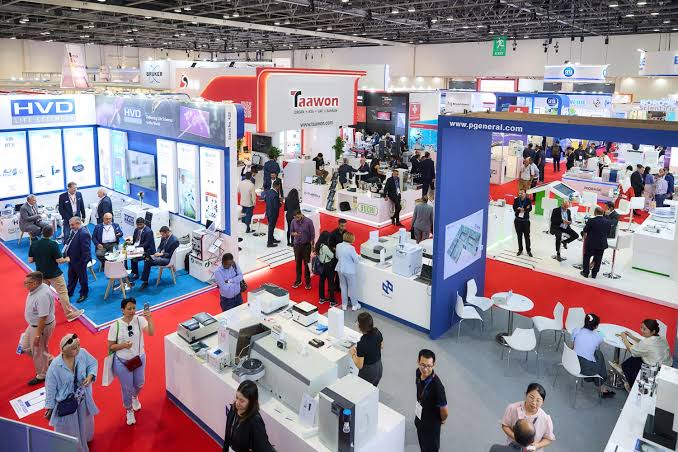
Consumer-electronics manufacturers, home-appliance brands, distributors, wholesalers, retailers and technology buyers will gather at Dubai World Trade Centre from 15 to 17 December 2026 when the International Appliance & Electronics Show returns for its winter edition.
The trade-only exhibition will occupy Halls 1 to 3 and is organised by Swift International Exhibition Organizing.
The show brings together an unusually broad range of consumer-technology categories.
Large household appliances.
Kitchen appliances.
Cleaning equipment.
Personal-care electronics.
Smart-home products.
Security devices.
Mobile phones and accessories.
Computing peripherals.
Gaming products.
Wearable technology.
Audio equipment.
Automotive electronics.
Portable power.
Electronic components.
The variety reflects how difficult it has become to separate the traditional appliance industry from the technology industry.
A refrigerator can now connect to an app.
A robot vacuum maps a home.
A television acts as an entertainment platform.
A watch monitors health information.
A doorbell contains cameras, cloud software and artificial intelligence.
Even ordinary household products are becoming digital.
For retailers, distributors and technology businesses operating in Dubai, the International Appliance & Electronics Show provides an opportunity to see how these categories are converging and identify products with potential across the Gulf and wider MENA markets.
The Home Appliance Is Becoming a Technology Product
For decades, household appliances were primarily mechanical and electrical machines.
A washing machine washed clothing.
A refrigerator cooled food.
A vacuum cleaner removed dirt.
These basic functions remain.
The difference is the amount of intelligence now being added around them.
Sensors detect conditions.
Software controls cycles.
Mobile applications provide remote access.
AI helps optimise settings.
Connected devices communicate with broader smart-home platforms.
The result is an appliance industry increasingly competing on software experience as well as physical performance.
Smart Homes Are Moving Beyond Individual Gadgets
The first generation of smart-home products often operated separately.
One app controlled lights.
Another controlled cameras.
A third managed air-conditioning.
Another handled appliances.
Consumers increasingly want these systems to work together.
A smart home becomes much more useful when devices share information.
A door sensor can influence air-conditioning.
Lights can respond to occupancy.
Security systems can send alerts.
Energy-management systems can identify unusual consumption.
Interoperability is therefore becoming one of the most important issues in connected-home technology.
Matter Is Helping Create Greater Compatibility
One challenge with smart homes has been compatibility between brands and ecosystems.
Standards such as Matter are designed to make connected devices easier to integrate across different platforms.
The long-term goal is straightforward.
Consumers should not need to understand complicated technical standards simply to connect a light, plug or sensor.
Greater interoperability could accelerate adoption because it reduces the risk of purchasing equipment that becomes trapped inside one incompatible ecosystem.
Manufacturers that support widely accepted standards may become more attractive to retailers and consumers.
Artificial Intelligence Is Entering Everyday Appliances
AI is rapidly becoming a marketing term across consumer electronics.
The useful applications are more specific.
A washing machine can analyse load characteristics.
A refrigerator may monitor temperature patterns.
A robot vacuum can recognise obstacles.
A camera can distinguish between people, vehicles and ordinary movement.
A television can optimise picture settings.
The value depends on whether the intelligence improves a real task.
Adding AI branding to a product without providing meaningful functionality will become less convincing as consumers become more familiar with the technology.
Robot Vacuums Show How Quickly a Category Can Evolve
Early robot vacuums moved relatively randomly through rooms.
Modern systems can map entire homes.
Identify rooms.
Avoid objects.
Detect carpets.
Empty their own dust containers.
Wash and dry mops.
Some models use cameras or advanced sensors to recognise obstacles.
The category illustrates the broader direction of consumer appliances.
Mechanical functionality is increasingly combined with mapping, AI, sensors and automation.
Competition now involves both hardware and software.
Cleaning Appliances Are Becoming More Automated
Automation extends beyond robot vacuums.
Window-cleaning robots.
Wet-and-dry floor cleaners.
Automatic litter systems.
Smart air purifiers.
Consumers increasingly pay for products that reduce repetitive domestic tasks.
This creates a strong commercial proposition.
Time saved is easy for customers to understand.
The challenge for manufacturers is reliability.
A product intended to reduce work becomes frustrating if it constantly needs troubleshooting.
Energy Efficiency Has Become a Major Selling Point
Appliances consume electricity for years after purchase.
That makes energy efficiency important to both consumers and governments.
Refrigerators operate continuously.
Air-conditioning can be a major household load.
Dryers use significant energy.
Efficient motors and compressors reduce consumption.
Better control systems avoid unnecessary operation.
Energy labels help buyers compare products.
In markets where electricity demand is growing rapidly, efficient appliances can also reduce pressure on the wider grid.
Air-Conditioning Is Particularly Important in Gulf Markets
Cooling is essential across the region.
Consumers therefore care about efficiency, reliability and performance under extreme temperatures.
Inverter technology allows compressors to vary output rather than repeatedly switching fully on and off.
This can improve comfort and reduce energy use in suitable applications.
Connected controls can add scheduling and remote operation.
The regional climate means appliance manufacturers cannot simply treat air-conditioning as another peripheral category.
It is critical household infrastructure.
Kitchen Appliances Continue to Become Smarter
The kitchen is another major technology battleground.
Smart ovens can automate cooking settings.
Connected coffee machines remember preferences.
Air fryers have created an enormous consumer category.
Multifunction appliances combine several cooking processes.
Induction technology improves control.
Consumers increasingly expect convenience without sacrificing food quality.
The winning products are often not the ones with the largest number of features.
They are the ones that simplify everyday cooking most effectively.
The Air Fryer Demonstrates the Power of a New Format
Few appliance categories have grown as rapidly as air fryers in recent years.
The underlying principle is relatively straightforward: circulate hot air around food inside a compact chamber.
The commercial success came from a clear consumer proposition.
Convenience.
Fast cooking.
Easy cleaning.
Reduced oil use for certain foods.
Manufacturers responded with larger capacities, dual baskets, multifunction systems and increasingly sophisticated controls.
The category demonstrates how one successful product idea can reshape an established kitchen market.
Refrigerators Are Becoming Connected Information Hubs
Premium refrigerators increasingly offer cameras, displays and connectivity.
Internal cameras can help consumers check contents remotely.
Software may assist with food organisation.
Some systems integrate calendars, recipes or entertainment.
The commercial challenge is deciding which features consumers will continue using after the novelty disappears.
A refrigerator typically remains in a home for years.
Digital features therefore need long-term software support.
A smart appliance whose app is abandoned after three years can become less useful while the physical machine still works perfectly.
Software Support Is Becoming Part of Product Quality
This represents a major change in the appliance business.
Traditional product quality centred on hardware durability.
A connected appliance also depends on software.
Does the app continue receiving updates?
Are security vulnerabilities fixed?
Will cloud services remain available?
Can the device still operate if internet services disappear?
Consumers increasingly need answers to these questions.
Retailers and distributors should consider the manufacturer’s software commitment alongside physical specifications.
Cybersecurity Has Entered the Living Room
Every connected product creates a potential digital entry point.
Smart cameras.
Televisions.
Routers.
Doorbells.
Speakers.
Appliances.
Weak passwords or outdated software can create security risks.
Manufacturers need secure update mechanisms.
Default credentials should be handled carefully.
Data should be protected.
Consumers need clear privacy settings.
A cheap connected device can become expensive if poor security creates a broader household vulnerability.
Smart Cameras Raise Privacy Questions
Connected cameras provide obvious security benefits.
Homeowners can monitor entrances.
Receive motion alerts.
Communicate with visitors.
Check homes remotely.
But cameras also collect highly sensitive information.
Where is video stored?
Who can access it?
Is footage encrypted?
How long is it retained?
Can cloud accounts be protected with strong authentication?
Product quality increasingly includes data governance as well as image resolution.
Wearables Continue Expanding Beyond Fitness
Smartwatches and fitness bands originally focused heavily on steps and exercise.
Modern devices can monitor heart rate, sleep, training load and other wellness indicators.
Some include increasingly sophisticated health-related sensors.
This has moved wearables closer to the boundary between consumer electronics and health technology.
Manufacturers need to communicate carefully.
A wellness device is not automatically a medical diagnostic tool.
Consumers should understand the difference between general insights and clinically validated measurements.
Smart Rings Have Created Another Wearable Format
Wearable technology is no longer limited to watches.
Smart rings have attracted consumers who want continuous tracking in a smaller form.
They may monitor sleep, activity and physiological signals.
Their growth shows that product form matters.
Some users do not want a screen on their wrist.
Others already wear traditional watches.
Miniaturisation creates additional possibilities for wearable electronics.
Portable Power Has Become a Significant Category
Power banks have existed for years.
Portable power stations are a much larger development.
These products combine substantial batteries with multiple outputs for electronics and selected appliances.
Customers use them for outdoor activities.
Emergency backup.
Mobile work.
Travel.
Some integrate solar charging.
Battery safety and quality are critical because high-capacity energy storage requires sophisticated management systems.
Retailers need to source products from manufacturers capable of meeting appropriate safety standards.
Battery Technology Connects Many Product Categories
Phones.
Laptops.
Wearables.
Cordless vacuums.
Power tools.
Portable power stations.
Electric mobility.
All rely heavily on battery technology.
Improvements in energy density, charging speed and management systems therefore influence several consumer-electronics markets simultaneously.
Battery performance often becomes one of the first specifications customers compare.
Yet lifespan and safety can matter just as much as maximum capacity.
Fast Charging Has Changed Consumer Expectations
Consumers increasingly expect devices to charge quickly.
Smartphones can recover significant battery capacity within relatively short periods.
Laptops increasingly use USB-C charging.
Common standards can reduce the number of proprietary adapters.
But faster charging creates heat and battery-management challenges.
Manufacturers need to balance speed with durability and safety.
A headline charging figure tells only part of the story.
USB-C Is Simplifying the Electronics Ecosystem
The growing adoption of USB-C demonstrates the value of standardisation.
Phones.
Tablets.
Laptops.
Headphones.
Accessories.
A growing range can share cables and chargers.
This reduces consumer frustration and electronic waste from unnecessary proprietary accessories.
The broader lesson applies across consumer electronics.
Compatibility can be as valuable as adding another feature.
Gaming Has Become a Major Consumer-Electronics Market
Gaming is now a global entertainment industry with its own hardware ecosystem.
Monitors.
Keyboards.
Mice.
Headsets.
Controllers.
Gaming chairs.
PC components.
Handheld devices.
The category attracts consumers willing to pay premiums for performance and design.
Retailers also benefit from frequent upgrade cycles.
Gaming customers follow specifications closely.
Manufacturers therefore compete on measurable performance as well as branding.
Monitors Are Evolving Rapidly
Display technology continues improving.
Higher refresh rates appeal to gamers.
Better colour accuracy serves creative professionals.
Ultrawide formats target productivity.
OLED technology offers exceptional contrast.
Mini-LED provides another premium option.
Buyers need to match the display to the use case.
A competitive gaming monitor and professional design display optimise different characteristics.
Audio Is Becoming More Personalised
Wireless earbuds transformed the audio market.
Noise cancellation has improved.
Spatial audio creates more immersive experiences.
Software allows sound profiles to be customised.
Smart speakers integrate voice assistants.
The category increasingly combines acoustics with algorithms.
Manufacturers that traditionally needed expertise mainly in speaker engineering now also need software and wireless connectivity capabilities.
Televisions Are Becoming Software Platforms
Modern TVs provide streaming services, applications, gaming and smart-home integration.
The operating system influences the ownership experience.
Update support matters.
Advertising and data practices matter.
Consumers may keep a television for many years.
The software platform therefore needs longevity similar to the physical hardware.
This creates a different relationship between appliance manufacturers and customers.
Mini-LED and OLED Continue Competing
Premium television markets are increasingly divided among several display technologies.
OLED offers excellent black levels and contrast.
Mini-LED LCD technology can provide high brightness and strong performance.
Different technologies have different strengths.
Retail buyers need to understand how specifications translate into real viewing experiences rather than relying only on marketing terminology.
Trade exhibitions make side-by-side comparison easier.
Beauty Appliances Are Becoming More Sophisticated
Consumer electronics increasingly enter personal care.
Hair styling.
Electric grooming.
Skin devices.
Massage products.
Beauty technology combines industrial design, electronics and lifestyle branding.
Social media plays a large role in demand.
A product can become globally popular through creator demonstrations.
This gives manufacturers rapid opportunities but also exposes weak products quickly through online reviews.
Home Healthcare Electronics Form Another Growing Category
Blood-pressure monitors.
Thermometers.
Connected scales.
Nebulisers.
Wellness devices.
Consumers increasingly monitor basic health information at home.
Products making medical claims require appropriate regulatory compliance and validation.
Importers need to distinguish between ordinary wellness electronics and regulated medical devices.
The difference has important legal and safety implications.
Consumer Electronics Depend on Complex Global Supply Chains
A finished electronic product may contain components from many countries.
Semiconductors.
Displays.
Memory.
Sensors.
Batteries.
Motors.
Plastic components.
Circuit boards.
Supply disruptions can delay entire product lines.
The semiconductor shortage demonstrated how a relatively small component can affect enormous industries.
Manufacturers increasingly think about resilience alongside cost.
Electronic Components Are the Hidden Layer
The show’s broader electronics ecosystem also includes components.
Consumers never see many of them.
Power supplies.
Connectors.
Circuit boards.
Sensors.
Chips.
Motors.
These determine what finished products can do.
OEM manufacturers need stable component suppliers before they can promise reliable production to global customers.
Electronics sourcing therefore extends much deeper than choosing a finished device from a catalogue.
Private Label Is Possible in Electronics Too
Retailers and entrepreneurs can work with manufacturers to create electronics under their own brands.
Small appliances.
Accessories.
Audio products.
Smart-home equipment.
Personal-care devices.
The opportunity is attractive.
The risk is greater than with simple consumer goods.
Electrical safety matters.
Software quality matters.
Warranty service matters.
Regulatory compliance matters.
A logo on a product also means responsibility for the customer experience.
OEM Relationships Can Create More Differentiation
A standard white-label product may be sold by many brands.
OEM development allows greater customisation.
Industrial design can change.
Specifications can differ.
Software may be modified.
Packaging becomes unique.
The deeper the customisation, the greater the investment.
Tooling and engineering costs increase.
Minimum orders may rise.
Companies need to decide how much differentiation the market actually rewards.
After-Sales Service Can Decide Which Brands Survive
Selling electronics is relatively easy compared with supporting them for years.
Products fail.
Customers need repairs.
Spare parts are required.
Warranty claims happen.
Software questions arise.
Brands entering a market need service capability.
A low-priced appliance can lose customer trust quickly if nobody can repair it.
Distributors should evaluate manufacturer support before committing to large volumes.
Retailers Need to Think About Returns
Consumer electronics can generate expensive return rates.
Customers may not understand setup.
Software can create confusion.
Products may arrive damaged.
Some devices simply fail.
A high return rate can erase apparently attractive margins.
Retail buyers therefore need to consider product reliability, instructions and customer support before focusing purely on purchase price.
Energy Labels Help Consumers Compare Appliances
Large appliances often remain in households for many years.
Operating cost therefore matters.
Energy labels can help consumers understand efficiency.
Similar-looking refrigerators may consume very different amounts of electricity over their lifetimes.
For manufacturers, efficiency can become a competitive advantage.
For governments, appliance standards can reduce national energy demand without requiring consumers to change daily behaviour.
Repairability Is Becoming a Bigger Issue
Modern electronics can be difficult to repair.
Components may be glued.
Parts may be proprietary.
Software can restrict replacement.
Consumers and regulators are increasingly questioning this model.
Right-to-repair initiatives seek better access to parts, manuals and repair options.
Manufacturers need to balance thin product designs and manufacturing efficiency with longer product lifespans.
Electronic Waste Is a Growing Environmental Challenge
Short upgrade cycles create enormous quantities of discarded electronics.
Phones contain valuable metals.
Computers contain reusable components.
Appliances contain steel, copper and plastics.
Improper disposal wastes resources and can create environmental damage.
Recycling systems need to recover valuable materials while handling hazardous components safely.
Designing products for easier disassembly could improve future recovery.
Refurbishment Can Extend Device Lifecycles
Not every used device needs immediate recycling.
Phones, laptops and appliances can sometimes be repaired and resold.
Refurbished markets reduce purchase costs and extend product life.
Consumers need trustworthy quality grading and warranties.
Manufacturers and retailers increasingly participate directly in trade-in programmes.
Circular electronics may become an important business category rather than simply an environmental initiative.
The Gulf Is an Attractive Electronics Market
Regional consumers have high smartphone penetration.
Smart homes are expanding.
Large retail markets serve residents and tourists.
Hospitality creates commercial appliance demand.
Real estate development drives purchases of home equipment.
The UAE also acts as a redistribution hub toward surrounding markets.
This makes Dubai attractive to manufacturers seeking distributors for the Middle East and Africa.
Trade Fairs Allow Buyers to Test Physical Products
Electronics can be researched online.
Physical inspection still provides useful information.
How does the appliance feel?
Is construction solid?
How responsive is the display?
Is the interface translated correctly?
How loud is the motor?
How large is the actual product?
Samples reveal details that specification sheets cannot.
For distributors making high-volume purchases, physical testing can prevent expensive mistakes.
Halls 1–3 Create a Focused Trade Environment
Dubai World Trade Centre currently lists the International Appliance and Electronics Show across Halls 1 to 3.
The event is classified as a trade-only consumer-goods exhibition.
That professional focus matters.
Manufacturers attend to find distributors and buyers.
Retailers search for product ranges.
Importers examine manufacturing relationships.
Commercial discussions can move directly from demonstration to sourcing.
Three Days Focused on the Connected Consumer
Consumer electronics used to contain clearly separated categories.
Computers were computers.
Appliances were appliances.
Security products were security products.
Those distinctions are disappearing.
A modern home is increasingly a network of connected machines.
The television runs software.
The vacuum maps rooms.
The watch collects health information.
The refrigerator connects to the internet.
The camera uses AI.
The charger communicates with devices.
From 15 to 17 December 2026, the International Appliance & Electronics Show will bring manufacturers and professional buyers together in Halls 1 to 3 at Dubai World Trade Centre.
The strongest products will not necessarily be those containing the most technology.
They will be those using technology to make everyday life easier, safer, more efficient or more enjoyable.
That is where the next phase of consumer electronics is heading.