


SGI MENA 2026 Brings Signage, Digital Display, LED and Smart Technology to Dubai
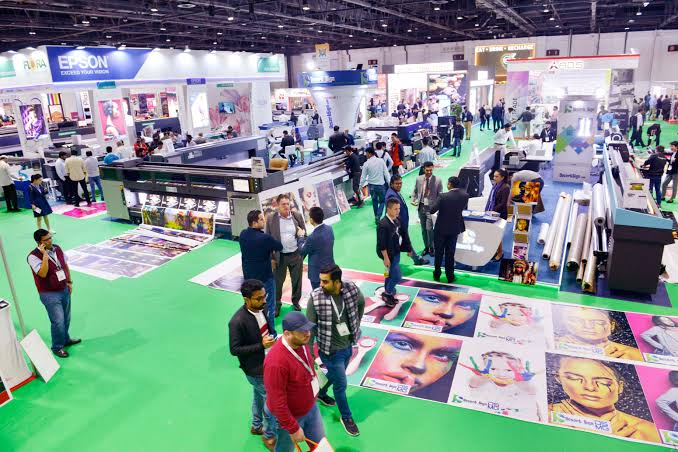
Sign makers, commercial printers, digital-display companies, LED manufacturers, AV specialists, retailers, event-production businesses and smart-technology suppliers will gather at Dubai World Trade Centre from 7 to 9 December 2026 when SGI MENA returns for its latest edition.
The exhibition enters 2026 with a significantly broader identity.
After almost three decades serving the sign and graphic industry, SGI MENA is expanding beyond its traditional print and signage foundations into digital displays, professional audio, lighting, smart technology, retail environments and event solutions.
The organiser describes the new direction simply as “Sign, Print & Beyond.”
It reflects how visual communication has changed.
A retail brand may once have needed printed signs and posters.
Today, the same project can involve LED walls, interactive displays, architectural lighting, digital signage software, audio systems, automated content and data-driven customer experiences.
A major event might require printed graphics, temporary structures, screens, projection, lighting, wayfinding and immersive technology.
The boundaries between these industries are becoming increasingly difficult to separate.
SGI MENA 2026 is designed around that convergence.
29 Years of Industry History Enter a New Phase
SGI has operated in the region for 29 years.
That gives it unusually deep roots within the Middle East’s printing and signage industries.
The 2026 edition is not abandoning that heritage.
Printing equipment, substrates, fabrication technology and signage remain important.
Instead, the platform is widening around the ways modern commercial spaces communicate.
Six buyer markets now structure the show.
Sign and display.
Print and packaging.
LED and digital technologies.
Retail and events.
Audio and lighting.
Smart technology.
For businesses serving commercial environments in Dubai, that creates a more complete sourcing environment than a narrowly focused printing exhibition.
Signage Is Physical Communication
Signs help people understand spaces.
A customer finds a store.
A passenger navigates an airport.
A driver identifies an exit.
A visitor understands where an event entrance is located.
A hotel guest finds a room.
This makes signage part of the built environment.
Good signage should communicate quickly.
Typography needs to be readable.
Contrast matters.
Lighting matters.
Placement matters.
The message needs to work from the expected viewing distance.
A beautiful sign that cannot be understood easily has failed its basic purpose.
Wayfinding Is Becoming More Sophisticated
Large buildings and public spaces need complete wayfinding systems rather than isolated signs.
Airports.
Hospitals.
Universities.
Shopping centres.
Transport hubs.
Exhibition venues.
Users may need to make dozens of navigation decisions during one visit.
Designers therefore think about information hierarchy.
Which destinations appear first?
Which colours represent zones?
Where should signs be repeated?
How can multilingual information remain understandable?
Digital displays add flexibility because messages can change according to conditions.
Digital Signage Has Changed Retail Communication
Traditional printed posters remain useful.
Digital screens can do something print cannot.
Change instantly.
A retailer can promote breakfast products in the morning.
Lunch later.
Special offers in the evening.
Airports can update gate information.
Hotels can change conference directions.
Shopping centres can rotate advertising.
Restaurants can modify menu pricing.
This creates a new content-management challenge.
Owning a screen does not automatically create an effective communication strategy.
Businesses need relevant content and clear scheduling.
LED Displays Are Getting Larger and More Creative
LED technology has developed dramatically.
Screens now appear on building façades.
Inside malls.
At concerts.
Across exhibition stands.
In television studios.
At sports venues.
Fine-pitch LED makes high-resolution indoor displays possible at closer viewing distances.
Large outdoor systems can remain visible in bright daylight.
Flexible and curved installations allow designers to move beyond conventional rectangles.
The screen increasingly becomes part of architecture.
Brightness Is Not the Same as Quality
A spectacular LED display requires more than extreme brightness.
Pixel pitch determines viewing characteristics.
Colour accuracy matters.
Uniformity matters.
Refresh rate matters.
Viewing angle matters.
Heat management matters.
A screen intended for a television studio has different requirements from one mounted outside a stadium.
Professional buyers need to understand the application before choosing technology.
SGI MENA allows competing systems to be compared physically rather than only through specifications.
Retail Environments Are Becoming More Experiential
Physical retailers increasingly compete with e-commerce.
Stores therefore need reasons for customers to visit.
Large digital displays.
Interactive installations.
Architectural lighting.
Sound.
Immersive product demonstrations.
Dynamic signage.
The store becomes a media environment.
This does not mean every surface needs a screen.
Technology should support the customer experience rather than distract from products.
The best retail technology feels intentional.
Events Depend on Integrated Visual Technology
Concerts, exhibitions, conferences and corporate events require increasingly sophisticated production.
Video walls.
Projection.
Audio.
Lighting.
Signage.
Stage systems.
Branding.
Wayfinding.
Interactive experiences.
Multiple suppliers may need to work together under strict deadlines.
SGI’s expansion into professional audio and lighting reflects the overlap between traditional graphic production and event technology.
Professional Audio Adds Another Layer
Audio systems shape how people experience spaces.
A conference needs intelligible speech.
A concert needs powerful sound.
Retail spaces may use background music.
Public buildings require announcement systems.
Outdoor environments need weather-resistant equipment.
System design needs to consider acoustics, coverage and control.
Simply installing more speakers does not necessarily improve sound.
Professional audio is an engineering discipline.
Architectural Lighting Can Transform Buildings
Lighting communicates visually without displaying words.
A façade changes character at night.
Retail displays attract attention.
Hotels create atmosphere.
Public spaces become safer and more inviting.
Modern lighting systems can be digitally controlled.
Colours change.
Scenes are programmed.
Systems react to schedules or events.
Integrating lighting with digital signage and building systems creates additional possibilities.
Printing Is Still Evolving
Digital media has not eliminated printing.
It has changed the types of printing businesses that grow.
Large-format graphics remain important.
Retail displays require printed materials.
Events use banners and graphics.
Packaging is expanding.
Vehicle wraps create mobile advertising.
Interior decoration increasingly uses printed surfaces.
Industrial UV printers can print on unusual substrates.
Printing companies therefore continue moving into higher-value applications.
Large-Format Printing Enables Physical Branding
Wide-format printers produce materials far larger than conventional office printing.
Building graphics.
Exhibition walls.
Retail displays.
Banners.
Floor graphics.
Vehicle wraps.
Producing these correctly requires knowledge beyond operating a printer.
Colour management.
Finishing.
Installation.
Material selection.
Outdoor durability.
Fire requirements.
A successful project combines digital production with fabrication skills.
Vehicle Graphics Turn Fleets Into Media
Commercial vehicles represent moving advertising space.
Delivery vans.
Buses.
Corporate fleets.
Race cars.
Full wraps can transform their appearance without permanent paint changes.
Installation skill is crucial.
Curves and body panels create challenges.
Poor application produces bubbles, lifting and visible seams.
SGI MENA 2026 includes its Vehicle Graphics Championship, bringing installers and suppliers together through live demonstrations and competitions.
The Graphics Championship Adds Hands-On Competition
The 2026 graphics programme features live vinyl and paint-protection-film installation battles, detailing demonstrations, ceramic-coating sessions and fleet-branding applications.
The associated platform lists more than 120 exhibitors, 50-plus workshops and an expected 5,000-plus visitors within this specialist ecosystem.
Live competitions are valuable because installation quality cannot be judged from a brochure.
Visitors can watch professionals work under real conditions.
Packaging Is Becoming More Important to Printers
Commercial printers increasingly diversify into packaging.
Brands need shorter production runs.
E-commerce companies require customised packaging.
Digital print systems make variable data and personalisation easier.
Converters want automation.
Packaging also offers different growth dynamics from traditional commercial print.
The 2026 SGI structure gives Print & Pack a dedicated focus, including converting and production technologies.
Digital Printing Supports Personalisation
Conventional printing is highly efficient for enormous identical runs.
Digital printing becomes attractive when every item can be different.
Names.
Serial numbers.
Custom designs.
Regional offers.
Short campaigns.
Brands can produce smaller quantities without the same setup requirements.
This flexibility supports increasingly fragmented marketing.
Automation Is Entering Print Production
Print businesses face constant pressure on margins.
Automation can reduce manual work.
Files can move through prepress automatically.
Machines can adjust settings.
Cutting systems process finished output.
Software tracks jobs.
AI may help detect quality problems.
The objective is to handle more work with fewer repetitive steps.
For small and medium print businesses, workflow efficiency can be as important as buying faster printing hardware.
AI Is Entering Visual Communication
Generative AI has immediate relevance to the sign and graphics sector.
Marketing teams can create concepts rapidly.
Image generation supports campaign ideation.
Content can be adapted into multiple formats.
Digital-signage systems could eventually personalise messages using contextual information.
But commercial production still needs quality control.
AI-generated images can contain errors.
Brand guidelines matter.
Print resolution matters.
Typography needs accuracy.
Creative speed does not eliminate production expertise.
Smart Displays Can React to Context
The next generation of digital signage may become more responsive.
Weather could influence content.
Store inventory could determine promotions.
Transport delays could update automatically.
Time of day already changes many systems.
Sensors could provide additional environmental information.
The more dynamic displays become, the more important data integration becomes.
A screen becomes an endpoint within a larger software system.
Interactive Displays Turn Audiences Into Participants
Touchscreens and sensor-based installations allow visitors to interact.
Retail customers can browse catalogues.
Museum visitors explore information.
Trade-show attendees select demonstrations.
Property developers can display available units.
The challenge is usability.
An interactive display that requires instructions is often poorly designed.
The technology should make information easier to access.
Immersive Technology Is Moving Into Commercial Spaces
Projection mapping.
Extended reality.
Large LED environments.
Interactive floors.
Motion sensors.
These technologies can create memorable experiences.
They are increasingly used during launches, exhibitions and entertainment.
Commercial adoption depends on whether the experience serves an objective.
A spectacular installation may generate attention.
Businesses still need to ask what that attention should achieve.
Smart Materials Expand What Can Be Produced
Materials technology affects both printing and signage.
New films offer specialised adhesion.
Reflective materials improve visibility.
Architectural films transform interiors.
Paint-protection films serve automotive applications.
Sustainable substrates aim to reduce environmental impact.
Choosing the correct material is often as important as choosing the printer.
A high-quality image printed on the wrong substrate can fail during installation or use.
Sustainability Is Reaching the Sign Industry
Temporary graphics create waste.
Exhibitions can consume large quantities of materials for only a few days.
Retail campaigns change frequently.
The industry is therefore exploring recyclable substrates, reusable structures, water-based inks and more efficient production.
Sustainability is complicated because signs still need durability and safety.
The lowest-impact solution depends on how long a product will be used and what happens afterwards.
Reusable Event Systems Can Reduce Waste
Exhibition companies increasingly design structures capable of repeated use.
Frames remain.
Graphics change.
Modular systems adapt to different spaces.
Digital screens can replace some disposable printed materials.
This can reduce waste and improve long-term economics.
Circular approaches are particularly relevant to industries built around temporary installations.
Smart Cities Need Better Public Communication
Urban infrastructure increasingly uses connected information systems.
Transport displays.
Parking guidance.
Emergency messages.
Wayfinding.
Public information screens.
Intelligent signage becomes part of smart-city infrastructure.
Reliability becomes essential.
A retail advertising screen can fail inconveniently.
A public transport information system has much greater operational importance.
Dubai Provides a Natural Market for the Industry
Large infrastructure projects, hospitality, shopping centres, major events, tourism and constant commercial development create significant demand for visual communication.
Airports require signage.
Hotels need displays.
Retailers invest in shop environments.
Events use sophisticated production.
New developments need wayfinding.
This makes the Gulf a strong market for SGI’s expanded supplier base.
A 365-Day Marketplace Is Replacing the Traditional Three-Day Model
One major change under organiser GL Exhibitions is the move toward SGI 365.
The traditional exhibition model concentrates interaction into a few days.
The new approach adds ongoing digital engagement.
Supplier discovery.
Content.
Buyer recommendations.
Product enquiries.
Webinars.
Matchmaking.
The physical exhibition remains central, but relationships can begin before December and continue afterwards.
Buyer Matchmaking Makes Trade Shows More Targeted
The 2026 programme offers exhibitors buyer recommendations and structured face-to-face meetings with qualified buyers.
This reflects a wider evolution in exhibitions.
Companies no longer want only foot traffic.
They want relevant meetings.
A signage supplier wants contractors with active projects.
An LED company wants system integrators.
An audio manufacturer wants buyers responsible for venues.
Matchmaking attempts to increase the commercial quality of each conversation.
Six Markets Reflect How Real Projects Are Delivered
SGI MENA’s new structure matters because modern projects rarely fit one product category.
A hotel ballroom upgrade might involve LED screens, sound, lighting, signage and control systems.
A mall campaign could combine printed graphics and digital content.
A public project could require physical wayfinding alongside intelligent displays.
The six-market structure is designed around those real procurement patterns.
Three Days Where Physical and Digital Communication Meet
The sign industry used to be fundamentally physical.
Print ink.
Cut vinyl.
Fabricate letters.
Install signs.
Those skills remain essential.
They now coexist with software, LED, audio, automation and connected displays.
From 7 to 9 December 2026, SGI MENA will bring those worlds together at Dubai World Trade Centre.
A visitor may arrive looking for a printer and discover an interactive-display solution.
A retailer may compare digital signage and architectural lighting.
An event company may source audio, LED and graphics from the same platform.
After 29 years, SGI is evolving because its industry has evolved.
The modern visual environment is no longer simply printed or digital.
It is increasingly both.