


Middle East Organic & Natural Products Expo 2026 Brings 500+ Sustainable Brands to Dubai
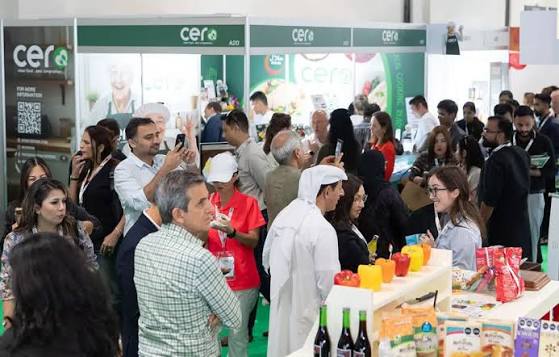
Organic food producers, natural beauty brands, wellness companies, sustainable-living businesses and international buyers will gather at Dubai World Trade Centre from 16 to 18 November 2026 when the Middle East Organic & Natural Products Expo returns for another major edition.
The trade exhibition has operated for more than two decades and positions itself as the region’s leading specialist marketplace for organic and natural products.
Its five core sectors cover food and beverages, beauty and cosmetics, health and wellness, agriculture and environment, and sustainable living.
The previous edition attracted more than 500 exhibitors, 17,784 visitors, over 21 country pavilions and thousands of pre-scheduled business meetings.
Those figures reflect a broader change in consumer markets.
Shoppers increasingly ask what is inside the products they purchase.
Where did the ingredients come from?
How were they produced?
Is the packaging sustainable?
Does the product carry recognised certification?
Can health claims be trusted?
For wholesalers, retailers, distributors and hospitality buyers operating in Dubai and the wider Gulf, the exhibition provides a concentrated opportunity to identify products responding to those questions.
Organic Food Has Moved Beyond a Niche Market
Organic food was once found mainly in specialist shops.
Today, major supermarkets carry organic products.
Hotels use organic ingredients.
Restaurants develop health-focused menus.
Parents search for organic baby food.
Consumers buy organic produce, dairy, snacks, beverages and packaged foods.
Growth has created commercial opportunities.
It has also created confusion.
The word “natural” does not necessarily mean “organic.”
Organic certification normally requires producers to follow defined standards.
Those standards may regulate pesticides, fertilisers, animal husbandry and processing.
Buyers therefore need to understand certifications rather than relying only on packaging claims.
Certification Creates Trust
Trust is essential within the organic market.
Consumers cannot inspect a farm before purchasing a product.
They rely on labels and certification.
Different markets use different organic standards.
International exporters need to understand which certifications buyers recognise.
Retailers need documentation.
Import regulations matter.
Specialist trade exhibitions help producers explain certification directly to distributors and buyers.
For a new brand, credible certification can be one of the strongest ways to differentiate from products using vague sustainability language.
Natural Products Are a Broader Category
The expo deliberately includes both organic and natural products.
The categories overlap but are not identical.
A product may use naturally derived ingredients without being certified organic.
This is common within cosmetics and personal care.
Consumers may search for plant-based formulations, products without particular ingredients or environmentally conscious packaging.
Brands need to communicate carefully.
Claims should be accurate.
A product should not imply certification it does not possess.
As the sector grows, transparency becomes increasingly important.
Healthy Food Is Becoming Mainstream
Consumers increasingly connect food with wellbeing.
High-protein products have grown.
Reduced-sugar alternatives are expanding.
Functional beverages include vitamins and minerals.
Plant-based products remain important.
Gluten-free products serve both medical needs and lifestyle demand.
Superfoods and traditional ingredients are being packaged for modern consumers.
This creates enormous opportunities for food brands.
But health positioning alone does not guarantee repeat purchases.
Products still need to taste good.
Price remains important.
Convenience matters.
Plant-Based Food Is Becoming More Mature
The plant-based sector has moved beyond early hype.
Consumers now evaluate products more critically.
Is the ingredient list understandable?
How much protein is provided?
Is the product heavily processed?
Does it taste good?
Is the price reasonable?
This pressure is forcing manufacturers to improve.
Plant-based food increasingly needs to compete as food rather than simply as a sustainability statement.
That is ultimately positive for the industry.
Natural Beauty Has Become a Major Business
Beauty and personal care form one of the exhibition’s five main sectors.
Consumers increasingly search for products positioned around botanical ingredients, cleaner formulations and sustainable sourcing.
Natural oils.
Plant extracts.
Mineral products.
Haircare.
Skincare.
Personal hygiene.
The category attracts both established companies and small independent brands.
The challenge is evidence.
A natural ingredient is not automatically safer or more effective than a synthetic one.
Professional buyers need to evaluate formulation quality rather than relying solely on marketing language.
Clean Beauty Needs Clear Definitions
“Clean beauty” has become one of the industry’s most popular terms.
It does not have one universally accepted definition.
Different retailers apply different standards.
Some brands exclude particular ingredients.
Others focus on environmental sourcing.
Some combine natural formulations with sustainable packaging.
This flexibility can create consumer confusion.
Brands able to explain clearly what they mean by “clean” may build greater trust.
Trade buyers increasingly ask for evidence supporting product claims.
Wellness Has Become an Industry of Its Own
Health and wellness now extend across supplements, functional nutrition, personal care, fitness, recovery and lifestyle products.
The market has grown because consumers are increasingly proactive.
People do not want only to treat illness.
They want to feel better, sleep better, exercise better and age well.
This creates an enormous commercial market.
It also creates risks when products make exaggerated health claims.
Retailers and distributors need to distinguish responsible brands from those relying on questionable marketing.
Supplements Require Careful Evaluation
Vitamins and dietary supplements are widely used.
Some have clear benefits when nutritional deficiencies exist.
Others are marketed aggressively without strong evidence.
Dosage matters.
Interactions with medication can occur.
Quality varies between manufacturers.
Responsible brands need strong manufacturing standards and accurate labelling.
Professional buyers also need to understand regulatory requirements because supplement rules differ between countries.
Sustainable Agriculture Is Becoming More Important
Agriculture and environment form another core expo sector.
Farmers around the world face pressure from climate change, soil degradation, water scarcity and rising input costs.
Sustainable agriculture attempts to produce food while protecting long-term productivity.
Methods can include improved irrigation.
Soil management.
Biological pest control.
Organic farming.
Controlled-environment agriculture.
Technology can support these approaches.
The Gulf provides an especially interesting market because local food production must operate under difficult climatic conditions.
Water Efficiency Matters in Regional Agriculture
Agriculture is one of the world’s largest users of fresh water.
That creates particular challenges in arid regions.
Drip irrigation can target water more precisely.
Sensors can monitor soil conditions.
Hydroponics can reduce water consumption for certain crops.
Greenhouses allow greater environmental control.
These technologies cannot eliminate every limitation, but they can improve efficiency significantly.
Vertical Farming Is Still Developing
Vertical farming attracted enormous attention because it allows crops to be grown in stacked indoor environments.
The technology offers advantages.
Production can take place close to cities.
Water can be recycled.
Pesticide use may be reduced.
Growing conditions can be controlled.
But artificial lighting and cooling consume electricity.
Economics can therefore be challenging.
The strongest applications are likely to involve high-value crops where local freshness justifies higher production costs.
Sustainable Living Extends Beyond Food
The Sustainable Living sector broadens the event into consumer products and lifestyle.
Reusable products.
Eco-friendly household goods.
Sustainable textiles.
Alternative packaging.
Low-waste solutions.
Ethically sourced products.
Consumers increasingly want purchases to align with environmental values.
But sustainability claims need to be measurable.
A reusable product may still have a high environmental footprint depending on how it is manufactured.
Companies need increasingly sophisticated lifecycle thinking.
Packaging Has Become a Major Sustainability Issue
Organic and natural brands often attract environmentally conscious consumers.
That creates pressure around packaging.
A premium organic product wrapped in excessive single-use plastic can appear contradictory.
Brands are therefore experimenting with recyclable materials, refill systems, paper-based packaging and reduced material use.
The challenge is protecting the product.
Food safety and shelf life cannot be sacrificed.
Cosmetics need protection from contamination.
Good packaging design balances environmental goals with functionality.
Retailers Want Products That Are Ready for Market
The expo reports thousands of products registered as ready for trade.
This matters because retail buyers need more than interesting prototypes.
Products need packaging.
Pricing.
Regulatory documentation.
Supply capacity.
Reliable logistics.
Brands need to prove they can deliver consistently.
A supermarket cannot build a category around a supplier unable to fulfil orders.
Commercial readiness often determines whether a trade-show conversation becomes an actual listing.
Country Pavilions Help Buyers Source Internationally
More than 20 country pavilions participated in the previous edition.
National pavilions allow smaller producers to enter international markets collectively.
Export agencies can support companies.
Buyers can explore products from one country efficiently.
This model is particularly useful within organic sectors, where origin can form part of the product story.
Honey.
Olive oil.
Herbs.
Tea.
Natural cosmetics.
Specialty foods.
Different regions build commercial identities around products linked to local agriculture.
MENA Is an Attractive Market for International Brands
The Gulf has strong purchasing power and a large international population.
Tourism creates additional demand.
Health-conscious consumers are expanding.
Premium grocery retailers continue developing.
Hotels and restaurants need differentiated products.
This makes the region attractive for organic and natural brands seeking international growth.
However, success requires localisation.
Packaging may need Arabic.
Regulatory rules need understanding.
Distributors matter.
Pricing needs to match the market.
A successful European or Asian product cannot simply be placed on a Gulf shelf without preparation.
Buyer Programmes Help Create Deals
The expo’s thousands of pre-scheduled meetings demonstrate how trade exhibitions are becoming more structured.
Buyers can identify relevant suppliers before arriving.
Brands can request meetings with distributors.
Retail chains can focus on particular categories.
This creates higher-quality conversations.
A natural skincare brand does not need to spend three days hoping the correct distributor walks past its stand.
Matching increases efficiency for both sides.
Sustainability Can Be Profitable
Environmental improvements are sometimes treated only as additional costs.
Many can improve economics.
Reducing packaging can reduce material spending.
Efficient manufacturing lowers energy costs.
Reducing food waste saves inventory.
Water efficiency lowers utility costs.
Local sourcing can reduce transportation.
The strongest sustainable business strategies often work because environmental and financial incentives align.
Consumers Are Becoming More Skeptical
As the sustainable-products market expands, greenwashing becomes a bigger issue.
Terms such as natural, green, eco-friendly and sustainable can be used loosely.
Consumers increasingly ask harder questions.
What evidence supports the claim?
Is the packaging genuinely recyclable?
Where are ingredients sourced?
Is certification independent?
Brands need greater transparency.
This ultimately benefits serious producers because credible companies can differentiate themselves from vague marketing.
Three Days Focused on Conscious Consumption
The Organic & Natural Products Expo reflects a broader change in consumer behaviour.
People increasingly care about what they buy, how it was produced and what impact it creates.
That does not mean every consumer will pay unlimited premiums for sustainability.
Price, quality and convenience still matter.
The businesses most likely to succeed are those able to combine all of these factors.
From 16 to 18 November 2026, Dubai World Trade Centre will bring together producers and buyers attempting to do exactly that.
Organic agriculture.
Natural beauty.
Wellness.
Sustainable living.
Healthy food.
Environmental technology.
Different industries, but one shared question:
Can businesses create products that are good for consumers, commercially viable and more responsible at the same time?