


HVACR World 2026 Brings 12,000+ Professionals to Dubai as Cooling Becomes Critical Infrastructure
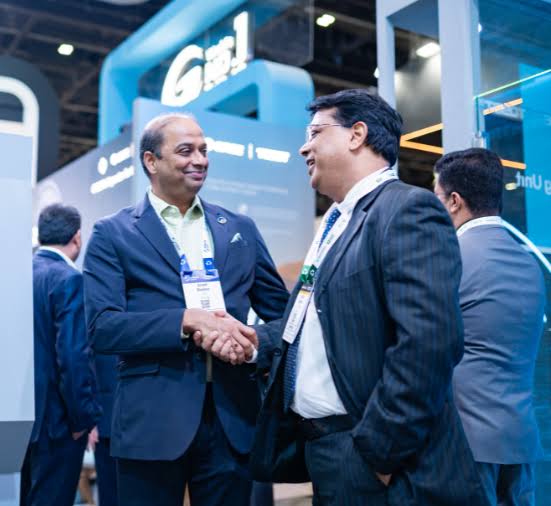
Heating, ventilation, air-conditioning and refrigeration professionals will gather at Dubai World Trade Centre from 23 to 26 November 2026 when HVACR World returns with four days focused on one of the Gulf’s most strategically important infrastructure sectors.
The specialist exhibition is expected to attract more than 12,000 professionals, over 100 global exhibitors, 50-plus industry speakers and participants from more than 115 countries.
Visitors will be able to explore thousands of products covering air-conditioning equipment, refrigeration, ventilation, indoor air quality, heat exchangers, pumps, controls, building automation, energy management and associated technologies.
In many parts of the world, air-conditioning is still discussed mainly as a comfort product.
In the Gulf, cooling is infrastructure.
Homes need it.
Hospitals depend on it.
Hotels cannot operate without it.
Shopping centres require enormous cooling capacity.
Data centres need tightly controlled temperatures.
Food supply chains depend on refrigeration.
Factories have environmental requirements.
As cities grow and temperatures rise, improving HVACR performance becomes an economic, energy and sustainability priority.
Cooling Demand Is Growing
Urbanisation creates more buildings.
Population growth increases demand.
Economic development creates more commercial space.
Digitalisation produces more data centres.
Hot climates require long cooling seasons.
This means global cooling demand is likely to remain substantial.
For professionals working across construction and property in Dubai, the challenge is not whether buildings need cooling.
It is how to provide it with less energy while maintaining reliability and indoor comfort.
Air-Conditioning Can Dominate Building Energy Use
Cooling often represents one of the largest components of electricity demand in hot climates.
That makes HVAC efficiency commercially important.
A small improvement in system performance can produce large savings when applied across a hotel, hospital, mall or office tower.
Owners therefore increasingly look beyond the purchase price of equipment.
Lifecycle cost matters.
How much electricity will the system use?
How often will it require maintenance?
How long will it operate?
Can controls optimise performance?
An inexpensive system that wastes energy for 15 years can become extremely costly.
Building Design Affects Cooling Before Equipment Is Installed
HVAC efficiency does not begin with the air-conditioning unit.
Building orientation matters.
Glass performance matters.
Insulation matters.
Shading matters.
Air leakage matters.
Roof design matters.
A poorly designed building creates unnecessary cooling demand that mechanical equipment then needs to overcome.
The strongest sustainability strategies integrate architecture and mechanical engineering early rather than trying to fix inefficient buildings after construction.
District Cooling Can Serve Large Developments
District cooling centralises chilled-water production and distributes cooling across multiple buildings.
The model can work effectively in large, dense developments.
Central plants can use highly efficient equipment.
Maintenance becomes concentrated.
Peak demand can be managed.
Thermal storage may shift electricity use.
However, district cooling requires substantial infrastructure and long-term planning.
The economics depend on density, demand and system design.
It is a major area of regional expertise because Gulf cities contain many large-scale developments suitable for centralised systems.
Data Centres Are Creating New Cooling Challenges
Artificial intelligence and cloud computing are driving rapid growth in data-centre capacity.
Servers turn electricity into computing power and heat.
That heat needs to be removed continuously.
More powerful processors create greater thermal density.
Traditional air cooling may become less efficient for certain workloads.
Liquid cooling is therefore attracting greater attention.
The relationship between AI and cooling is becoming surprisingly direct.
The more computing capacity the world builds, the more sophisticated thermal management needs to become.
Liquid Cooling Is Moving Into the Data-Centre Mainstream
Liquid can move heat more effectively than air.
Direct-to-chip systems circulate coolant close to processors.
Immersion cooling places equipment in specialised fluids.
Different technologies suit different environments.
The transition requires changes to facility design, maintenance and equipment.
For HVACR companies, data centres represent one of the most important emerging markets because cooling has become central to computing infrastructure.
Refrigeration Keeps the Food Economy Moving
HVACR World is not only about comfortable buildings.
Refrigeration protects food.
Cold stores maintain products.
Supermarkets require refrigerated displays.
Restaurants need chilled storage.
Trucks transport temperature-sensitive goods.
Pharmaceutical supply chains also depend on controlled temperatures.
A failure can destroy valuable inventory quickly.
Reliability is therefore fundamental.
The Cold Chain Is Particularly Important in Hot Climates
Food may travel through several stages before reaching a consumer.
Producer.
Processing facility.
Warehouse.
Truck.
Distribution centre.
Retailer.
Temperature needs to remain controlled throughout.
In the Gulf, high outdoor temperatures increase the consequences of equipment failure.
Efficient refrigeration protects food security and reduces waste.
The best system is not simply one that cools effectively.
It must also operate reliably under demanding environmental conditions.
Refrigerants Are Undergoing a Major Transition
Refrigeration and air-conditioning systems rely on refrigerants to transfer heat.
The environmental impact of certain refrigerants has driven global regulatory change.
Industry is moving toward alternatives with lower global-warming potential.
This transition is technically important.
Different refrigerants have different pressure, safety and performance characteristics.
Equipment may need redesign.
Technicians require training.
Supply chains need to adapt.
HVACR World’s 2026 programme specifically addresses refrigerant transition and compliance readiness.
The Kigali Amendment Is Influencing the Industry
International efforts to phase down high-global-warming-potential HFC refrigerants are reshaping equipment markets.
Manufacturers need compliant technology.
Governments need implementation strategies.
Contractors need updated skills.
Building owners need to understand future availability.
Replacing equipment without considering changing refrigerant standards can create long-term problems.
Regulation therefore affects purchasing decisions today.
Indoor Air Quality Became More Visible After the Pandemic
People spend large portions of their lives indoors.
Ventilation quality influences health and comfort.
Filters remove particles.
Fresh-air systems dilute indoor contaminants.
Humidity matters.
Air distribution matters.
Carbon dioxide can provide useful information about occupancy and ventilation.
The pandemic increased public awareness of indoor air quality.
The challenge is balancing healthy ventilation with energy efficiency.
Bringing in more hot outdoor air increases cooling demand.
Good engineering needs to address both.
Sensors Make Buildings More Responsive
Modern HVAC systems increasingly use sensors.
Temperature.
Humidity.
CO2.
Occupancy.
Pressure.
Air quality.
Energy consumption.
These measurements allow systems to respond dynamically.
An empty meeting room does not need the same ventilation as one containing 20 people.
A hotel room does not need identical conditioning when unoccupied.
Demand-controlled operation can reduce unnecessary energy use.
Building Automation Connects HVAC With the Wider Property
Heating and cooling no longer operate as isolated mechanical systems.
Building-management platforms can connect HVAC with lighting, access control, metering and other equipment.
Operators gain a central view.
Alarms identify problems.
Trends can be analysed.
Scheduling improves.
The value increases when systems are interoperable rather than locked into disconnected platforms.
Smart buildings depend as much on integration as individual devices.
AI Can Optimise HVAC Performance
Artificial intelligence can analyse how a building behaves over time.
Weather.
Occupancy.
Energy prices.
Thermal characteristics.
Equipment efficiency.
An AI system could adjust settings to achieve comfort while reducing consumption.
It might identify that a chiller is operating inefficiently.
It could forecast tomorrow’s cooling demand.
These applications are valuable because buildings contain repeated patterns.
However, algorithms need high-quality sensor data and proper engineering oversight.
AI cannot compensate for poorly maintained equipment indefinitely.
Predictive Maintenance Can Prevent Failure
Traditional maintenance follows schedules or responds after equipment breaks.
Predictive approaches analyse equipment condition.
Vibration.
Temperature.
Pressure.
Electrical characteristics.
Operating hours.
Patterns may indicate that components are deteriorating.
Maintenance teams can intervene before failure.
This is especially valuable for mission-critical environments.
A hospital cannot wait comfortably for a major chiller to fail before arranging repair.
Retrofits Offer Huge Efficiency Potential
New buildings receive much attention.
Existing buildings represent a much larger opportunity.
Older chillers.
Outdated controls.
Poorly balanced systems.
Inefficient pumps.
Inadequate insulation.
Retrofits can reduce energy use without rebuilding an entire property.
The economics can be attractive when energy savings repay investment.
HVACR World’s 2026 programme explicitly includes decarbonising existing buildings through HVAC retrofits.
Performance Contracts Can Help Finance Upgrades
One challenge with efficiency is upfront capital.
Energy-service companies can use performance-based models where savings help finance improvements.
The concept aligns incentives.
Building owners gain upgrades.
Service providers are rewarded when systems perform.
Contracts need careful measurement because savings must be verified.
Accurate energy data becomes essential.
Hotels Need Comfort Without Wasting Energy
Hospitality properties face an unusual challenge.
Guests expect immediate comfort.
Rooms may sit empty for hours.
Large public spaces operate at different occupancy levels throughout the day.
Kitchens add heat.
Pools and spas create other loads.
Hotels can use intelligent controls to reduce energy use while maintaining experience.
Poor efficiency damages operating margins.
Poor comfort damages reviews.
The system needs to achieve both.
Hospitals Have Even Stricter Requirements
Healthcare facilities require reliable cooling and ventilation.
Operating theatres may need controlled pressure.
Certain areas have filtration requirements.
Medical equipment generates heat.
Patients may be particularly vulnerable.
Redundancy matters.
Energy efficiency remains important, but safety and reliability come first.
HVAC design therefore varies dramatically by building type.
Manufacturing Requires Process Cooling
Factories may need cooling for machinery or processes rather than only people.
Food production.
Pharmaceutical manufacturing.
Plastics.
Electronics.
Industrial refrigeration.
A temperature problem can affect product quality.
Industrial HVACR therefore combines comfort systems with production requirements.
Equipment selection depends on what the facility actually does.
Heat Pumps Are Receiving Greater Attention
Heat pumps move heat rather than producing it directly.
They can provide efficient heating in many climates and applications.
In hot regions, their role may differ from colder markets.
Domestic hot water and certain industrial processes can create opportunities.
Technology decisions need to reflect local climate rather than global trends mechanically.
Energy Recovery Reduces Waste
Ventilation systems sometimes exhaust conditioned air directly outdoors.
Energy-recovery equipment can transfer some heating or cooling energy between outgoing and incoming air streams.
This reduces the load on mechanical systems.
The concept is simple.
Do not throw away useful energy if it can be recovered economically.
The exact benefit depends on climate and application.
Cooling Towers Need Water Management
Certain cooling systems use cooling towers.
These can consume significant water.
Water chemistry needs control.
Maintenance affects performance.
Poor management can create health and efficiency problems.
As sustainability priorities expand, operators increasingly consider both energy and water consumption.
Efficiency needs a broader definition than electricity alone.
Refrigeration Technicians Need New Skills
Equipment is changing.
Refrigerants are changing.
Controls are becoming digital.
Sensors produce more data.
Safety requirements evolve.
Technicians therefore require continuous training.
A workforce comfortable only with older systems may struggle as the industry modernises.
Professional events and technical programmes play an important role in knowledge transfer.
ASHRAE Training Adds a Professional Development Dimension
HVACR World 2026 includes professional education alongside the exhibition.
Topics cover practical energy management, resilient HVAC design, climate compliance, data-centre cooling and refrigerant transition.
This makes the event relevant not only to procurement teams but also to engineers and technical specialists maintaining professional knowledge.
Cooling Is Also a Climate Adaptation Technology
Climate discussions often frame air-conditioning only as a source of energy demand.
Cooling also protects people from extreme heat.
As heatwaves become more severe, access to safe indoor temperatures becomes a resilience issue.
The challenge is avoiding a cycle where more cooling creates excessive energy demand that increases emissions.
Efficient equipment, cleaner electricity and better building design need to advance together.
12,000+ Professionals Represent a Huge Technical Market
HVACR World currently expects more than 12,000 global attendees, 100-plus exhibitors, 5,000-plus products and more than 50 speakers.
Visitors come from construction.
Healthcare.
Data centres.
Hospitality.
Manufacturing.
Food and beverage.
Facilities management.
Government.
The sector touches almost every part of the built environment.
Four Days Focused on Keeping Modern Cities Cool
Cooling is easy to ignore when it works.
People notice it immediately when it fails.
A hotel becomes uncomfortable.
Food spoils.
Servers overheat.
Factories stop.
Hospitals face risk.
That makes HVACR one of the least visible but most important systems supporting modern cities.
From 23 to 26 November 2026, HVACR World will bring manufacturers, engineers, buyers and technical experts together at Dubai World Trade Centre.
The central challenge is clear:
provide more cooling as demand grows, while consuming less energy and reducing environmental impact.
The companies able to solve that equation will become increasingly important as cities become hotter, larger and more digital.