


Dubai Mallathon 2026 Wraps Up After Three Months of Turning Shopping Malls Into Running Tracks
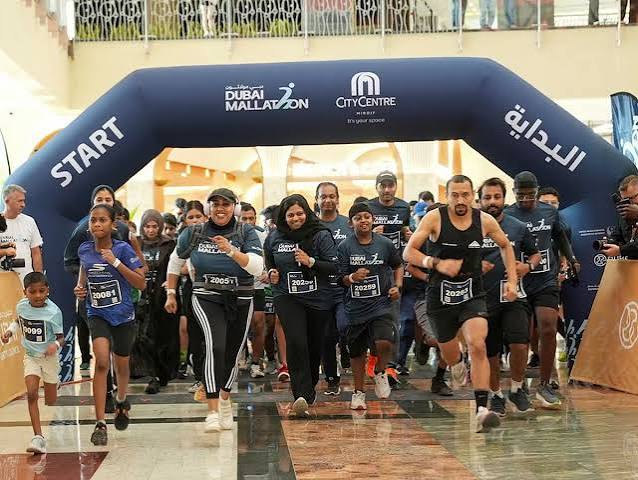
Dubai Mallathon completed its 2026 season on 15 September after spending three months transforming major shopping malls across the city into early-morning walking and running destinations.
The second edition began on 15 June and operated daily between 6am and 10am during the hottest part of Dubai’s summer.
Instead of asking residents to stop exercising because outdoor conditions had become difficult, the initiative took fitness indoors.
Shopping malls became running tracks.
Air-conditioning replaced summer heat.
People could walk, jog or run before regular retail hours began.
The concept was remarkably simple, but it addressed one of Dubai’s most obvious fitness problems: how do you keep people moving consistently when extreme summer temperatures make outdoor activity difficult?
Dubai Turned Climate Into a Design Problem
Summer fitness in Dubai often moves indoors.
Gyms become busier.
Treadmills replace outdoor running tracks.
Cyclists use indoor trainers.
People reduce long walks during the day.
The Mallathon approached the issue from a different direction.
Rather than viewing shopping malls only as retail environments, it treated them as existing climate-controlled infrastructure capable of supporting physical activity.
The floors were already there.
The air-conditioning was already there.
Parking existed.
Public transport served several locations.
The initiative simply changed how those spaces were used during morning hours.
Three Months Created Continuity
The 2026 programme ran from 15 June until 15 September.
This matters because one weekend would have created a novelty.
Three months created a routine.
Residents could participate repeatedly rather than treating the Mallathon as a one-time event.
Daily sessions operated between 6am and 10am.
That meant people could walk before work, use the programme as morning training or simply become more active without joining a formal gym.
Public-health initiatives work best when participation can become habitual.
The Mallathon offered exactly that possibility.
Major Malls Became Fitness Hubs
The programme expanded across several of Dubai’s best-known shopping destinations.
Locations included Dubai Mall, Mall of the Emirates, Dubai Hills Mall, City Centre Deira, City Centre Mirdif and Dubai Festival City, with additional participating locations added across the initiative.
Each mall offered its own indoor routes and lap distances.
That geographic spread was important.
A community health programme becomes far more useful when participants do not need to travel across the entire city to access it.
People could choose a mall closer to home or work.
Dubai Mall Offered Multiple Running Distances
Dubai Mall became one of the programme’s flagship locations.
Its daily route operated between 6am and 10am.
One lap covered approximately 1.5km, allowing participants to choose how much distance they wanted to complete.
Organised options included shorter distances as well as 5K and 10K running.
The flexibility was important.
A beginner could complete one lap.
A serious recreational runner could complete several.
Everybody used the same environment.
A Full Marathon Took Place Inside Dubai Mall
Perhaps the most eye-catching event of the season came near its conclusion.
On 13 September, Dubai Mall hosted a 42km race.
The idea of completing marathon distance inside a shopping mall sounds almost surreal.
Yet it perfectly captured what made the Mallathon unusual.
A space normally associated with retail became the setting for endurance sport.
Running 42km indoors creates its own psychological challenge.
There are no changing landscapes.
There are no outdoor landmarks gradually passing by.
Athletes repeat indoor sections while accumulating distance.
That demands substantial mental patience.
Pro Races Added Competition
The Mallathon was not limited to casual walking.
Different malls hosted organised Pro Races throughout the summer.
These included distances such as 2km, 2.5km, 5km, 6km and 10km depending on the venue.
This gave stronger runners a reason to treat the programme competitively.
The combination of informal daily participation and structured racing was one of the initiative’s strongest features.
People could engage at whatever level made sense.
No Registration Was Needed for Everyday Participation
Daily walking and running did not require normal race-style registration.
That reduced friction.
People could arrive and move.
This sounds like a small administrative detail, but convenience strongly influences exercise habits.
Every additional step creates an opportunity for somebody to decide not to participate.
Create an account.
Pay a fee.
Book a slot.
Collect a bib.
The Mallathon removed many of those barriers for ordinary morning exercise.
Walking Was Treated as Legitimate Fitness
The programme consistently promoted walking alongside running.
This is important.
Fitness campaigns can become overly focused on people who are already athletic.
That misses the population most likely to benefit from increased physical activity.
Walking is accessible.
It requires little technical skill.
People can control intensity naturally.
Older adults can participate.
Beginners can participate.
Someone who has been sedentary for years does not need to become a runner immediately.
A sustainable walking routine can be an excellent starting point.
Air Conditioning Made Exercise Predictable
Outdoor summer exercise in Dubai requires careful timing and heat management.
Even early mornings can be hot and humid.
Indoor mall routes removed much of that environmental uncertainty.
Participants knew conditions would remain relatively stable.
That predictability makes routine easier.
People could focus on movement rather than weather.
For older participants and families, this may have made the programme particularly attractive.
The Programme Included Different Community Groups
The 2026 edition also incorporated initiatives intended for women, senior citizens and People of Determination.
This broader approach reinforced the idea that the Mallathon was not simply another running competition.
It was designed as a public-health initiative.
Inclusive programming matters because different groups may require different environments before feeling comfortable participating.
A successful citywide fitness programme needs more than one model of athlete.
Malls Became Social Exercise Spaces
Walking inside a mall is not a new activity.
What changed was the social meaning.
Normally, somebody walking through a shopping centre is travelling between stores.
During the Mallathon, movement itself became the objective.
Participants saw other people exercising.
Coaches led warm-ups and cool-downs at certain locations.
Running groups emerged.
A normal commercial environment temporarily became a community fitness environment.
That shift matters psychologically.
Exercise becomes visible.
When movement appears normal and socially supported, more people are willing to participate.
The Initiative Challenged Traditional Ideas About Sports Infrastructure
Cities usually think of sports infrastructure as stadiums, tracks, gyms, pools and specialised facilities.
Dubai Mallathon demonstrated that existing spaces can sometimes be repurposed.
A mall does not need to become a permanent athletics facility.
It only needs to support activity during hours when retail traffic is limited.
This is an efficient concept.
Infrastructure already exists.
Instead of building something entirely new, the city changes its purpose temporarily.
Other hot-climate cities may find the idea particularly interesting.
Indoor Running Has Limitations Too
The programme should not be romanticised as a perfect replacement for outdoor sport.
Indoor loops can become repetitive.
Hard flooring may affect some runners differently.
GPS tracking can become less reliable indoors.
The lack of natural variation may make long sessions mentally difficult.
But those limitations are minor compared with the central objective.
The Mallathon was not trying to replace every form of outdoor exercise.
It was creating another option during summer.
The September Finish Arrived at the Right Time
The 15 September conclusion also works logically within Dubai’s annual sports cycle.
As summer begins to ease, outdoor events start returning.
Ice Warrior Challenge follows within days.
Running events increase through October.
Dubai Fitness Challenge begins at the end of that month.
Triathlon, cycling and other endurance competitions fill November.
The Mallathon therefore acts almost like a bridge.
It keeps residents active indoors through summer before the outdoor season returns.
The Real Success Is What Happens Next
The most important question is not how many kilometres people completed inside shopping centres.
It is whether the initiative changed behaviour.
Did someone begin walking regularly?
Did a casual walker become a runner?
Did families become more active together?
Did someone who avoided exercise during summer maintain fitness instead?
Did participants discover that exercise could fit into ordinary daily routines?
These are the outcomes that matter most.
Public-health programmes succeed when activity continues after banners and event branding disappear.
Dubai Found a Very Dubai Solution to Summer Fitness
There is something particularly appropriate about using shopping malls for sport in Dubai.
The city has some of the world’s most famous retail destinations.
It also has one of the most challenging summer climates for outdoor exercise.
The Mallathon combined those two realities.
Instead of fighting the environment, it adapted.
Instead of building another temporary facility, it used spaces already available.
Instead of restricting participation to competitive athletes, it welcomed walking and running.
From 15 June to 15 September, retail corridors became tracks.
Thousands of ordinary steps became part of a wider city health initiative.
The second Dubai Mallathon may now be finished, but its most interesting legacy could be the idea behind it.
Sports infrastructure does not always need to look like a sports facility.
Sometimes the best place to start moving is simply the space the city already has.