


Dubai Derma 2027 Brings Global Dermatology, Aesthetics and Laser Innovation to DWTC
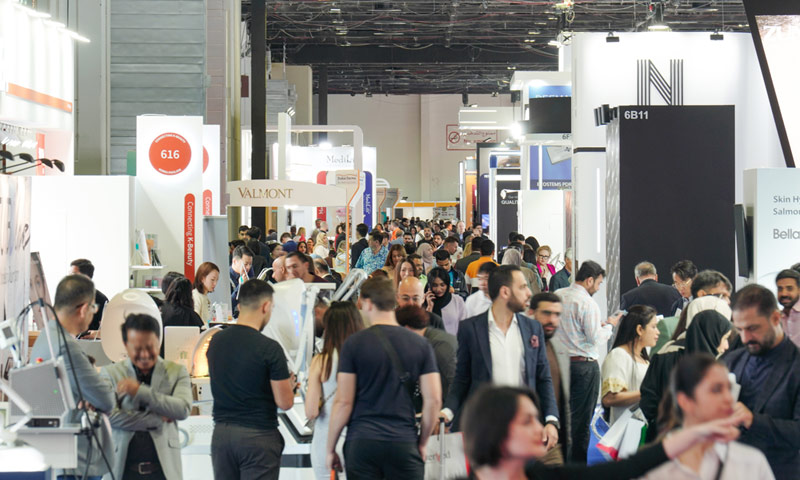
Dermatologists, aesthetic physicians, skincare companies and medical-technology manufacturers will gather at Dubai World Trade Centre from 6 to 8 April 2027 for the 25th Dubai World Dermatology and Laser Conference and Exhibition, better known as Dubai Derma.
The three-day event has developed into one of the leading professional platforms for dermatology, aesthetics and laser medicine across the Middle East, Africa and the Indian Subcontinent.
Its structure combines two major elements.
The scientific conference brings specialists together to discuss clinical knowledge, research and emerging treatments.
The exhibition connects healthcare professionals with companies supplying dermatology equipment, pharmaceuticals, lasers, skincare products, hair-loss solutions and aesthetic technologies.
That combination gives Dubai Derma a distinctive role.
It is simultaneously a medical-education event and a major commercial marketplace.
The 25th Edition Marks a Major Milestone
Reaching a 25th edition is significant in a rapidly changing medical sector.
Dermatology today looks very different from the field of two decades ago.
Imaging technology has improved.
Lasers have become more sophisticated.
Biologic medicines have transformed treatment for certain inflammatory skin diseases.
Artificial intelligence is entering diagnosis.
Aesthetic medicine has expanded enormously.
Consumers have become much more knowledgeable about skincare ingredients.
Social media has influenced patient expectations.
The 2027 edition arrives at a point where clinical dermatology and aesthetic medicine are both becoming increasingly technology-driven.
Professionals visiting Dubai will have the opportunity to examine many of these changes within the same event.
Dermatology Covers Much More Than Cosmetic Treatment
Public discussion around dermatology often focuses heavily on aesthetics.
The specialty is much broader.
Dermatologists diagnose and treat thousands of skin conditions.
Acne.
Eczema.
Psoriasis.
Skin cancer.
Hair disorders.
Nail disease.
Autoimmune conditions.
Infections.
Allergic reactions.
Pigmentation disorders.
The skin is the body’s largest organ and can reveal signs of both local and systemic disease.
Dubai Derma’s scientific programme reflects this broader medical role.
Skin Cancer Detection Is Becoming More Technological
Early detection is critical in several types of skin cancer.
Dermatoscopy allows specialists to examine skin lesions in greater detail.
Digital imaging systems can record changes over time.
Artificial intelligence is increasingly being researched as a tool for image analysis.
Algorithms may help identify lesions that deserve closer clinical examination.
The potential is considerable.
But diagnosis cannot be reduced to a smartphone image and an algorithm.
Skin colour, patient history and clinical context matter.
A false reassurance can delay treatment.
AI therefore needs to function as a support tool rather than an unsupervised replacement for dermatologists.
AI Could Improve Clinical Workflows
Artificial intelligence may also assist dermatology in less dramatic but highly practical ways.
Clinical documentation can be streamlined.
Images can be organised.
Large patient datasets can be analysed.
Follow-up patterns can be monitored.
Administrative workload can potentially decrease.
The strongest AI applications may ultimately be those that free clinicians to spend more time with patients rather than replacing clinical reasoning.
Laser Technology Continues to Advance
Lasers form a major part of Dubai Derma.
Different systems can target specific structures within the skin.
Some treatments focus on pigmentation.
Others target blood vessels.
Hair removal is another major application.
Resurfacing systems can address texture and scarring.
Tattoo removal continues evolving.
The challenge is selecting the right technology for the right patient.
More powerful equipment does not automatically produce better results.
Skin type matters.
Treatment settings matter.
Operator training matters.
Incorrect use can cause burns, pigmentation changes or scarring.
Skin Diversity Matters in the Gulf
The UAE has an unusually international population.
Clinicians regularly treat patients with many different skin tones.
This matters because certain treatments behave differently depending on melanin levels.
Laser parameters may need adjustment.
Some skin types are more prone to post-inflammatory pigmentation.
Certain diseases can also appear differently across skin tones.
Professional education needs to reflect this diversity.
A treatment protocol developed primarily around one population may not automatically be appropriate for another.
Aesthetic Medicine Continues Growing Rapidly
Demand for non-surgical aesthetic treatment has expanded globally.
Botulinum toxin.
Dermal fillers.
Skin boosters.
Energy-based devices.
Laser resurfacing.
Body-contouring technologies.
Patients increasingly seek procedures offering visible changes without traditional surgery.
This growth has created an enormous commercial market.
It has also increased the need for professional standards.
Complications can occur.
Over-treatment can produce unnatural results.
Unsafe products create serious risks.
Medical expertise remains important even when procedures are marketed as routine beauty treatments.
Social Media Has Changed Patient Expectations
Patients increasingly arrive with photographs saved from social platforms.
Filters may alter facial proportions.
Influencers promote treatments.
Before-and-after images can create unrealistic expectations.
Clinicians therefore need strong communication skills.
A responsible physician sometimes needs to tell a patient that a requested treatment is unnecessary or inappropriate.
Aesthetic medicine should not become a process of automatically agreeing to every request.
Clinical judgement matters.
Injectables Require Anatomical Knowledge
Injectable treatments may appear simple when presented in short social-media videos.
They are medical procedures.
The face contains blood vessels, nerves and complex anatomical structures.
Poor injection technique can cause serious complications.
Professional training and understanding of anatomy are essential.
Events such as Dubai Derma provide opportunities for qualified practitioners to continue updating their knowledge as products and techniques evolve.
Biologics Have Transformed Certain Skin Diseases
Modern systemic treatments have dramatically changed care for conditions such as psoriasis and atopic dermatitis.
Biologic medicines can target specific parts of the immune system.
Patients with severe disease who previously had limited options may achieve much better control.
But these treatments require careful patient selection and monitoring.
They can also be expensive.
Dermatologists need to understand both clinical evidence and long-term management.
The pharmaceutical side of Dubai Derma therefore remains highly important alongside aesthetic technology.
Acne Remains One of the Most Common Conditions
Acne affects enormous numbers of adolescents and adults.
Treatment can include topical medicines, oral therapy, procedural options and skincare changes.
The psychological impact can be substantial.
Patients may experience reduced confidence or social anxiety.
Social media can intensify this by promoting unrealistic skin appearance.
Effective acne management therefore needs to consider both the medical condition and the patient experience.
Hair Loss Is a Growing Commercial and Medical Category
Hair-loss products and technology form another significant part of the exhibition.
Hair loss can occur for many reasons.
Genetics.
Hormonal factors.
Autoimmune conditions.
Stress.
Nutritional deficiencies.
Medication.
Treatment depends on the cause.
This is why professional diagnosis matters before expensive products or procedures are recommended.
The market includes pharmaceuticals, devices, transplant technology and cosmetic solutions.
Dubai Derma gives professionals an opportunity to compare these approaches critically.
Skincare Has Become Ingredient-Driven
Consumers know more about skincare ingredients than ever before.
Retinoids.
Vitamin C.
Niacinamide.
Peptides.
Ceramides.
Acids.
Sunscreen filters.
Information spreads rapidly through social platforms.
Sometimes this education is useful.
Sometimes it produces confusion.
Consumers may combine too many active ingredients.
Products may be promoted without adequate evidence.
Dermatologists increasingly need to help patients separate marketing from science.
Cosmeceuticals Sit Between Beauty and Medicine
The cosmeceutical category has grown significantly.
These products may make claims related to ageing, pigmentation, hydration or skin barrier function.
They occupy a space between ordinary cosmetics and medicines.
Clinical evidence varies enormously.
Some ingredients are strongly supported.
Others rely heavily on marketing.
Healthcare professionals attending Dubai Derma can compare brands and examine evidence more closely than ordinary consumers.
Medical Devices Face Regulatory Requirements
Aesthetic and dermatological devices can represent major investments.
Clinics need to consider far more than purchase price.
Is the device approved?
What clinical evidence exists?
What consumables are required?
How expensive is maintenance?
Is local technical support available?
How much training is provided?
What happens when the machine breaks?
These questions can determine whether an expensive device becomes profitable or problematic.
The Exhibition Creates a Major Commercial Marketplace
Dubai Derma brings manufacturers together with dermatologists, clinics, distributors and procurement professionals.
This makes the exhibition especially important for companies trying to enter Middle Eastern markets.
International manufacturers may need local distribution partners.
Clinics may search for new product lines.
Skincare companies can meet medical buyers.
Device companies can demonstrate equipment directly.
For exhibitors, the value lies in reaching a highly specialised professional audience.
Live Demonstrations Help Buyers Evaluate Technology
Many dermatology and aesthetic products are difficult to evaluate from brochures.
A laser platform needs to be seen operating.
Software should be tested.
Device ergonomics matter.
Treatment workflow matters.
Clinical professionals can ask detailed questions.
Trade exhibitions provide an environment where suppliers need to explain exactly what their technology does and where its limitations lie.
Clinical Education Remains the Core
Despite the commercial scale, Dubai Derma remains fundamentally linked to medical education.
The conference brings internationally recognised specialists together to discuss evidence, cases and treatment approaches.
Medicine changes continuously.
A clinician who completed specialist training years ago still needs continuing education.
New drugs arrive.
Guidelines change.
Technology develops.
Previously popular treatments may lose support.
Continuous learning is essential for patient safety.
Ethics Matter as Aesthetic Medicine Expands
Commercial growth creates ethical challenges.
Clinics earn revenue from procedures.
Patients may request unnecessary interventions.
Social media rewards dramatic results.
This can create pressure toward overtreatment.
Responsible aesthetic medicine requires boundaries.
Doctors need to place patient wellbeing ahead of sales.
Industry events should therefore include conversations about complications, informed consent and appropriate treatment selection alongside product innovation.
Three Days Connecting Science and Business
From 6 to 8 April 2027, Dubai World Trade Centre will host a sector that sits at the intersection of healthcare, technology and consumer demand.
Dermatologists will discuss disease.
Aesthetic physicians will examine new techniques.
Skincare companies will launch products.
Laser manufacturers will demonstrate systems.
Researchers will present evidence.
Distributors will negotiate partnerships.
The combination creates both enormous opportunity and responsibility.
Skin treatments can improve health, appearance and confidence.
They can also cause harm when used incorrectly.
That is why professional education needs to grow alongside the industry itself.
Dubai Derma 2027 provides three days for the international dermatology community to do exactly that.