


Dubai Airshow 2027 Returns to DWC for Five Days of Aviation, Space and Defence Innovation
The global aerospace industry will return to Dubai World Central from 15 to 19 November 2027 when Dubai Airshow brings aircraft manufacturers, airlines, defence companies, space organisations, technology providers, investors and government delegations together for five days of business and innovation.
Held at the dedicated Dubai Airshow Site at DWC, the biennial event has developed into one of the world’s most influential aerospace gatherings.
Its current platform scale includes more than 1,500 exhibitors, over 148,000 attendees, more than 200 aircraft on display, 120-plus startups and over 350 industry speakers.
The numbers tell only part of the story.
Dubai Airshow is where major aircraft purchases are announced.
New technologies make their regional debuts.
Airlines discuss future fleets.
Defence organisations evaluate systems.
Space companies meet investors.
Startups search for customers.
Governments discuss aviation policy.
And some of the world’s most advanced aircraft take to the sky directly above the exhibition.
For aviation businesses operating in Dubai and across the wider Middle East, the five-day show represents one of the most important opportunities on the international aerospace calendar.
Aerospace Has Become Much Broader Than Commercial Aircraft
Commercial aviation remains one of the central pillars of Dubai Airshow.
Airbus.
Boeing.
Embraer.
Bombardier.
Airlines.
Leasing companies.
Engine manufacturers.
But the modern aerospace industry is considerably broader.
Defence is deeply integrated.
Space technology has become a major sector.
Drones are expanding.
Advanced air mobility is emerging.
Artificial intelligence is entering operations.
Cybersecurity affects airports and aircraft.
Sustainable aviation is becoming a strategic issue.
The airshow increasingly brings all of these industries together because they share technology, supply chains and talent.
Commercial Aircraft Orders Can Reach Tens of Billions of Dollars
Few trade exhibitions generate individual transactions as large as those seen at major airshows.
During the 2025 edition, Emirates announced an order for 65 Boeing 777-9 aircraft powered by GE9X engines, valued at approximately US$38 billion.
flydubai also reached a landmark agreement for 150 Airbus A321neo aircraft with options for another 100.
Deals at this scale demonstrate why the event matters commercially.
An airline order creates business far beyond the aircraft manufacturer.
Engine companies benefit.
Component suppliers benefit.
Maintenance organisations gain future work.
Training providers need more capacity.
Airports may need additional infrastructure.
Aircraft financing and leasing businesses become involved.
One fleet decision can influence an entire aerospace ecosystem for decades.
Airlines Are Planning for Long-Term Passenger Growth
Aircraft purchases require unusually long planning horizons.
An airline ordering aircraft today may not receive all of them for several years.
The aircraft may then remain in service for two or three decades.
Airlines therefore need to estimate what passenger demand will look like far into the future.
Will international travel continue growing?
Which routes will expand?
How important will India become?
What will African aviation look like?
How much premium travel will the Gulf support?
Which aircraft sizes will offer the right economics?
Dubai Airshow gives airline executives access to manufacturers, financiers and suppliers while these strategic decisions are being made.
Fleet Efficiency Has Become a Competitive Advantage
Fuel is one of an airline’s largest costs.
Newer aircraft generally offer improved fuel efficiency through better engines, aerodynamics and lighter materials.
A few percentage points of improvement can become extremely valuable across thousands of flights.
Efficiency also affects emissions.
Airlines therefore have both financial and environmental reasons to modernise fleets.
However, replacing aircraft requires huge amounts of capital.
Operators must balance purchase costs against expected savings over many years.
This is why aircraft economics dominate so many airshow conversations.
Aircraft Engines Are Technological Masterpieces
Modern jet engines operate under extreme conditions.
They must generate enormous thrust.
Remain reliable.
Handle high temperatures.
Operate efficiently.
Meet strict noise and emissions requirements.
Manufacturers invest billions in engine development.
Small improvements can produce major savings when multiplied across global fleets.
Engine technology will remain central to aviation’s environmental transition because conventional aircraft are likely to remain in operation for decades even as entirely new propulsion systems develop.
Sustainable Aviation Fuel Is Becoming More Important
The aviation industry faces a difficult decarbonisation challenge.
Long-distance aircraft require enormous amounts of energy.
Battery technology currently cannot provide practical long-haul performance at the scale of conventional jets.
Sustainable aviation fuel, commonly called SAF, is therefore receiving major attention.
SAF can potentially reduce lifecycle carbon emissions compared with traditional jet fuel depending on how it is produced.
The challenge is supply and cost.
Global SAF production remains far below what the aviation industry would require for widespread adoption.
Airlines need more producers.
Producers need long-term demand.
Governments may need supportive policy.
Airshows provide a natural place for these stakeholders to meet.
Hydrogen Could Play a Longer-Term Role
Hydrogen is another potential aviation energy source.
It can be used directly as a fuel or indirectly in synthetic fuels.
Hydrogen aircraft could theoretically produce much lower carbon emissions during operation.
The engineering challenge is significant.
Hydrogen has different storage requirements from conventional jet fuel.
Aircraft architecture may need substantial changes.
Airport infrastructure would need adaptation.
Commercial deployment is therefore likely to take time.
Research continues because aviation ultimately needs several pathways toward lower emissions.
Electric Aviation May Arrive First on Shorter Routes
Batteries are unlikely to power long-haul passenger jets anytime soon.
Smaller aircraft create a different possibility.
Short routes require less energy.
Training aircraft can use smaller battery systems.
Urban air mobility vehicles operate over relatively limited distances.
Electric propulsion could therefore enter aviation gradually through specialised applications.
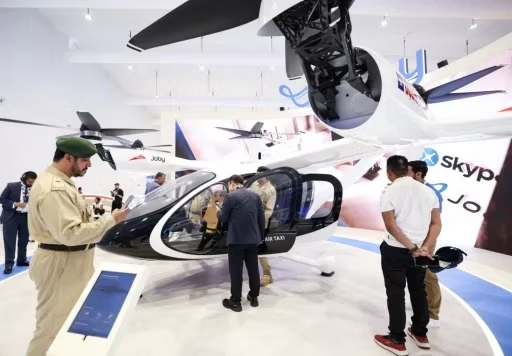
Dubai Airshow’s Advanced Air Mobility programme highlights this emerging category.
Flying Taxis Are Moving From Concept Toward Deployment
Electric vertical take-off and landing aircraft, commonly known as eVTOLs, have become one of aviation’s most visible emerging technologies.
These vehicles aim to combine vertical flight with electric propulsion.
Potential applications include airport transfers and short urban journeys.
Dubai has been one of the cities actively preparing for commercial air-taxi operations.
That makes DWC a particularly relevant location for eVTOL demonstrations.
The technology still faces challenges.
Certification.
Battery performance.
Noise.
Infrastructure.
Passenger acceptance.
Air-traffic integration.
Economics.
The companies able to solve all of these simultaneously may create an entirely new transportation category.
The Flying Display Remains One of the Main Attractions
Dubai Airshow is unusual because visitors can move directly between business meetings and live aircraft demonstrations.
The official flying programme is published each morning rather than far in advance.
Commercial aircraft may demonstrate performance.
Military fighters take to the sky.
Helicopters participate.
Special display teams perform.
Advanced air mobility aircraft can appear.
The flying display gives manufacturers something a conventional exhibition hall cannot provide.
They can show aircraft doing what they were designed to do.
More Than 200 Aircraft Form the Static and Flying Display
The airshow’s platform has grown to feature more than 200 aircraft.
Commercial jets.
Business aircraft.
Military platforms.
Helicopters.
Drones.
Unmanned systems.
Visitors can examine aircraft on the ground while manufacturers and operators conduct meetings nearby.
For buyers, the static display provides access to aircraft interiors, cockpit systems and technologies that are difficult to evaluate through presentations alone.
Business Aviation Remains a Major Market
Private aviation continues developing strongly across the Middle East.
Ultra-high-net-worth individuals use business jets.
Companies need flexible corporate travel.
Charter businesses operate regional and international fleets.
Aircraft-management companies provide services to owners.
Manufacturers compete across everything from smaller business jets to ultra-long-range aircraft capable of connecting distant cities nonstop.
The Gulf’s geographic position makes long-range business aviation particularly relevant.
Defence Is a Major Part of Dubai Airshow
Military aerospace represents another core sector.
Fighter aircraft.
Transport aircraft.
Helicopters.
Surveillance systems.
Unmanned aircraft.
Electronic warfare.
Missile technology.
Communications.
Defence buyers operate differently from commercial airlines.
Procurement can involve national strategy.
Political relationships matter.
Technology transfer may be required.
Local manufacturing can influence decisions.
Governments want systems capable of operating for decades.
Dubai Airshow gives defence manufacturers access to official delegations and military decision-makers from numerous markets.
Drones Are Reshaping Military and Civil Aviation
Unmanned aerial systems have developed rapidly.
Small drones are used for inspection.
Mapping.
Photography.
Agriculture.
Infrastructure monitoring.
Emergency response.
Military applications have evolved even faster.
Recent conflicts have demonstrated how relatively inexpensive unmanned systems can influence modern warfare.
This is forcing defence companies to rethink both drones and counter-drone technology.
Airports, governments and critical infrastructure operators also need ways to detect and manage unauthorised aircraft.
AI Is Entering Aerospace
Artificial intelligence is beginning to influence several parts of aviation.
Airlines can use AI for demand forecasting.
Maintenance systems can analyse equipment data.
Airports can improve passenger flow.
Manufacturers can accelerate aspects of engineering.
Security systems analyse information.
Pilots may receive more advanced decision support.
But aviation has exceptionally strict safety requirements.
Software used in a casual consumer application and software influencing an aircraft cannot be treated the same way.
AI systems entering safety-critical environments require rigorous testing, governance and certification.
Predictive Maintenance Could Reduce Aircraft Downtime
Modern aircraft generate large quantities of operational data.
Sensors monitor engines and systems.
Maintenance teams can increasingly analyse this information to identify components showing signs of deterioration.
The goal is to fix problems before unexpected failures occur.
This benefits airlines in several ways.
Aircraft spend less time unavailable.
Spare parts can be planned more effectively.
Maintenance teams can schedule work.
Passengers experience fewer disruptions.
Predictive maintenance is one example where data analytics can create direct financial value.
MRO Is a Huge Business Behind Aviation
Maintenance, repair and overhaul—known as MRO—is essential to keeping aircraft safe.
Every aircraft follows strict maintenance schedules.
Components are inspected.
Engines are overhauled.
Parts are repaired or replaced.
Airframes undergo major checks.
As Middle Eastern and Asian fleets expand, MRO demand grows with them.
Airlines need enough maintenance capacity to support larger fleets.
This creates opportunities for regional service centres and specialist suppliers.
Supply-Chain Pressure Remains a Major Challenge
Aircraft manufacturing depends on extremely complex global supply chains.
Thousands of parts need to arrive at the right time.
Shortages of one component can delay delivery of an entire aircraft.
Engine manufacturers have faced production constraints.
Suppliers need skilled labour.
Materials need certification.
Quality standards are strict.
The aerospace industry is therefore paying greater attention to supply-chain resilience.
Manufacturers may diversify suppliers.
Governments want more local production.
Digital systems improve visibility.
The UAE Is Building Aerospace Manufacturing Capability
The region increasingly wants to participate in aerospace manufacturing rather than only purchasing finished aircraft.
Companies such as Strata manufacture sophisticated aerostructure components.
Defence groups invest in local technology.
Space programmes create engineering expertise.
Maintenance companies support global fleets.
Developing these capabilities requires long-term investment in education, manufacturing standards and research.
Dubai Airshow gives local companies an international platform to demonstrate progress.
Space Has Become a Major Airshow Sector
The Space Pavilion reflects the growing overlap between aviation, defence and the space economy.
Governments are investing in satellite programmes.
Private companies are developing launch systems.
Earth observation supports agriculture, defence and environmental monitoring.
Satellite communications connect remote locations.
Navigation systems underpin enormous parts of the global economy.
The UAE has also developed a significant national space programme, giving the sector particular regional relevance.
Satellites Are Becoming Smaller and More Accessible
Space was once dominated almost entirely by governments and very large corporations.
Smaller satellites have lowered certain barriers.
Universities can build spacecraft.
Startups can develop specialised constellations.
Commercial Earth observation has expanded.
Launch costs have declined.
This does not make space easy.
Engineering requirements remain demanding.
But the commercial ecosystem is much broader than it was two decades ago.
Space Data Has Value Back on Earth
Many space businesses do not earn money from transporting people into orbit.
Their value comes from data.
Satellite images monitor farms.
Governments track environmental change.
Insurance companies assess disasters.
Shipping can be observed.
Telecommunications reach remote areas.
Navigation supports transportation.
The economic value of space therefore extends deeply into terrestrial industries.
Aerospace Startups Need Long-Term Capital
Aerospace entrepreneurship is difficult.
Building hardware is expensive.
Certification takes time.
Development cycles can last years.
Startups may need substantial investment before generating significant revenue.
The airshow’s startup ecosystem provides founders with access to investors, manufacturers, airlines and government customers.
The strongest startups may eventually become suppliers to much larger aerospace companies.
Airports Are Becoming Technology Platforms
Airport technology forms another important part of the conference ecosystem.
Passengers increasingly expect digital journeys.
Biometric identity can reduce document checks.
Automated baggage systems improve operations.
AI can analyse passenger flow.
Predictive systems help manage gates.
Robots may support terminal operations.
Airport operators are trying to increase capacity without simply building larger terminals indefinitely.
Technology becomes a way to move more passengers through existing infrastructure efficiently.
Biometrics Could Make Travel More Seamless
Future airport journeys may involve less physical documentation.
Facial recognition and digital identity systems could connect check-in, immigration, security and boarding.
The potential benefit is speed.
The challenge is privacy.
Biometric information is extremely sensitive.
Unlike a password, a face cannot simply be changed after a data breach.
Airports therefore need strong security and clear governance around identity systems.
Cybersecurity Is Critical to Aviation
Aviation depends on connected digital infrastructure.
Airline reservation systems.
Airport networks.
Maintenance platforms.
Operational technology.
Aircraft communications.
Supply chains.
Digital identity.
Cybersecurity therefore has direct operational importance.
A cyber incident can disrupt flights even without affecting an aircraft itself.
The industry needs strong segmentation, monitoring, incident response and supply-chain security.
As airports become smarter, this issue becomes even more important.
Talent Could Become a Major Constraint
The aviation industry needs pilots.
Engineers.
Technicians.
Air-traffic specialists.
Cybersecurity professionals.
Software developers.
Manufacturing workers.
Space scientists.
As fleets grow, workforce requirements grow with them.
Training takes time.
A pilot or licensed aircraft engineer cannot be created overnight.
The airshow’s conference agenda increasingly addresses talent because industry growth ultimately depends on people capable of operating and maintaining the technology.
Women in Aviation Are Expanding Their Role
Aerospace historically had significant gender imbalances in many technical and operational roles.
That is slowly changing.
Airlines, manufacturers and governments increasingly invest in programmes encouraging women into aviation, engineering and leadership.
Expanding the talent pool is not simply a diversity objective.
An industry facing skills shortages cannot afford to ignore large sections of potential talent.
The Airshow Is a Trade Event First
Despite spectacular flying displays, the main Dubai Airshow remains a professional business event.
Registered industry visitors attend the exhibition and conferences.
Companies come to sell.
Buyers come to evaluate.
Government delegations come to negotiate.
Executives come to build partnerships.
Members of the public interested primarily in the flying display are served separately through the SkyView experience.
This distinction matters because the commercial exhibition is designed around serious aerospace business.
Networking Technology Makes a Huge Show More Manageable
With more than 1,500 exhibitors and a massive professional audience, random networking would be inefficient.
The airshow uses an AI-powered mobile platform to help attendees identify companies, schedule meetings and manage contacts.
This reflects a wider trend across large exhibitions.
Digital matchmaking increasingly supports physical networking.
The objective is not to replace human meetings.
It is to make it easier for the right people to find one another.
Five Days That Can Shape the Next Decade of Aviation
Aviation operates on long timelines.
Aircraft ordered during Dubai Airshow 2027 may still be flying in the 2050s.
Airports planned today will serve passengers for decades.
Technologies currently demonstrated as prototypes may eventually become ordinary transportation.
Cybersecurity decisions made now could protect systems for years.
Space investments may create industries that barely exist today.
That is what makes a major airshow different from many ordinary exhibitions.
It is not only displaying what the aerospace industry is today.
It is making decisions about what the industry will become.
From 15 to 19 November 2027, Dubai World Central will again become one of the places where those decisions are made.