


Jewellery, Gem & Technology Dubai 2026 Brings 400 Exhibitors and 5,600+ Buyers to Expo City
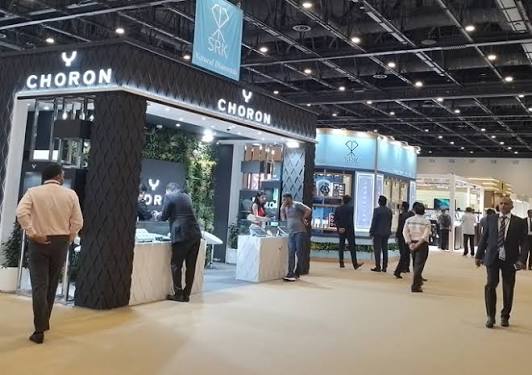
Jewellery manufacturers, gemstone suppliers, wholesalers, retailers and technology companies will gather at Dubai Exhibition Centre from 27 to 29 October 2026 when Jewellery, Gem & Technology in Dubai returns for its fifth edition.
Known as JGTD, the international B2B sourcing fair moves to the expanded Dubai Exhibition Centre at Expo City for the first time.
The 2026 event will occupy North Halls N21 and N23 and bring together more than 400 exhibitors from at least 26 countries and regions.
Recent show figures also record more than 5,600 unique buyers from 102 countries and regions, making JGTD a genuinely international jewellery marketplace rather than simply a local retail exhibition.
The fair covers the jewellery industry’s complete commercial chain.
Finished jewellery.
Diamonds.
Coloured gemstones.
Pearls.
Lab-grown diamonds.
Semi-finished jewellery.
Components.
Manufacturing equipment.
Laboratory technology.
Packaging.
Displays.
Digital solutions.
For businesses operating within the jewellery trade in Dubai, the show creates three days of concentrated access to suppliers and buyers serving the Middle East, India, Africa, Europe and other international markets.
Dubai Is a Natural Jewellery Trading Hub
Jewellery depends heavily on international trade.
A stone can be mined in one country.
Cut in another.
Mounted somewhere else.
Sold through a retailer thousands of kilometres away.
Dubai’s location makes it particularly well suited to connecting these markets.
India lies nearby.
African producing countries have strong commercial connections.
European buyers can reach the city relatively easily.
Gulf consumers represent an important luxury market.
The emirate also has a well-established gold and precious-metals trading ecosystem.
JGTD builds directly on those advantages.
The Show Is Strictly Business-to-Business
JGTD differs from consumer jewellery exhibitions.
Its core purpose is sourcing.
A retailer may attend to find collections for future seasons.
A manufacturer can identify gemstone suppliers.
A wholesaler may search for international distribution relationships.
Technology companies demonstrate equipment to jewellery factories.
Laboratories meet traders requiring testing and certification.
The focus is therefore not simply admiring jewellery.
It is doing business around jewellery.
Finished Jewellery Remains the Most Visible Category
Fine jewellery attracts immediate attention.
Gold.
Diamonds.
Coloured gemstones.
Wedding jewellery.
Silver.
Men’s jewellery.
Contemporary design.
The variety of international exhibitors gives retailers an opportunity to compare different design traditions.
Indian jewellery may emphasise distinctive craftsmanship.
Italian manufacturers have different design strengths.
Middle Eastern collections respond to regional preferences.
Global sourcing allows retailers to build assortments that serve increasingly international customers.
Gold Remains Deeply Connected With Regional Demand
Gold has cultural, financial and commercial significance across the Middle East and South Asia.
Consumers buy jewellery for weddings.
Gifts.
Celebrations.
Investment.
Personal use.
Price movements can influence demand significantly because the underlying metal represents a large portion of product value.
Retailers therefore operate partly as fashion businesses and partly within commodity markets.
Managing inventory requires attention to both.
Diamonds Are Experiencing Structural Change
The diamond industry is undergoing one of its most significant transitions in decades.
Natural diamonds now compete increasingly with lab-grown stones.
Consumer awareness has expanded.
Prices have changed.
Retailers need clear product positioning.
Some customers prioritise the natural origin and rarity of mined diamonds.
Others prefer the affordability of lab-grown alternatives.
The important principle is transparency.
Consumers should understand exactly what they are buying.
Lab-Grown Diamonds Have Created a New Market
Lab-grown diamonds possess essentially the same fundamental crystal material as natural diamonds but are produced through technological processes rather than geological formation.
Production has expanded quickly.
Prices have generally become much lower than comparable natural stones.
This makes larger diamond jewellery accessible to more customers.
The category also creates challenges.
Rapid price changes can affect inventory values.
Retailers need staff capable of explaining the difference accurately.
Testing laboratories need technologies to distinguish stones.
JGTD includes lab-grown diamonds within its dedicated sourcing categories because the segment is now too significant to treat as marginal.
Natural Diamonds Are Emphasising Rarity and Provenance
As lab-grown products expand, the natural diamond sector increasingly emphasises origin, rarity and story.
Where was the diamond mined?
Was sourcing responsible?
Can its journey be traced?
Luxury markets often value scarcity.
Provenance can therefore become part of the product.
Technology may support traceability, although systems need reliable data from the beginning of the chain.
A digital record is only as trustworthy as the information entered into it.
Coloured Gemstones Offer Enormous Variety
Rubies.
Sapphires.
Emeralds.
Tourmalines.
Spinels.
Opals.
Aquamarines.
The coloured-stone market is extraordinarily diverse.
Value depends on several characteristics.
Colour.
Clarity.
Size.
Origin.
Treatment.
Rarity.
Two stones of the same species and weight can have very different values.
Professional buyers therefore need specialist knowledge.
Trade fairs allow stones to be examined physically, which remains essential.
Gemstone Treatments Need Disclosure
Many gemstones are treated to improve appearance.
Heat treatment is common for some materials.
Other methods can be more controversial.
The ethical issue is not necessarily whether treatment exists.
It is whether it is disclosed.
A buyer needs accurate information to determine value.
Laboratories and certification services therefore play an important role in market confidence.
Pearls Remain Important to Gulf Jewellery Culture
Pearls have historical significance in the Gulf.
Before oil transformed the regional economy, pearling was an important commercial activity.
Modern pearl markets include cultured varieties from several regions.
Akoya.
South Sea.
Tahitian.
Freshwater.
Quality varies according to lustre, surface, shape and other characteristics.
Contemporary designers continue finding new ways to use pearls beyond traditional strands.
Jewellery Manufacturing Is Becoming More Technological
A finished ring may appear handmade.
Its production can involve sophisticated digital tools.
Computer-aided design.
3D modelling.
Wax or resin printing.
Laser cutting.
Laser welding.
Casting systems.
CNC equipment.
Digital measurement.
Technology allows designers to create complex geometry and produce prototypes quickly.
Traditional craftsmanship remains important, particularly during finishing and stone setting.
The modern jewellery workshop increasingly combines both.
3D Printing Has Changed Product Development
Designers can create a ring digitally and produce a physical model rapidly.
This reduces development time.
Customers can approve designs before precious materials are used.
Custom jewellery becomes easier.
Multiple variations can be tested.
3D printing is particularly valuable in jewellery because finished products are small while geometric complexity can be high.
Additive manufacturing allows forms difficult to create through older modelling techniques.
CAD Enables Mass Customisation
Computer-aided design allows manufacturers to adapt products efficiently.
Ring size changes.
Stone dimensions change.
Initials can be added.
Design elements can be modified.
This supports personalised jewellery without requiring every piece to begin completely from scratch.
Retailers increasingly offer customisation because consumers value products that feel unique.
Laser Technology Has Become Common
Lasers are used for cutting.
Welding.
Engraving.
Marking.
Repairs.
Precision is one major advantage.
Work can be completed close to heat-sensitive areas with greater control than certain traditional methods.
Technology companies participating in JGTD therefore serve both industrial manufacturers and individual workshops.
Jewellery Laboratories Support Market Trust
A valuable gemstone may require independent evaluation.
Laboratories assess characteristics.
Issue reports.
Detect treatments.
Identify synthetic materials.
This is particularly important as production technologies become more sophisticated.
The ability to distinguish natural, treated and laboratory-grown materials protects professional buyers and consumers.
Laboratory technology is consequently one of JGTD’s dedicated exhibition sectors.
AI Is Beginning to Influence Jewellery Design
Generative AI can help designers explore forms rapidly.
Patterns.
Settings.
Concept imagery.
Variations.
The technology can accelerate brainstorming.
It does not automatically understand manufacturability.
A visually impressive AI concept may have weak structural support or impossible stone settings.
Experienced designers need to convert creative output into products that can actually be manufactured and worn.
AI Can Also Support Retail Personalisation
Jewellery purchases are highly personal.
Retail technology can analyse browsing and customer preferences.
Digital tools may recommend products.
Virtual try-on technology allows shoppers to visualise pieces.
AI can assist sales teams with product discovery.
But luxury retail still depends strongly on human interaction.
A major purchase often involves trust, explanation and emotion.
Technology should support rather than remove that relationship.
Augmented Reality Helps Online Jewellery Sales
Selling jewellery online has particular challenges because scale and appearance are difficult to judge from photographs.
AR can place a virtual ring, watch or necklace onto a live image.
The technology will not perfectly reproduce every material property.
It helps customers understand proportions.
Online luxury retail increasingly combines virtual tools with physical appointments and flexible returns.
The boundary between digital and store experiences is becoming less clear.
Packaging Is Part of the Luxury Experience
Jewellery packaging protects products.
It also communicates value.
Boxes.
Bags.
Display systems.
Lighting.
Retail fixtures.
A premium product presented poorly can feel less valuable.
Sustainable packaging adds another requirement.
Brands want luxury presentation without unnecessary materials.
Packaging suppliers at JGTD serve an important role despite not producing the jewellery itself.
Retail Displays Need Both Security and Beauty
Jewellery stores need strong visual presentation.
They also manage extremely high-value inventory.
Display cases require security.
Lighting needs accurate colour rendering.
Layouts influence customer movement.
Technology may connect cases with sensors.
Retail design therefore combines aesthetics, psychology and loss prevention.
Jewellery Security Extends Through the Supply Chain
High-value goods create obvious security needs.
Transportation.
Storage.
Exhibitions.
Retail.
Insurance.
Digital inventory records.
Businesses need chain-of-custody procedures.
International shipments require specialist logistics.
Security is part of operating economics.
A company trading small products worth thousands of dollars per gram needs completely different controls from ordinary consumer retail.
Blockchain Has Been Proposed for Provenance
Distributed ledgers have been used in projects aimed at tracking diamonds and other precious products.
The concept is attractive.
Create a record that follows an item from source to retailer.
However, blockchain cannot independently verify physical reality.
Someone still needs to establish that the stone linked to the record is actually the stone being described.
Technology can strengthen traceability when combined with reliable verification.
It cannot replace verification.
Responsible Sourcing Is Increasingly Important
Consumers and corporate buyers ask more questions about supply chains.
Mining conditions.
Environmental impact.
Labour.
Conflict financing.
Origin.
Industry initiatives aim to improve transparency.
Responsible sourcing is complex because jewellery supply chains can include many intermediaries.
Retailers increasingly need documentation capable of supporting claims.
Trust can become a commercial differentiator.
Recycled Gold Is Growing
Gold can be melted and reused repeatedly without losing its fundamental material characteristics.
This makes recycling particularly significant.
Old jewellery.
Industrial scrap.
Investment products.
All can re-enter the supply chain.
Brands increasingly highlight recycled gold as part of sustainability strategies.
However, sourcing claims require proper chain-of-custody systems if companies want to communicate specific environmental credentials.
Luxury Consumers Are Changing
Younger consumers may have different priorities from previous generations.
Some want recognised brands.
Others value independent designers.
Personalisation matters.
Ethical sourcing matters to certain buyers.
Digital discovery is increasingly important.
Customers may first encounter a jeweller through social media before visiting a store.
Luxury companies therefore need traditional craftsmanship and modern digital marketing simultaneously.
Social Media Can Launch Independent Designers
Instagram, TikTok and other platforms allow small jewellery brands to reach international audiences.
A designer no longer needs a large traditional advertising budget to become visible.
Strong photography and distinctive design can create demand.
Scaling production becomes the next challenge.
A small workshop may suddenly need manufacturers, gemstone suppliers and international logistics.
B2B events such as JGTD can help businesses build that infrastructure.
Wedding Jewellery Remains a Major Commercial Market
Weddings generate significant jewellery demand across many cultures.
Engagement rings.
Gold sets.
Diamond jewellery.
Gifts.
Traditional pieces.
The Gulf, India and South Asia contain particularly important wedding markets.
Retailers need inventory appropriate to different customer groups.
International sourcing helps build variety.
Seasonal planning is also important because wedding demand can concentrate during particular periods.
Men’s Jewellery Is Expanding
Men increasingly purchase jewellery beyond traditional watches and wedding rings.
Bracelets.
Chains.
Rings.
Brooches.
Precious-metal accessories.
Fashion trends and celebrity influence support the category.
Brands are developing collections specifically for male customers rather than treating them as a secondary market.
This adds another growth segment for retailers.
The Middle East Luxury Market Attracts International Brands
Strong purchasing power and tourism make the Gulf attractive to jewellery companies.
International visitors shop in the region.
Luxury malls create premium retail environments.
Residents come from diverse cultural backgrounds.
Dubai also hosts significant wholesale trade.
For international manufacturers, JGTD offers access to both regional consumption and wider distribution networks.
400 Exhibitors Create Genuine Sourcing Depth
Dubai Exhibition Centre expects more than 400 exhibitors from at least 26 countries at the 2026 fair.
Official industry figures for the previous edition record over 5,600 unique buyers from 102 countries and regions.
This international mix is important.
Jewellery trading depends heavily on relationships.
Buyers want trusted suppliers.
Suppliers want reliable customers.
Face-to-face inspection remains essential for many high-value products.
Moving to DEC Gives JGTD More Room to Grow
The 2026 edition takes place at Dubai Exhibition Centre at Expo City for the first time.
The new venue’s expanded capacity supports larger international events as Dubai’s exhibition industry continues growing.
For JGTD, the move creates a setting capable of bringing manufacturing, gems, finished jewellery and technology together at greater scale.
The fair occupies North Halls N21 and N23.
Three Days Where Beauty Becomes International Trade
Jewellery is an emotional product.
The business behind it is technical and global.
A ring may involve a mine, cutting facility, laboratory, designer, manufacturer, logistics company, wholesaler and retailer before reaching the final customer.
JGTD brings many of those stages into one marketplace.
From 27 to 29 October 2026, Dubai Exhibition Centre will host manufacturers, gemstone suppliers, laboratories, technology companies and thousands of professional buyers.
Visitors will see beautiful objects.
The deeper purpose is commercial.
Source.
Verify.
Negotiate.
Connect.
Build trust.
In an industry where individual products can carry extraordinary value, those relationships are as important as the jewellery itself.