


Seatrade Maritime UAE 2027 Brings 10,000+ Shipping and Logistics Professionals to Dubai
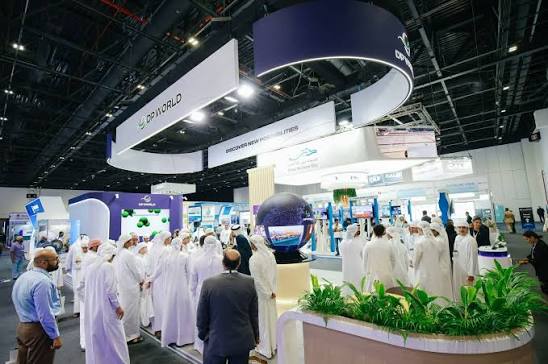
Shipowners, port operators, maritime technology companies, logistics providers and industry leaders will gather at Dubai World Trade Centre from 4 to 6 May 2027 when Seatrade Maritime UAE returns for three days of international maritime business.
Previously known as Seatrade Maritime Logistics Middle East, the event has adopted the Seatrade Maritime UAE name to reflect the country’s increasingly important position within global shipping and logistics.
The 2027 edition is expected to bring together more than 10,000 attendees from over 90 countries, with 150-plus speakers and a major international exhibition of maritime suppliers.
The event takes place in Za’abeel Halls 5 and 6 and combines the trade show with conferences and structured networking.
For an industry responsible for moving the majority of world trade, the issues being discussed are substantial.
Decarbonisation.
Alternative fuels.
Ship technology.
Digitalisation.
Artificial intelligence.
Cybersecurity.
Ports.
Crew welfare.
Offshore operations.
Supply-chain resilience.
These are not isolated maritime topics.
They influence the cost and reliability of global commerce.
Shipping Makes Global Trade Possible
Modern consumers rarely think about maritime transport.
They buy electronics manufactured in Asia.
Food produced on another continent.
Cars assembled using components from multiple countries.
Clothing made thousands of kilometres away.
Most international goods spend at least part of their journey on ships.
Container vessels move manufactured products.
Bulk carriers transport commodities.
Tankers move energy products.
Specialised ships serve offshore industries.
Without maritime transport, modern globalisation would be impossible.
Seatrade Maritime UAE brings together the businesses responsible for keeping that system operating.
The UAE Is a Natural Maritime Hub
The country’s geographic position gives it a major advantage.
It sits between Asian, European and African trade routes.
Ports connect regional and global markets.
Logistics infrastructure supports transshipment.
Free zones attract international companies.
Airports and road networks integrate with maritime transport.
For companies operating in Dubai and the wider UAE, shipping is therefore not simply an external industry.
It is part of the region’s economic infrastructure.
Seatrade’s decision to place “UAE” directly in the event name reflects this wider role.
Ports Are Becoming Intelligent Logistics Platforms
A modern port is far more than a place where ships load and unload cargo.
Terminals use automated cranes.
Software schedules vessel calls.
Containers are tracked.
Customs systems exchange digital information.
Trucks need coordinated access.
Warehouses connect with the wider supply chain.
The best ports reduce waiting.
Time matters enormously.
A ship sitting idle costs money.
Cargo delayed at a terminal disrupts customers.
Technology that improves port efficiency therefore creates value across the entire logistics chain.
Port Automation Continues Expanding
Automated guided vehicles can move containers.
Remote-controlled cranes reduce certain operational risks.
AI can help optimise yard planning.
Digital systems schedule equipment.
Computer vision supports safety and monitoring.
Automation can improve throughput, but ports remain complex physical environments.
Technology must operate reliably around heavy equipment, workers and constantly changing conditions.
The objective is not automation for its own sake.
It is safer and more efficient cargo movement.
AI Is Entering Maritime Operations
Artificial intelligence is beginning to influence shipping in several ways.
Route optimisation can consider weather and fuel consumption.
Predictive maintenance systems analyse machinery.
Ports forecast congestion.
Commercial teams analyse freight markets.
Computer vision can support safety.
Documentation can be processed automatically.
But maritime operations generate imperfect data.
Ships operate globally.
Connectivity varies.
Equipment may remain in service for decades.
AI needs to work within these real operational constraints.
Digital Twins Can Improve Vessel Management
A digital twin is a virtual representation of a physical asset.
For ships, this could combine information about engines, equipment, fuel consumption and operating conditions.
Engineers can monitor performance.
Maintenance needs may be predicted.
Operational changes can be tested digitally.
Similar concepts apply to ports.
Digital twins can model traffic, infrastructure and terminal operations.
The technology is promising because maritime assets are expensive.
Small efficiency improvements can produce substantial savings over many years.
Cybersecurity Has Become a Maritime Risk
Ships and ports increasingly depend on connected systems.
Navigation.
Engine monitoring.
Cargo systems.
Communications.
Terminal operations.
Booking platforms.
Corporate networks.
This creates cybersecurity vulnerabilities.
An attack on a shipping company can interrupt cargo movement.
A compromised port platform can create operational disruption.
Ransomware has already affected major maritime businesses globally.
Maritime organisations therefore need to treat cybersecurity as an operational risk, not only an IT problem.
Ships Have Long Lifecycles
A commercial vessel may operate for decades.
This creates a technology challenge.
Ships designed before today’s cybersecurity or environmental requirements may still be in service many years later.
Owners need to retrofit equipment.
Digital systems may be added gradually.
Engines may need efficiency improvements.
Alternative-fuel readiness becomes important.
The industry cannot replace the global fleet overnight.
Transition happens through both newbuilding and upgrades.
Decarbonisation Is the Industry’s Biggest Long-Term Challenge
International shipping produces significant greenhouse-gas emissions.
Reducing them is difficult.
Ships carry enormous cargo loads over long distances.
They require energy-dense fuels.
Battery-electric systems are not practical for every vessel and route.
The industry is therefore considering several alternative fuels.
Methanol.
Ammonia.
Hydrogen.
Biofuels.
LNG as a transitional option in certain strategies.
There is no universal answer yet.
Shipowners face difficult investment decisions because vessels ordered today may still operate when environmental rules become much stricter.
Methanol Is Attracting Significant Interest
Methanol has emerged as one of the leading alternative marine-fuel options.
Dual-fuel ships capable of using methanol have already been ordered.
The fuel can be easier to handle than certain alternatives.
Its environmental performance depends heavily on how it is produced.
Conventional fossil-derived methanol does not deliver the same benefits as renewable versions.
Building sufficient low-carbon supply is therefore a major challenge.
Fuel availability matters as much as engine technology.
Ammonia Could Serve Deep-Sea Shipping
Ammonia contains no carbon within the molecule, making it interesting for shipping decarbonisation.
It can potentially be produced using renewable hydrogen.
But ammonia is toxic.
Handling requirements are strict.
Engines and fuel systems require development.
Ports need appropriate infrastructure.
Crew training is essential.
The industry needs to understand safety at scale before widespread adoption.
This demonstrates why fuel transitions involve complete ecosystems rather than simply changing what goes into a ship’s tank.
LNG Remains Part of the Debate
Liquefied natural gas can reduce certain air pollutants and may reduce some carbon emissions compared with conventional marine fuels.
However, methane leakage can reduce climate benefits.
This makes LNG controversial within long-term decarbonisation strategies.
Shipowners need to consider asset lifespan.
A vessel ordered now may operate well beyond 2040.
Investment decisions need to account for future regulation and fuel availability.
Energy Efficiency Can Reduce Emissions Immediately
Alternative fuels receive attention, but ship efficiency matters now.
Hull design can reduce resistance.
Propeller improvements save fuel.
Weather routing avoids inefficient conditions.
Slow steaming reduces consumption.
Wind-assist technology can supplement engines.
Hull coatings reduce drag.
Digital optimisation improves operations.
A vessel burning less fuel reduces both operating cost and emissions regardless of fuel type.
This makes efficiency one of the most practical near-term strategies.
Wind Is Returning to Commercial Shipping
Shipping began with wind power.
Modern technology is bringing it back in a very different form.
Rotor sails.
Rigid wings.
Automated kite systems.
These technologies can supplement engine propulsion and reduce fuel consumption under appropriate conditions.
They do not turn cargo ships into traditional sailing vessels.
Instead, they use wind as an additional energy source.
For certain routes, the savings may become commercially attractive.
Crew Remains at the Centre of Shipping
Technology tends to dominate maritime discussions.
Ships still depend on people.
Seafarers can spend months away from home.
Fatigue affects safety.
Mental health matters.
Training is critical.
New fuels introduce new hazards.
Digital systems require new skills.
The maritime transition therefore depends heavily on workforce development.
A sophisticated vessel cannot operate safely without competent crew.
Recruitment Could Become a Major Challenge
The shipping industry needs engineers, officers and specialist technical staff.
Younger workers have many alternative careers.
Long periods away from family can make seafaring less attractive.
Companies therefore need to improve working conditions, training and career development.
Automation may change roles but is unlikely to eliminate the need for skilled maritime professionals.
Women Remain Underrepresented at Sea
Shipping has historically been male-dominated, particularly in seagoing roles.
The industry increasingly wants to broaden its talent pool.
That requires more than recruitment campaigns.
Shipboard environments need to support diverse crews.
Career progression must be credible.
Companies need professional workplace cultures.
An industry facing talent shortages has practical reasons to become more inclusive.
The Offshore Industry Adds Another Dimension
Seatrade Maritime UAE also serves companies operating offshore.
Energy projects need specialised support vessels.
Offshore wind creates new maritime demand internationally.
Oil and gas continue requiring marine logistics.
Subsea infrastructure needs inspection and maintenance.
This creates markets for vessel operators, equipment companies and specialist service providers.
Shipyards Need to Modernise
Shipbuilding and repair yards are becoming more digital.
Robotic welding.
3D modelling.
Automated cutting.
Digital project management.
Advanced coatings.
Predictive maintenance.
Modern shipyards compete not only on labour costs but on quality, speed and technical capability.
The Gulf’s maritime sector includes major repair and shipyard operations that can serve vessels travelling through regional trade routes.
Retrofit Could Become a Huge Market
As environmental rules tighten, existing vessels will need upgrades.
Energy-saving devices.
New propulsion technologies.
Digital monitoring.
Emission-control equipment.
Alternative-fuel conversions in selected cases.
This creates significant opportunities for shipyards and marine-equipment suppliers.
Retrofitting can sometimes extend vessel life while improving efficiency without requiring complete replacement.
Supply Chains Need Resilience
Recent geopolitical events have shown how quickly maritime routes can be disrupted.
Conflict.
Canal blockages.
Port congestion.
Extreme weather.
Labour disputes.
Companies increasingly recognise that the cheapest supply chain may not always be the most resilient.
Alternative routes.
Multiple suppliers.
Better inventory strategies.
Improved tracking.
All can reduce risk.
Shipping therefore sits at the centre of corporate resilience planning.
The Conference Brings 150+ Speakers Together
Seatrade Maritime UAE expects more than 150 speakers in 2027.
Industry leaders can discuss technology, regulation, fuels, investment, crew and market trends.
This educational component matters because the industry faces strategic decisions with long-term consequences.
A shipowner selecting a fuel today needs to think decades ahead.
A port investing in infrastructure needs to understand future vessel requirements.
Regulators need to balance environmental goals with practical feasibility.
No company can answer these questions alone.
10,000+ Attendees Create a Regional Maritime Marketplace
The 2027 event expects more than 10,000 attendees from 90-plus countries.
Shipping is inherently international.
A vessel may be owned in one country.
Registered in another.
Managed from another.
Crewed internationally.
Financed by banks elsewhere.
Serving ports across several continents.
A maritime exhibition therefore needs global participation to reflect the industry it serves.
Three Days Focused on Moving the Global Economy
Most people will never attend a maritime trade show.
They depend on its industry every day.
The laptop on a desk.
The car outside.
Food on supermarket shelves.
Construction materials.
Fuel.
Industrial equipment.
Much of it moved by sea.
From 4 to 6 May 2027, Za’abeel Halls 5 and 6 at Dubai World Trade Centre will bring together the organisations responsible for keeping those flows moving.
The industry’s challenge is significant.
Move more cargo.
Use less fuel.
Cut emissions.
Improve safety.
Protect digital systems.
Support crews.
Adapt to geopolitical disruption.
And remain economically competitive throughout the transition.
Seatrade Maritime UAE 2027 is where many of the companies solving those problems will meet.