


Middle East Energy 2027 Moves to Expo City With 1,900+ Global Energy Exhibitors
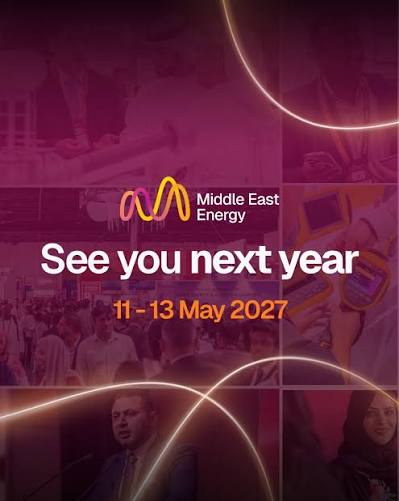
The global power and electricity industry will gather at Dubai Exhibition Centre, Expo City, from 11 to 13 May 2027 when Middle East Energy returns with one of its largest editions yet.
More than 35,000 attendees, 1,900 exhibitors, participants from over 150 countries and more than 250 speakers are expected at the three-day event.
Formerly associated with Dubai World Trade Centre, Middle East Energy is moving to the expanded Dubai Exhibition Centre for 2027 as demand for exhibition space and specialist energy sectors continues to grow.
The event covers the complete electricity value chain, from generating power and transporting it through national grids to managing consumption and storing energy for later use.
For utilities, engineering companies, contractors, manufacturers, developers, investors and government authorities, Middle East Energy is essentially a marketplace for the infrastructure required to keep modern economies powered.
Four Sectors Cover the Complete Power Journey
The 2027 exhibition has been reorganised into four main sectors: Generation, Transmission & Distribution, Efficiency and Storage.
The structure follows electricity from the point where it is produced to the moment it is used.
Generation covers the technologies required to create electricity, including conventional systems, backup power and renewable technologies.
Transmission & Distribution focuses on moving electricity safely between generation sites, substations, businesses and consumers.
Efficiency examines how organisations can reduce unnecessary consumption.
Storage focuses on technologies capable of keeping electricity available when demand and generation do not occur at the same time.
This integrated approach reflects how the energy industry itself is changing.
Utilities can no longer think about generation separately from networks, storage and consumption.
Every part of the system increasingly affects the others.
Electricity Demand Is Growing Rapidly
Electricity is becoming even more important to the global economy.
Population growth increases demand.
Cities expand.
Data centres consume enormous amounts of electricity.
Electric vehicles shift transportation demand toward power grids.
Industrial development requires additional capacity.
Air-conditioning remains a major requirement across the Gulf.
Artificial intelligence is creating another major source of consumption through computing infrastructure.
The result is a challenge for utilities.
They need to generate more electricity while simultaneously reducing emissions and improving reliability.
This makes power infrastructure one of the most important investment areas of the coming decades.
The Grid Is Becoming More Complicated
Traditional electricity systems were relatively straightforward.
Large power plants generated electricity.
High-voltage transmission networks moved it across countries.
Distribution networks delivered it to homes and businesses.
Renewable energy changes this model.
Solar farms may generate strongly during daylight hours.
Wind production changes according to weather.
Homes can become small electricity producers through rooftop solar.
Battery systems can both consume and return power.
Electric vehicles create large new loads.
Managing this environment requires smarter grids.
Transmission and Distribution Need Massive Investment
Electricity cannot create economic value if it cannot reach the places where people need it.
That makes transmission and distribution infrastructure critical.
Transformers.
Switchgear.
Substations.
Cables.
Grid monitoring.
Protection systems.
Digital controls.
All of these technologies form part of the network.
Middle East Energy gives utilities and infrastructure companies attending from Dubai and across the wider region access to hundreds of suppliers working in these categories.
Grid expansion is particularly important because renewable-energy projects are often built far from major cities.
New generation capacity may require completely new transmission connections.
Solar Energy Remains Central to the Gulf
The Middle East has exceptional solar resources.
Large solar projects are already operating across the UAE and other regional markets.
The economics of solar generation have improved significantly over time.
But adding more solar creates additional challenges.
Production rises during daylight hours.
Demand may remain high after sunset.
Without storage or flexible generation, supply and demand can become difficult to balance.
This is why solar development increasingly needs to be discussed together with batteries and grid modernisation.
Middle East Energy reflects that relationship through the co-located Intersolar Middle East platform.
Battery Storage Is Moving Into the Mainstream
Energy storage is one of the most important areas of the 2027 show.
Battery systems can absorb electricity when supply is high and return it later.
This can help stabilise electricity networks.
It can allow larger quantities of solar and wind energy onto the grid.
Commercial businesses can use storage for resilience.
Critical facilities can maintain power during disruptions.
The technology is also evolving quickly.
Lithium-ion remains dominant, but companies are exploring alternative chemistries and longer-duration storage technologies.
The real question is increasingly economic.
Which storage system provides the right combination of cost, safety, lifespan and performance for a particular application?
The Battery Show Adds a Dedicated Platform
The Battery Show Middle East runs alongside the main exhibition.
This gives battery manufacturers, component suppliers, engineering companies and potential buyers a more concentrated environment.
Battery technology is relevant far beyond electricity grids.
Electric vehicles depend on it.
Industrial equipment is becoming electrified.
Backup power increasingly uses batteries.
Data centres need resilient systems.
Battery recycling is becoming another major industry.
As deployment expands, supply chains and end-of-life management will become increasingly important.
Data Centres Are Transforming Energy Planning
The growth of cloud computing and AI has created unprecedented interest in data-centre electricity consumption.
A large AI-focused data centre can require enormous power capacity.
These facilities also need reliable electricity every second of the day.
Even short interruptions can be costly.
This creates demand for robust grids, backup power, storage and renewable generation.
Energy infrastructure is therefore becoming directly connected with the digital economy.
Future technology hubs may be determined partly by which locations can provide sufficient reliable electricity.
Critical and Backup Power Remain Essential
Renewables attract attention, but businesses still need reliability.
Hospitals cannot simply shut down during a power interruption.
Airports need continuous systems.
Data centres need redundancy.
Factories may lose significant production if electricity fails.
Backup generators, uninterruptible power supplies and battery systems therefore remain major parts of the industry.
The objective is increasingly to combine resilience with improved environmental performance.
Energy Efficiency May Be the Cheapest Solution
Producing more electricity is not always the best response to increasing demand.
Reducing unnecessary consumption can sometimes be cheaper.
Buildings can improve insulation.
Lighting can use smart controls.
Cooling systems can operate more efficiently.
Factories can replace inefficient motors.
Energy-management software can identify waste.
Smart meters provide better information.
The 2027 Efficiency sector brings these solutions together.
Every unit of electricity saved reduces the amount that needs to be generated, transmitted and stored.
Cooling Is Especially Important in the Gulf
Air-conditioning represents a significant share of electricity demand across Gulf cities.
Improving cooling efficiency can therefore deliver major savings.
Modern chillers use less energy.
Building automation can adjust cooling based on occupancy.
District cooling can serve large developments more efficiently.
Predictive maintenance can prevent equipment from operating poorly.
For developers and facilities managers, energy efficiency is no longer only an environmental objective.
It directly affects operating expenses.
Digitalisation Is Changing Utilities
Power companies are becoming technology companies.
Sensors monitor networks.
Smart meters provide detailed consumption information.
AI can forecast demand.
Digital twins can model infrastructure.
Predictive systems can identify equipment likely to fail.
Control rooms receive information from thousands of connected devices.
The benefits can be substantial.
Outages may be identified faster.
Maintenance becomes more proactive.
Networks can handle more complex energy flows.
But digitalisation also creates cybersecurity risk.
A connected grid needs strong protection.
Five Conferences Add Technical Depth
Middle East Energy 2027 includes five specialist conference tracks addressing areas such as leadership, technical excellence, renewables, storage and battery technology.
These programmes bring utilities, engineers, regulators and project developers together.
The conference environment is important because purchasing equipment is only one part of energy development.
Projects need financing.
Regulations matter.
Technical standards need agreement.
Grids require long-term planning.
The industry needs places where strategic and engineering discussions can happen alongside commercial sourcing.
Energy Club Connects Buyers With Suppliers
The Energy Club provides targeted matchmaking between senior buyers, investors and exhibitors.
This can make a major difference at an exhibition containing nearly 2,000 suppliers.
A procurement executive may not have time to explore every stand.
Structured meetings allow participants to focus on relevant technologies and live projects.
Suppliers also benefit because they can meet organisations with genuine purchasing requirements.
The objective is to turn exhibition traffic into actual business.
Expo City Becomes a Bigger Energy Hub
The move to Dubai Exhibition Centre is strategically important.
Expo City is increasingly hosting some of the emirate’s largest professional exhibitions.
The larger venue gives Middle East Energy room to expand its specialist sectors and create clearer product zones.
For visitors, it also places solar, batteries, grid technology, generation and efficiency within one large connected environment.
Three Days Focused on Keeping the World Powered
Energy infrastructure is easy to ignore when it works.
People switch on lights.
Factories operate.
Phones charge.
Cooling systems run.
Data centres process information.
The complexity becomes visible only when electricity is unavailable.
Middle East Energy exists for the companies ensuring that does not happen.
From 11 to 13 May 2027, thousands of utilities, engineers, manufacturers, investors and policymakers will gather at Expo City to discuss how future power systems should work.
They need to generate more electricity.
Move it across stronger networks.
Use it more efficiently.
Store it when necessary.
Integrate more renewable energy.
Protect critical infrastructure.
And do all of this while electricity demand continues growing.
That makes Middle East Energy 2027 not simply another industrial exhibition, but a meeting point for one of the systems on which almost every other industry depends.