


AEEDC Dubai 2027 Brings the Global Dental Industry Together for Three Days of Innovation
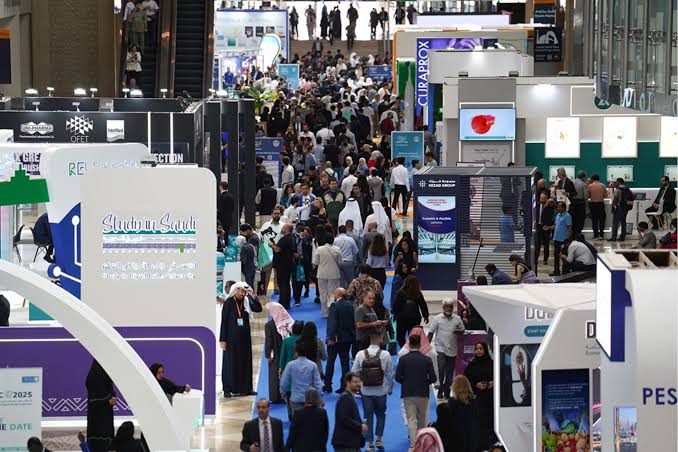
Dentists, oral healthcare specialists, manufacturers, distributors and researchers from around the world will gather at Dubai World Trade Centre from 19 to 21 January 2027 when AEEDC Dubai returns for another edition of what organisers describe as the world’s largest annual scientific dental conference and exhibition.
The three-day event combines a major international dental exhibition with an extensive scientific programme, specialist conferences, educational sessions and the Dental Business Hub.
For dental professionals, AEEDC provides an opportunity to examine new equipment, learn about changes in clinical practice and meet specialists working across different areas of dentistry.
For manufacturers and distributors, it functions as a major commercial marketplace connecting global dental brands with buyers across the Middle East, Africa, Asia and beyond.
The 2027 exhibition will occupy a large part of Dubai World Trade Centre, including Halls 1 to 8, Sheikh Saeed Halls 1 to 3 and Trade Centre Arena.
That scale reflects just how large modern dentistry has become.
Dentistry Is Becoming Increasingly Digital
The dental clinic is changing rapidly.
Traditional techniques remain important, but digital systems increasingly influence diagnosis, treatment planning, manufacturing and patient communication.
Digital scanners can capture detailed models of a patient’s mouth without conventional impression materials.
CAD/CAM systems allow clinicians and laboratories to design restorations digitally.
Three-dimensional printing is being used for models, surgical guides and certain dental appliances.
Digital imaging has improved diagnosis.
Software can connect multiple stages of treatment into one workflow.
These technologies will be among the major areas of interest when professionals arrive in Dubai for AEEDC 2027.
The important question is no longer whether dentistry will become digital.
It is how effectively practices can integrate the technology.
Intraoral Scanners Are Changing Clinical Workflows
One of the most visible changes involves intraoral scanning.
Conventional dental impressions can be uncomfortable for patients and require physical materials.
Digital scanners capture the shape of teeth and surrounding structures directly.
The result can be transferred electronically to a laboratory or used within treatment-planning software.
This can speed up workflows.
Digital records are easier to store.
Clinicians can show patients three-dimensional images.
But equipment selection matters.
Accuracy, speed, software compatibility, support and cost all differ between systems.
AEEDC allows dentists to compare scanners directly rather than relying only on marketing material.
3D Printing Is Expanding in Dentistry
Dentistry has become one of the most practical applications of 3D printing.
Dental laboratories and clinics can produce models rapidly.
Surgical guides can help implant placement.
Orthodontic workflows may use printed models.
Temporary restorations and other applications continue developing.
The advantage comes from customisation.
Every patient’s mouth is different.
Digital manufacturing is particularly powerful when each product needs to be slightly different from the previous one.
However, materials need appropriate regulatory approval and clinical evidence.
Speed alone is not enough.
Dental products need to be safe and predictable.
Artificial Intelligence Is Entering Diagnosis
AI is another growing area.
Algorithms can assist with the interpretation of dental images.
Software may highlight areas that deserve closer examination.
Administrative applications can support scheduling or documentation.
Digital treatment-planning platforms can use automated analysis.
The technology could help clinicians manage information more efficiently.
But dentistry illustrates why AI needs human oversight.
A software system should support clinical judgement rather than automatically replace it.
The dentist remains responsible for diagnosis and treatment.
Implant Dentistry Continues to Advance
Dental implants remain a major part of modern restorative dentistry.
Planning is becoming increasingly digital.
CBCT imaging allows clinicians to understand bone anatomy in three dimensions.
Digital scans can be combined with imaging.
Surgical guides can support precise placement.
Implant surfaces and materials continue evolving.
The objective is better predictability and long-term results.
AEEDC brings implant manufacturers, surgical-instrument companies and digital-planning providers together, allowing specialists to compare complete workflows rather than only individual products.
Orthodontics Gets Dedicated Scientific Attention
AEEDC Dubai World Orthodontic Conference will take place on 19 and 20 January alongside the main event.
Orthodontics has changed substantially over the past decade.
Traditional braces remain widely used.
Clear aligners have expanded rapidly.
Digital treatment planning allows clinicians to model tooth movement before treatment begins.
Remote-monitoring tools can reduce certain clinic visits.
Three-dimensional imaging can support complex cases.
But technology does not remove the need for strong orthodontic knowledge.
Moving teeth involves biology.
Poor planning can create complications regardless of how sophisticated the software looks.
Oral and Maxillofacial Surgery Has Its Own Programme
The 2027 programme also includes the AEEDC Dubai World Oral & Maxillofacial Surgery Conference.
This specialty covers complex procedures involving the mouth, jaws and face.
Surgeons may treat facial trauma.
Jaw abnormalities.
Tumours.
Complex dental extractions.
Reconstructive conditions.
Advanced imaging and digital planning are becoming increasingly useful in these procedures.
Patient-specific models can help surgeons understand anatomy.
3D printing can assist surgical planning.
Navigation technology may support certain operations.
AEEDC gives surgeons access to both scientific discussion and relevant technology suppliers.
Preventive Dentistry Remains Fundamental
High-tech dentistry receives attention, but prevention remains one of the most important parts of oral healthcare.
Tooth decay and gum disease are often preventable.
Patient education matters.
Regular examinations matter.
Home care matters.
Diet influences oral health.
Modern dental events therefore need to balance new technologies with evidence-based preventive care.
The best dental treatment is sometimes avoiding the need for complex treatment altogether.
Periodontology Connects Oral and General Health
Gum health is another important area.
Periodontal disease can damage the tissues supporting teeth and eventually contribute to tooth loss.
Research also continues examining associations between oral inflammation and wider health conditions.
Dentists increasingly recognise that oral healthcare should not be treated as completely separate from the rest of medicine.
This broader perspective may become even more important as healthcare systems move toward more integrated models.
Aesthetic Dentistry Continues to Grow
Demand for cosmetic and aesthetic dental treatment remains strong.
Whitening.
Veneers.
Aligners.
Composite restorations.
Smile-design systems.
Patients increasingly arrive with specific expectations influenced by social media.
That creates responsibility for clinicians.
Aesthetic treatment still needs to preserve function and oral health.
The most visually dramatic treatment is not necessarily the most appropriate treatment.
Professional education becomes important as commercial demand expands.
Dental Laboratories Are Becoming Digital Production Centres
Dental laboratories have experienced significant technological change.
Technicians increasingly work with digital files rather than only physical impressions.
CAD software is used to design restorations.
Milling machines manufacture components.
3D printers produce models and appliances.
The role of the technician is changing from purely manual craftsmanship toward a combination of craftsmanship and digital production.
This creates new training requirements.
Laboratories need employees who understand both dental anatomy and modern software.
The Dental Business Hub Adds a Commercial Dimension
AEEDC is also a business event.
The Dental Business Hub connects manufacturers, distributors, suppliers and buyers.
For international brands, the Middle East offers an attractive growth market.
Populations are expanding.
Private healthcare is developing.
Demand for advanced dentistry is growing.
Dental tourism also creates opportunities in certain markets.
Manufacturers entering the region need distributors and local partners.
Distributors need reliable products.
The Business Hub is designed to facilitate these relationships.
Startups Get Their Own Space
AEEDC 2027 includes Startup by AEEDC, also known as Dental Startup Alley.
This area focuses on emerging companies developing new products, technology and workflow solutions.
Startups often struggle to gain attention within industries dominated by established brands.
A dedicated area gives founders greater visibility.
Clinic owners and distributors can discover products early.
Investors can identify companies with growth potential.
The dental sector is particularly suitable for specialised startups because even small improvements in workflow can create substantial value across thousands of clinics.
Digital Dentistry Creates Cybersecurity Questions
As clinics become more connected, cybersecurity becomes more important.
Dental practices store sensitive patient data.
Scanners connect to software platforms.
Cloud systems may store images.
Patient-management systems handle personal information.
A cyberattack can interrupt operations and expose confidential records.
Dental clinics therefore need to think increasingly like other healthcare organisations.
Technology adoption must include security.
Training Determines Whether Technology Adds Value
Buying advanced equipment is easy compared with using it effectively.
A clinic might purchase a sophisticated scanner but fail to integrate it into normal workflows.
Software can remain underused.
Staff may resist new processes.
The financial return then disappears.
Professional education is therefore essential.
AEEDC’s scientific programme complements the exhibition by helping clinicians understand not just what technology exists but how dentistry itself is changing.
More Than 100 Speakers Are Expected
The main AEEDC Conference 2027 is scheduled across three days and lists more than 100 speakers.
Specialists from different countries will discuss clinical techniques, research and emerging developments across dental disciplines.
This international perspective is valuable because treatment approaches may differ between markets.
Professionals can compare ideas and determine which methods are supported by strong clinical evidence.
Dentistry Is Also a Global Business
The dental industry extends far beyond clinical practice.
Manufacturing is global.
Equipment may be designed in Europe, manufactured in Asia and sold through a Gulf distributor.
Dental materials move internationally.
Software companies provide cloud platforms globally.
Training and education cross borders.
AEEDC’s commercial scale reflects these international supply chains.
Three Days Covering the Future of Oral Healthcare
From 19 to 21 January 2027, Dubai World Trade Centre will become a global meeting point for oral healthcare.
Dentists will learn.
Manufacturers will launch products.
Distributors will search for partnerships.
Researchers will share findings.
Startups will demonstrate technology.
Clinicians will compare equipment.
Business relationships will be formed.
But the most important question behind every new scanner, implant system, software platform or dental material remains simple.
Will it improve patient care?
AEEDC Dubai 2027 provides three days for the global dental industry to try to answer that question.