


The Mining Show 2026 Brings 6,500+ Mining Professionals to Dubai
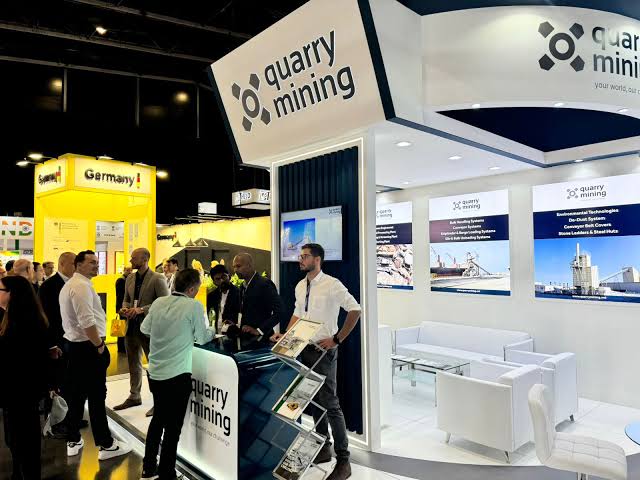
Mining companies, governments, investors and technology suppliers will gather at Dubai World Trade Centre on 16 and 17 November 2026 for the 19th edition of The Mining Show.
The two-day event is expected to attract more than 6,500 mining and quarrying professionals, over 250 exhibitors and more than 150 speakers.
Its focus extends across the Middle East, Africa and South Asia, regions containing some of the world’s largest mineral resources and many of its fastest-growing mining markets.
The exhibition floor showcases equipment, machinery, digital technologies and operational solutions.
At the same time, a conference programme of more than 50 sessions explores issues including mining investment, regulation, critical minerals, sustainability, artificial intelligence, automation and energy transition.
For an industry under pressure to produce more minerals while reducing environmental impact and improving safety, those topics could hardly be more relevant.
Mining Is Becoming Strategically Important Again
Mining has always been essential to industrial economies.
The transition toward renewable energy and electric transportation is making it even more strategically important.
Electric vehicles require lithium, nickel, copper, graphite and other materials.
Electrical grids require enormous quantities of copper.
Wind turbines require metals.
Solar technology depends on mineral supply chains.
Semiconductors use specialised materials.
Data centres need large amounts of power infrastructure.
Defence industries depend on critical minerals.
This means the transition away from fossil fuels does not reduce the need for mining.
In some areas, it increases it substantially.
The question is how those minerals can be produced responsibly and securely.
The Event Connects Three Major Regions
The Mining Show focuses on the Middle East, Africa and South Asia.
This geographic positioning gives the event particular importance.
Africa contains enormous mineral resources.
Gulf countries are investing in mining and processing as part of economic diversification.
Saudi Arabia has identified mining as a major pillar of its Vision 2030 strategy.
South Asian markets combine large industrial demand with important mining activity.
Placing the event in Dubai provides a convenient business hub connecting these regions with global investors, equipment manufacturers and service companies.
Critical Minerals Are Now a Geopolitical Issue
Certain minerals have become strategically important because supply is concentrated in a small number of countries.
Governments increasingly worry about dependence on foreign sources.
A disruption in one region can affect industries around the world.
This has changed mining policy.
Countries want to secure supply chains.
Manufacturers want more reliable access to raw materials.
Investors are looking at mineral projects that may once have attracted less attention.
The conference programme reflects this shift through discussions around critical minerals and the Gulf’s potential role as a global gateway between African mining resources and international markets.
Saudi Arabia Is Expanding Its Mining Ambitions
One conference session examines Saudi Arabia’s mining development under Vision 2030.
The Kingdom has been investing heavily in geological exploration, regulatory reform and industrial development.
Mining is viewed as a way to diversify an economy historically dominated by oil.
That creates opportunities for equipment companies, engineering firms, exploration businesses and investors.
It also creates competition.
Countries across the region want to attract capital into mineral projects.
Clear regulations and reliable infrastructure therefore become major advantages.
Mining Law Can Determine Whether Projects Happen
A country may have excellent mineral resources and still struggle to attract investment if its regulatory system is unclear.
Mining projects require substantial upfront capital.
Investors may wait years before receiving returns.
They therefore need confidence that licences will remain valid, contracts will be respected and regulations will be predictable.
The Mining Show’s programme includes discussion around legal harmonisation and mining-law reform, particularly across African markets.
For governments, getting regulation right can be as important as the geology itself.
Exploration Is Becoming More Data-Driven
Before a mine can be developed, companies need to find economically viable deposits.
Exploration can be expensive and uncertain.
Traditional methods combine geological mapping, sampling, drilling and expert interpretation.
Artificial intelligence and machine learning are increasingly being added to this process.
Models can analyse large geological datasets.
Satellite imagery can be evaluated.
Historical exploration records can be processed.
Patterns may be identified more quickly.
The objective is not to replace geologists.
It is to help them focus attention on areas with stronger probability.
AI Needs Good Geological Data
The excitement around AI can create unrealistic expectations.
Machine learning cannot discover valuable deposits from poor information.
Models need relevant data.
Geological datasets may be incomplete.
Historical records may use inconsistent formats.
Remote regions may have limited information.
The best AI systems therefore depend heavily on strong data preparation and human expertise.
This is why The Mining Show’s agenda frames AI exploration around both potential and practical results rather than hype alone.
Automation Can Improve Safety
Mining can involve dangerous environments.
Heavy machinery operates around workers.
Underground conditions can be challenging.
Blasting requires strict procedures.
Remote operations may be far from emergency services.
Automation can reduce human exposure to certain risks.
Autonomous haul trucks can operate without drivers inside the cab.
Remote-control equipment can be used in dangerous areas.
Drones can inspect sites.
Sensors can monitor conditions continuously.
The strongest business case for automation is therefore not always labour reduction.
In some applications, safety may be more important.
Autonomous Equipment Is Expanding
Large mining companies already use autonomous trucks and drilling systems at certain sites.
The technology can improve consistency.
Machines do not become tired.
Routes can be optimised.
Operating data can be collected continuously.
But implementation requires significant infrastructure.
Reliable communications networks are essential.
Maintenance teams need new skills.
Cybersecurity becomes more important.
A connected autonomous mine is also a large digital system.
Operators therefore need both mining and technology expertise.
Mining Equipment Must Survive Extreme Conditions
The exhibition side of The Mining Show includes machinery and equipment built for highly demanding environments.
Crushers process rock.
Conveyors move material.
Drilling systems operate continuously.
Heavy vehicles carry enormous loads.
Dust, vibration and heat affect equipment.
Reliability is therefore critical.
A failure can stop part of an operation and cost significant amounts of money.
Mining companies often evaluate equipment based on total lifetime performance rather than the initial purchase price alone.
Predictive Maintenance Can Reduce Downtime
Sensors are creating new approaches to equipment maintenance.
Instead of waiting for a machine to fail, operators can monitor vibration, temperature, pressure and other indicators.
Software can identify patterns suggesting a component is deteriorating.
Maintenance can then be scheduled before catastrophic failure.
This is especially valuable in mining because replacing equipment in remote locations can be difficult.
A spare component may take days to arrive.
Unplanned downtime can become extremely expensive.
Decarbonising Mining Is Complicated
Mining companies face growing pressure to reduce emissions.
The challenge is significant.
Mines often use heavy diesel machinery.
Processing can require substantial electricity.
Remote operations may lack access to clean power grids.
Transport distances can be enormous.
The Mining Show includes discussions around hydrogen and solar power as possible solutions.
Different technologies may suit different applications.
Solar power can reduce electricity emissions in sunny regions.
Battery-electric machinery may work for certain operations.
Hydrogen could eventually serve heavier applications.
There is unlikely to be one universal solution.
Renewable Energy Can Benefit Remote Mines
Many mines are located far from major electricity networks.
Historically, diesel generators have been common.
Solar and battery systems can provide an alternative or supplement.
The economic case can be attractive where transporting fuel is expensive.
Renewables can also reduce emissions.
Hybrid microgrids may combine solar, batteries and conventional generation to provide more reliable energy.
This is an area where the Gulf’s experience with large-scale solar could become relevant internationally.
Water Is Another Major Mining Issue
Mining and mineral processing can require significant amounts of water.
That creates challenges in arid regions.
Companies need to recycle more water.
Tailings systems require careful management.
Environmental regulation may limit withdrawals.
Technology providers are developing filtration, treatment and monitoring systems to help mines reduce consumption.
Water management may become one of the most important constraints on future mining projects in dry regions.
ESG Standards Affect Investment
Environmental, social and governance considerations increasingly influence mining finance.
Investors want to understand environmental risks.
Communities expect consultation.
Workers need strong safety protections.
Governments want economic benefits.
A project may contain valuable minerals yet still fail if relationships with local communities deteriorate.
Responsible mining therefore requires more than meeting minimum legal obligations.
Companies need what the industry often calls a social licence to operate.
Local Communities Need to See Benefits
Mining projects can create jobs, infrastructure and government revenue.
They can also create disruption.
Land use changes.
Environmental risks emerge.
Communities may need relocation.
The distribution of benefits therefore becomes extremely important.
If local residents see resources leaving while receiving little benefit, conflict can develop.
Strong projects increasingly invest in training, local procurement and community infrastructure.
This is not only ethical.
It reduces long-term operational risk.
The Gulf Could Become a Processing Hub
The Gulf region has several potential advantages in mineral processing.
Strong logistics infrastructure.
Major ports.
Investment capital.
Industrial zones.
Relatively affordable energy in some markets.
Strategic location between Africa, Asia and Europe.
This creates a possibility that Gulf economies could participate further downstream rather than only investing in mines abroad.
Processing minerals closer to major trade routes could create additional economic value.
Country Pavilions Bring International Suppliers Together
The Mining Show includes country pavilions showcasing international technology and expertise.
For buyers, this creates an efficient way to compare suppliers from different markets.
For foreign manufacturers, it provides access to distributors across the Middle East and Africa.
The event even includes a dedicated distributor-connect initiative aimed at helping exhibitors identify local partners.
This matters because industrial equipment often requires local after-sales support.
A manufacturer may produce excellent machinery but still struggle in a market without reliable servicing and spare parts.
The Conference Features More Than 150 Speakers
More than 150 speakers are scheduled across over 50 conference sessions.
The programme covers operational excellence, project development, investment, critical minerals, AI, ESG, regulation and decarbonisation.
This breadth reflects how mining has changed.
The industry is no longer only about geology and heavy machinery.
Modern mining companies need expertise in software, energy, finance, regulation, sustainability and community engagement.
A successful mining project may involve dozens of disciplines before the first tonne of material is sold.
The Exhibition Is a Marketplace for Heavy Industry
On the exhibition floor, the focus becomes practical.
Equipment suppliers meet mine operators.
Technology companies demonstrate automation.
Engineering firms meet project developers.
International manufacturers search for distributors.
Investors can examine emerging projects.
Procurement teams compare suppliers.
For a business operating in mining, two days can compress months of normal business development into one venue.
Mining Will Be Essential to the Energy Transition
One of the paradoxes of the global energy transition is that clean technology requires huge quantities of mined material.
Electric vehicles need minerals.
Renewable electricity needs metals.
Grid expansion needs copper.
Battery storage needs specialised materials.
The world cannot build this infrastructure without mining.
That does not remove mining’s environmental impact.
It makes improving the industry more urgent.
Society needs more minerals while demanding cleaner production.
Those two pressures will shape the sector for decades.
Two Days Focused on the Industry Beneath the Global Economy
Mining is easy to overlook because most consumers never see it.
They see smartphones.
Cars.
Buildings.
Solar panels.
Power lines.
They do not usually see the mines supplying the materials inside them.
The Mining Show brings that hidden part of the global economy into focus.
From 16 to 17 November, Dubai World Trade Centre will host the companies, governments and technology providers determining how future mineral demand will be met.
The challenge is enormous.
More materials are needed.
Safety must improve.
Environmental impact needs to fall.
Supply chains need greater security.
Projects need capital.
The Mining Show 2026 exists at the intersection of all of those pressures.