


ARABLAB LIVE 2026 Brings the Global Laboratory and Scientific Industry to Dubai
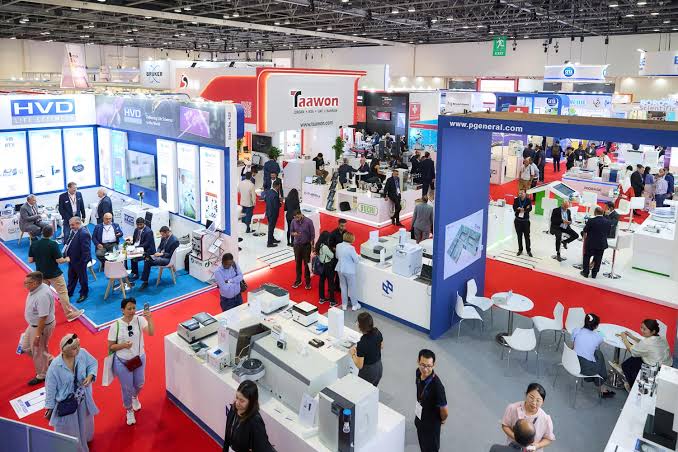
Laboratory professionals, scientists, manufacturers and technology suppliers will gather at Dubai World Trade Centre from 26 to 28 October 2026 when ARABLAB LIVE returns for another major edition.
The three-day exhibition serves industries that depend on laboratory analysis, testing, research and quality control.
That includes healthcare.
Pharmaceuticals.
Food manufacturing.
Environmental science.
Petrochemicals.
Industrial production.
Education.
Biotechnology.
Forensic science.
Materials testing.
Although laboratory technology rarely attracts the same public attention as artificial intelligence or consumer electronics, much of the modern economy depends on accurate testing.
Medicines need to be analysed.
Food needs safety testing.
Water quality must be monitored.
Industrial materials need verification.
Scientists require reliable equipment.
Manufacturers need quality-control laboratories.
ARABLAB LIVE brings the companies developing these systems together with the laboratories and organisations that use them.
Laboratories Sit Behind Everyday Life
Most people rarely enter a professional laboratory.
Yet laboratory work influences almost everything around them.
A pharmaceutical company tests whether medicines contain the correct compounds.
Food producers examine contamination and nutritional characteristics.
Municipal authorities monitor water.
Oil and gas companies analyse chemical samples.
Hospitals process diagnostic tests.
Universities conduct research.
Manufacturers inspect materials.
Environmental organisations measure pollution.
All of these processes require instruments, chemicals, software and trained specialists.
ARABLAB exists around this largely invisible scientific infrastructure.
For businesses and scientific organisations operating in Dubai, the exhibition provides access to international suppliers without requiring individual sourcing trips to several different markets.
The Event Runs for Three Days
ARABLAB LIVE 2026 takes place from 26 to 28 October at Dubai World Trade Centre.
The trade-only event will use Sheikh Saeed Halls 1–3 and Trade Centre Arena.
The exhibition is organised within Terrapinn’s international portfolio of technology and science events.
Visitors can expect suppliers covering laboratory instruments, analytical systems, chemicals, testing equipment, scientific software and specialist services.
Because the industries represented are so broad, two visitors can attend the same exhibition for completely different reasons.
A pharmaceutical laboratory may search for analytical equipment.
A food company may need microbiology testing solutions.
A university could evaluate research instruments.
An environmental laboratory may be interested in water-analysis technology.
Analytical Chemistry Is Essential Across Industries
One of the largest areas within laboratory science is analytical chemistry.
The purpose is straightforward: determine what substances are present and often how much of each one exists.
The actual science can be extremely sophisticated.
Chromatography can separate compounds.
Mass spectrometry can identify molecules.
Spectroscopy can analyse how materials interact with light.
These technologies support industries ranging from medicine to petrochemicals.
Their accuracy can affect major decisions.
If a pharmaceutical laboratory identifies an impurity incorrectly, the consequences may be serious.
If an environmental laboratory fails to detect contamination, public health can be affected.
Laboratory equipment therefore competes not only on speed but also on reliability.
Automation Is Changing Laboratory Work
Laboratories increasingly automate repetitive processes.
Robotic systems can handle samples.
Automated analysers can perform high volumes of tests.
Software can transfer results directly into information-management systems.
This can reduce manual work and improve consistency.
Automation becomes particularly valuable in laboratories processing thousands of samples.
Clinical laboratories are one example.
Large food-testing operations are another.
But automation also requires careful implementation.
A process completed quickly but incorrectly creates little value.
Laboratories need strong validation and quality-control procedures.
Artificial Intelligence Is Reaching the Laboratory
AI is also entering scientific workflows.
Algorithms can identify patterns in large datasets.
Computer vision can analyse images.
Machine learning may help interpret instrument outputs.
Researchers can use AI to prioritise experiments.
Drug-development teams can analyse biological information more efficiently.
But laboratories require a much higher standard of reliability than many ordinary software applications.
Scientific results need to be reproducible.
Models need appropriate validation.
Human expertise remains critical.
The laboratory AI opportunity is therefore significant, but the requirements are demanding.
Digital Laboratories Are Becoming More Connected
Paper laboratory records are gradually being replaced by digital systems.
Laboratory Information Management Systems, commonly called LIMS, can manage samples, workflows and results.
Electronic laboratory notebooks can replace traditional paper records.
Instruments can send information directly into databases.
This creates major efficiency advantages.
Researchers can search historical data.
Quality teams can track samples.
Organisations can create clearer audit trails.
The downside is greater dependence on technology.
Data integrity and cybersecurity become critical.
Scientific Data Needs Strong Protection
Laboratory data can be extremely valuable.
Pharmaceutical research may contain intellectual property worth millions of dollars.
Industrial laboratories may hold confidential information about products and manufacturing processes.
Clinical laboratories handle sensitive patient information.
Connected laboratory environments therefore need strong cybersecurity.
A cyberattack does not always need to destroy equipment to create damage.
Stealing confidential research may be enough.
Changing scientific results could be even more serious.
As laboratories become more digital, IT security increasingly becomes part of scientific quality management.
Food Safety Depends on Testing
The food industry is one of the clearest examples of laboratory science affecting everyday consumers.
Food manufacturers test ingredients and finished products.
Microbiological analysis looks for harmful organisms.
Chemical analysis can detect contaminants.
Allergen testing helps protect sensitive consumers.
Nutritional analysis verifies product information.
Shelf-life studies help determine how long products remain safe and acceptable.
With global food supply chains becoming increasingly complex, laboratory testing provides confidence that products meet required standards.
Water Testing Is Critical in the Gulf
Water quality has particular significance across the Middle East.
Desalination provides a large proportion of drinking water in Gulf countries.
Water still needs to be tested continuously throughout treatment and distribution.
Laboratories monitor chemical composition, microorganisms and other quality indicators.
Industrial water requires testing too.
Wastewater treatment depends on accurate analysis.
As water reuse becomes increasingly important, laboratories will play an even larger role in verifying treatment performance.
Environmental Laboratories Are Becoming More Important
Governments and companies increasingly measure air, soil and water quality.
Environmental laboratories detect pollutants.
Industrial operations monitor emissions.
Construction projects may require environmental testing.
Climate and sustainability regulations create additional demand for reliable measurement.
This demonstrates an important principle.
Environmental goals cannot be managed effectively without data.
Before pollution can be reduced, it needs to be measured accurately.
Pharmaceutical Manufacturing Requires Strict Quality Control
Drug manufacturing is one of the most heavily regulated industries in the world.
Companies need to demonstrate that products meet precise specifications.
Raw ingredients must be tested.
Production environments need monitoring.
Finished medicines require analysis.
Stability tests examine how products change over time.
Documentation needs to be complete.
Laboratory technology therefore becomes central to pharmaceutical operations.
Faster equipment can improve productivity, but regulatory compliance remains non-negotiable.
Life Sciences Are Generating More Data
Biotechnology and life sciences increasingly depend on sophisticated laboratory instruments.
Genomics generates huge datasets.
Cell-based research requires advanced imaging.
Proteomics examines proteins at scale.
New therapies demand complex testing.
This creates demand not only for physical equipment but also for computing and data management.
Future laboratories will increasingly combine biology, engineering and software.
Forensic Science Relies on Precision
Forensic laboratories provide another specialised application.
Samples connected with criminal investigations may require chemical analysis, DNA testing or toxicology.
Results can influence legal proceedings.
That makes quality and documentation critical.
A laboratory must be able to demonstrate that samples were handled correctly and methods were reliable.
Scientific accuracy becomes part of the justice process.
Calibration Is an Important but Overlooked Business
Scientific instruments cannot simply be purchased and assumed to remain accurate forever.
Equipment requires calibration and maintenance.
Temperature systems need verification.
Balances need checking.
Measurement instruments require traceability.
This creates an entire specialist service industry around laboratories.
A small error may seem insignificant until multiplied across thousands of tests.
Laboratory Sustainability Is Growing in Importance
Laboratories can consume substantial energy.
Freezers may operate continuously at extremely low temperatures.
Ventilation systems use power.
Single-use plastics create waste.
Chemical disposal requires careful management.
Research organisations are therefore examining how laboratories can reduce environmental impact without compromising scientific quality.
Energy-efficient equipment can help.
Better waste management can help.
Smarter workflows can reduce unnecessary consumption.
Equipment manufacturers increasingly need to demonstrate sustainability alongside performance.
Suppliers Need Direct Access to Scientists
Scientific equipment is difficult to sell through ordinary advertising alone.
Laboratory professionals often need detailed technical information.
Will an instrument handle a specific sample type?
What detection limits can it achieve?
How often does it need calibration?
Can it integrate with existing systems?
What training is provided?
How quickly can spare parts be supplied?
Trade exhibitions allow scientists and technical buyers to ask these questions directly.
That is one reason specialised scientific events remain valuable despite the growth of online purchasing.
Live Demonstrations Can Influence Purchasing Decisions
Laboratory equipment can represent a substantial investment.
A high-end instrument may remain in use for many years.
Buyers therefore need confidence.
Seeing equipment operating can reveal details specifications cannot communicate.
How intuitive is the software?
How quickly can samples be processed?
How difficult is routine maintenance?
Is the physical footprint suitable for the laboratory?
Those practical questions become clearer through live demonstrations.
Dubai Connects Several Scientific Markets
The UAE sits geographically between major markets in Asia, Europe and Africa.
That makes Dubai useful as a regional distribution hub for laboratory suppliers.
Manufacturers can meet buyers from the Gulf, South Asia and Africa within the same event.
Distributors can search for new technologies to represent.
International suppliers can evaluate markets before establishing local operations.
The exhibition therefore functions as both a scientific event and a business-development platform.
Science Depends on Reliable Tools
Scientific breakthroughs often receive attention for the researchers behind them.
The instruments making those discoveries possible receive much less recognition.
Yet modern research would be impossible without advanced laboratory technology.
Scientists need to detect smaller quantities.
Analyse more samples.
Generate more accurate data.
Store information securely.
Automate repetitive work.
Connect different systems.
ARABLAB LIVE brings the companies solving those technical problems together.
Three Days Behind the Science
From 26 to 28 October, the halls of Dubai World Trade Centre will be filled with technology most people rarely see.
Analytical instruments.
Laboratory automation.
Testing systems.
Scientific software.
Chemicals.
Research technologies.
Quality-control solutions.
Each product may serve a different industry, but all share one objective: producing reliable information.
That makes ARABLAB LIVE more important than its specialist audience might suggest.
Modern economies depend on science.
And science depends on laboratories capable of measuring the world accurately.