


Najah Dubai 2026 Connects Students With 100+ Universities From Around the World
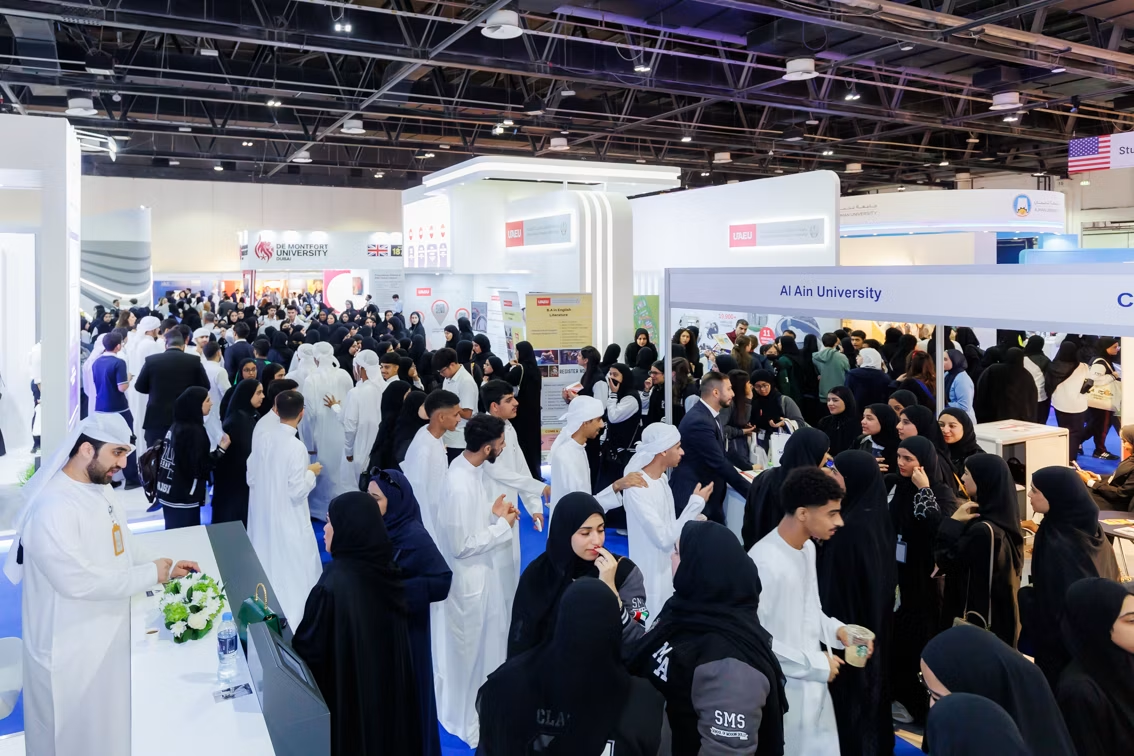
Students planning their next step after school will have the opportunity to meet universities, colleges and education specialists from around the world when Najah Dubai returns to Dubai World Trade Centre from 25 to 27 October 2026.
The three-day higher education fair is one of the UAE’s largest events dedicated to university recruitment and study opportunities.
Supported by the UAE Ministry of Education and organised by Informa, Najah brings students face-to-face with representatives from more than 100 universities across more than 20 countries.
Participating institutions represent destinations including the UAE, United Kingdom, United States, Canada, Finland, Spain, Singapore and other international education markets.
The event is designed primarily for high-school students considering undergraduate study, but parents, teachers, school counsellors and postgraduate applicants can also attend.
For young people trying to make one of the biggest educational decisions of their lives, Najah provides something online university searches cannot fully replace: direct conversations with the institutions themselves.
More Than 100 Universities in One Place
Choosing a university can become overwhelming.
Students may compare dozens of websites.
They watch virtual campus tours.
They read rankings.
They search social media.
They ask friends and family.
Eventually, the amount of information can make the decision harder rather than easier.
Najah brings many of those options into one physical environment.
Students can walk between university stands and ask similar questions directly.
What are the admission requirements?
Which programmes are available?
How much does tuition cost?
Are scholarships offered?
What qualifications are required?
Can international students work during or after their studies?
What does accommodation cost?
What career support does the university provide?
Being able to ask those questions directly can help students move beyond marketing material and understand whether a university genuinely matches their needs.
Universities From More Than 20 Countries
International education is a major part of Najah.
Students can explore universities from several major study destinations without travelling abroad.
The United Kingdom remains popular with students seeking internationally recognised degrees.
The United States offers a wide range of university models and degree structures.
Canada continues attracting students interested in higher education combined with international experience.
European institutions provide additional options.
Universities from Asia and the Middle East expand the choice even further.
For students based in Dubai, the event also provides the chance to compare studying overseas with attending an international university closer to home.
That comparison can significantly affect the final decision.
Studying Abroad Is About More Than the Course
Students often focus initially on the degree itself.
That is understandable.
But international study involves many other factors.
Visa requirements matter.
Accommodation matters.
Living costs matter.
Language matters.
Climate matters.
Distance from family matters.
Employment rules matter.
Post-study work opportunities matter.
A university may have an excellent academic programme but still be unsuitable if the wider experience does not match a student’s circumstances.
Najah allows students to ask these practical questions directly.
Scholarships Can Change the Decision Completely
University costs are a major concern for many families.
Tuition fees can be significant.
International students may also need to consider accommodation, flights, insurance and everyday living expenses.
Scholarships can therefore transform what is financially possible.
Najah specifically highlights scholarship opportunities as one of the main reasons students should attend.
Different universities offer different types of support.
Some scholarships are based on academic performance.
Others may consider sports, creative ability, financial need or other criteria.
Discounts and grants may also be available.
Students should avoid assuming they are automatically ineligible.
The only reliable approach is to ask.
Admissions Teams Can Explain Requirements Directly
University admission systems differ significantly.
One institution may focus heavily on academic grades.
Another may require specific subjects.
Some programmes need portfolios.
Creative courses may ask for examples of work.
Certain degrees can require interviews.
English-language requirements also vary.
Medicine, engineering, law and other specialist programmes may have additional criteria.
Talking directly with admissions representatives can prevent students from misunderstanding these requirements.
This is particularly useful before application season becomes stressful.
Country Pavilions Make International Options Easier to Compare
Najah includes dedicated country representation that allows students to explore education systems rather than only individual institutions.
This can be useful because university choice often begins with a broader decision.
Which country?
A student interested in studying abroad may not yet know whether the UK, Canada, Europe or another destination suits them best.
Understanding national education systems can narrow that choice.
How long does an undergraduate degree usually take?
How flexible is the curriculum?
What visa rules apply?
Are internships common?
Can graduates remain after completing their studies?
These questions can be just as important as university rankings.
Parents Have an Important Role
Najah is not designed only for students.
Parents are encouraged to attend.
For many families, higher education is both an academic decision and a major financial commitment.
Parents naturally want to understand safety, costs, accommodation and career prospects.
A student may be attracted by campus culture.
A parent may be concerned about living expenses.
Both perspectives are valid.
Attending together allows families to gather the same information before discussing options later.
This can reduce misunderstandings and help decisions become more realistic.
Teachers and Counsellors Can Benefit Too
School counsellors regularly help large numbers of students navigate university applications.
Events like Najah allow them to update their knowledge quickly.
Admission requirements change.
Scholarship programmes change.
Universities launch new courses.
Visa rules evolve.
New campuses open.
A counsellor who meets institutions directly can provide better advice when students return with questions months later.
Schools can also develop new relationships with universities.
Postgraduate Students Have Options as Well
Although much of Najah focuses on undergraduate recruitment, postgraduate applicants can also find useful opportunities.
Someone considering a master’s degree may want to change career direction.
Another person may need a specialist qualification.
Professionals may be looking for an MBA.
Researchers may be considering doctoral study.
Postgraduate decisions involve different questions from undergraduate study.
Programme duration may matter more.
Professional accreditation can be critical.
Part-time options may be necessary.
Students should ask whether courses are designed for working professionals and how programmes connect with industry.
Career Outcomes Matter More Than Ever
University is a major investment of both time and money.
Students increasingly want to understand what happens after graduation.
This makes employability one of the most important questions to ask at Najah.
Which companies recruit graduates?
Does the university provide internships?
Is there a careers service?
Can students gain work experience while studying?
Does the degree include industry projects?
Are employers involved in course development?
Universities may advertise strong employment outcomes, but students should ask how those results are achieved.
Career support should be practical rather than simply promotional.
Accreditation Should Always Be Checked
Students should never choose a programme based only on a university’s branding.
Accreditation matters.
A degree needs to be recognised for the purpose the student intends.
This becomes particularly important for professions such as medicine, engineering, architecture, law, teaching and healthcare.
A programme may be legitimate while still not meeting the licensing requirements of another country.
Students planning an international career should ask specifically whether their qualification is recognised in the places where they may eventually work.
University Rankings Are Useful — But Not Everything
Rankings receive enormous attention.
They can provide useful information about research reputation, academic performance and global standing.
But the highest-ranked university is not automatically the best choice for every student.
Course quality can vary within institutions.
One university may be particularly strong in a specific subject.
Another may provide better industry access.
Class sizes differ.
Teaching styles differ.
Campus environments differ.
Students need to think about fit, not only prestige.
A university where a student thrives can be a better choice than a famous institution where they struggle.
Ask About the Actual Programme
Students should avoid spending the entire event asking only about the university.
Ask about the course.
Which modules will you study?
How much flexibility is there?
Can students choose electives?
Are internships included?
Is there practical laboratory work?
Does the programme involve group projects?
Can students study abroad for a semester?
Who teaches the course?
The degree title may look appealing while the actual curriculum does not match expectations.
Reading module lists before attending Najah can help students ask better questions.
Technology Is Changing Higher Education
Artificial intelligence is rapidly affecting universities.
Students now use AI tools for research, writing, coding and learning.
Universities are changing assessment methods in response.
Some institutions are integrating AI into programmes.
Others are introducing stricter academic-integrity rules.
This makes it worth asking how universities are responding.
A forward-looking institution should prepare students to use AI responsibly rather than pretending the technology does not exist.
At the same time, students need to understand that AI cannot replace genuine learning.
Employers still need people who can think independently.
Future Careers Are Changing Too
The job market students enter after graduation may look very different from today’s.
AI and automation are transforming many professions.
Cybersecurity demand is increasing.
Data-related careers are expanding.
Sustainability is creating new roles.
Healthcare remains important.
Creative industries are changing.
Students should therefore consider not only what they enjoy now but how industries may evolve over the next decade.
No university can guarantee a job.
The strongest programmes help students develop adaptable skills.
Vocational Education Deserves Attention
Traditional university study is not the only pathway represented at Najah.
Vocational training institutes and specialist education providers also participate.
This is important because not every career requires a conventional four-year academic degree.
Technical training can lead directly to valuable careers.
Hospitality, aviation, technology, design and other industries often offer alternative routes.
Students should choose the pathway that fits their goals rather than assuming university is automatically the correct answer.
Education Consultants and Service Providers Will Attend
Najah also includes education consultants, language centres, accommodation providers and other student services.
These organisations can help with practical parts of international education.
But students should still evaluate advice carefully.
Consultants may represent specific institutions.
Families should understand how advisers are compensated and whether recommendations are genuinely independent.
The final decision should always be based on verified information.
How to Prepare Before Visiting Najah
Walking into a large education exhibition without a plan can become exhausting.
Students can make the visit much more productive with simple preparation.
Create a shortlist of countries.
Identify subjects of interest.
Know approximate academic grades.
Prepare questions.
Set a realistic budget range.
Research a few universities beforehand.
Then use Najah to compare them and discover alternatives.
Taking notes is also essential.
After speaking with ten universities, conversations can begin blending together.
A simple note on a phone can record key details.
Scholarship information.
Entry requirements.
Interesting courses.
Follow-up contacts.
This makes the event useful after the halls close.
Do Not Apply Just Because a Stand Looks Impressive
Exhibition stands are marketing environments.
Universities naturally want to appear attractive.
Large screens, impressive brochures and friendly representatives can create a strong first impression.
That is fine.
But students are choosing several years of education, not an exhibition booth.
Every important claim should be verified later.
Visit the official university website.
Check accreditation.
Read the course structure.
Compare fees.
Research the campus.
Speak with current students if possible.
Najah should begin the research process, not necessarily finish it.
Meeting Representatives Can Help Students Stand Out
Students who already have a shortlist can use the event strategically.
Introduce yourself properly.
Explain what you want to study.
Ask specific questions.
Request the representative’s contact information.
A thoughtful conversation may make it easier to follow up later.
Universities speak with thousands of potential applicants.
Students who arrive prepared generally have much more productive discussions.
The Event Is Open to the Public
Najah Dubai takes place in Halls 4 to 6 at Dubai World Trade Centre and is open to the public.
The event runs from Sunday, 25 October through Tuesday, 27 October.
This makes it accessible not only to organised school groups but also to families who want to attend independently.
Students approaching university application season should consider using the event as a research day rather than simply walking around collecting brochures.
Three Days That Could Shape Years of Education
A university decision can influence where someone lives, what they study, who they meet and the career opportunities available after graduation.
That makes it worth investing time in the decision.
Najah cannot tell a student which university to choose.
What it can do is bring a large number of options into one place.
Students can compare countries.
Parents can understand costs.
Applicants can ask about scholarships.
Admissions teams can explain requirements.
Universities can introduce programmes that students may never have discovered online.
From 25 to 27 October 2026, Dubai World Trade Centre will become a temporary global education marketplace.
For students who arrive with questions and an open mind, three days of conversations could help shape the next several years of their lives.