


Al Marmoom Dune Run 2026 Returns With 5K and 10K Desert Racing in Dubai
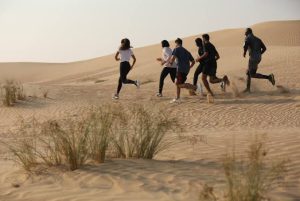
Dubai runners looking for something completely different from conventional road racing will have another chance to test themselves when the Al Marmoom Dune Run returns to Al Marmoom Desert Conservation Reserve in December 2026.
The event offers two distances: a 5km Dune Run and a 10km Desert Race.
Those numbers may look modest compared with a half marathon or marathon.
The terrain changes everything.
Running five kilometres across sand can be far more demanding than covering the same distance on a flat road.
Every step requires additional effort.
Foot placement becomes less predictable.
The legs work differently.
Maintaining normal road-running pace becomes almost impossible.
The Al Marmoom Dune Run is therefore not really about comparing distances.
It is about adapting to the desert.
Why Sand Changes Running So Much
Road runners are accustomed to pushing against a firm surface.
Energy transfers efficiently.
The foot lands.
The runner moves forward.
Soft sand behaves differently.
The surface shifts beneath the foot.
Some of the energy that would normally propel the body forward disappears into the ground.
The legs must work harder to maintain momentum.
Stabilising muscles also become more involved because every landing is slightly different.
The result is a slower but often more physically demanding type of running.
Athletes accustomed to checking pace every kilometre may find their normal numbers almost meaningless in the desert.
Effort becomes a better guide.
The 10K Desert Race Is a Serious Endurance Challenge
Ten kilometres on road is already a significant event for many recreational runners.
Ten kilometres across desert terrain creates a different level of difficulty.
Competitors need cardiovascular endurance, but muscular endurance becomes especially important.
Calves, ankles, glutes and stabilising muscles can fatigue faster than expected.
The constant changes in terrain also prevent runners from settling into the kind of repetitive rhythm they might find on asphalt.
That makes preparation important.
A runner who trains exclusively on a treadmill or flat road may have excellent aerobic fitness but still struggle when the ground starts moving underneath each step.
The 5K Dune Run Is an Accessible but Legitimate Test
The shorter category gives more people an opportunity to experience desert running.
Five kilometres is manageable enough for recreational athletes while still providing a meaningful challenge.
Beginners should not underestimate it.
The goal does not need to be speed.
Completing a demanding off-road course can be an achievement by itself.
More experienced runners may use the event as a strength-endurance test.
Running hard over dunes creates a very different training stimulus from a normal 5K.
Road Pace Should Be Forgotten
One of the biggest mistakes participants can make is attempting to maintain their usual road pace.
A runner capable of completing 10km quickly on asphalt may become frustrated when kilometre splits are significantly slower in the desert.
That frustration can lead to pushing too hard.
The better strategy is to run according to effort.
Accept slower sections.
Use shorter strides where necessary.
Maintain control.
Speed will naturally increase on firmer ground.
The objective is to cover the entire course efficiently rather than win a battle against the GPS watch.
Foot Placement Becomes a Skill
Running on dunes requires attention to the surface.
Some areas are firmer.
Others collapse immediately beneath the foot.
Experienced desert runners learn to identify more stable lines.
Shorter steps often work better on soft climbs.
Trying to take enormous strides can waste energy.
Downhill sections require control because loose sand changes braking and balance.
The race therefore involves a technical element that ordinary road running does not.
Hills Feel Different in Sand
Climbing a dune can be extremely demanding.
The runner pushes upward while the surface moves backwards.
Heart rate rises rapidly.
Trying to maintain normal running form may become inefficient.
Some competitors will discover that a fast, controlled hike up the steepest sections is more effective than forcing an unsustainable running pace.
There is no shame in changing technique.
The goal is forward progress.
Smart endurance racing is about choosing the most efficient movement for the terrain.
Descending Requires Control
Downhill dune running can feel exciting because gravity finally helps.
It can also create problems.
Runners may accelerate beyond their ability to control foot placement.
The soft surface reduces impact compared with hard asphalt but increases instability.
Maintaining a quick cadence and balanced posture can help.
Athletes should practise before race day rather than discovering their downhill technique during competition.
Shoes Matter, but There Is No Perfect Choice
Participants often ask whether special shoes are required.
Trail-running shoes can provide additional support and protection, particularly on mixed desert terrain.
But extremely aggressive tread does not automatically solve soft sand.
Some runners prefer lighter footwear.
Others value stability.
The most important rule is familiar equipment.
Race day is not the time to wear an untested pair of shoes simply because they are marketed for trails.
Train in them first.
Sand Can Get Everywhere
Desert racing creates another practical issue: sand inside shoes.
Some trail runners use gaiters to reduce the amount entering around the ankle.
Whether they are necessary depends on personal preference and course conditions.
Even small amounts of sand can create friction over longer distances.
Again, equipment decisions should be tested beforehand.
Comfort matters more than appearance.
The Al Marmoom Setting Is Part of the Experience
The Al Marmoom Desert Conservation Reserve gives the event a setting unlike Dubai’s city races.
There are no skyscraper-lined streets.
There is no polished urban course.
Instead, competitors experience dunes and open desert landscape within one of the emirate’s major conservation areas.
That connection with the natural environment is one of the event’s strongest attractions.
Dubai is often associated internationally with towers, malls and modern infrastructure.
Al Marmoom demonstrates another side of the emirate.
Desert Running Requires Environmental Respect
Racing inside a conservation reserve carries responsibility.
Participants should stay on designated routes.
Waste should never be left behind.
Wildlife and the natural landscape need to be respected.
Outdoor sport works best when athletes leave the environment as they found it.
This is especially important in protected areas.
The race offers people access to a remarkable natural setting.
That access should be treated responsibly.
Hydration Remains Essential
December provides far more comfortable conditions than summer, but desert running still creates fluid demands.
The air can feel dry.
Athletes may not notice sweat in the same way they would in humid conditions.
Participants should arrive properly hydrated.
The longer 10km race requires particular attention.
The correct strategy depends on conditions and individual needs.
Training sessions provide the best opportunity to learn what works.
Strength Training Can Help
Traditional running programmes often focus almost entirely on mileage.
Desert running benefits from additional strength work.
Calf raises, squats, lunges and single-leg exercises can help prepare the legs for unstable terrain.
Core strength assists balance.
Ankle and foot strength become particularly useful.
None of these need to replace running.
They support it.
Training on Similar Terrain Is Ideal
If possible, participants should include some sand or trail sessions before the race.
Even short workouts can teach the body how different surfaces feel.
The first session may be surprisingly tiring.
That is useful information.
It gives the athlete time to adjust before competition.
People without easy access to dunes can still prepare through hills, trail running and strength work.
The principle is introducing variability rather than training exclusively on perfectly flat surfaces.
Mental Expectations Matter
The course will probably feel slower than a normal race.
That should be expected rather than interpreted as failure.
Desert runners need patience.
The difficult sections eventually end.
The next dune may be easier.
Breaking the race into smaller sections can help psychologically.
Reach the crest.
Recover on the descent.
Settle into the flatter section.
Then deal with the next challenge.
A Race That Shows a Different Side of Dubai
The Al Marmoom Dune Run stands out because it is not attempting to compete with the city’s major road races.
It offers something completely different.
Five or ten kilometres become a test of adaptability, strength and mental resilience.
The desert becomes part of the competition.
For road runners, it offers an opportunity to leave familiar conditions behind.
For trail athletes, it provides a uniquely Dubai challenge.
For beginners, the 5K creates an achievable introduction to off-road racing.
When runners arrive at Al Marmoom in December, normal pace targets may need to be forgotten.
The objective is simpler.
Read the terrain.
Respect the desert.
Keep moving.
And earn the finish line one dune at a time.