


Expand North Star 2026 Moves to Expo City as 2,000+ Startups Chase Global Capital
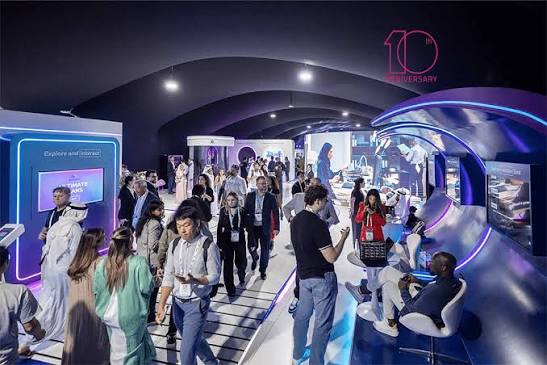
Founders, venture capital investors, sovereign funds, family offices and technology leaders will gather at Dubai Exhibition Centre, Expo City, from 8 to 10 December 2026 when Expand North Star enters a new chapter at its expanded venue.
The event, organised within the wider GITEX ecosystem, describes itself as the world’s largest startup and investor connector.
Its move to Expo City is significant.
The 2025 edition brought together approximately 2,000 international startups, 1,000 investors, 70,000 attendees, 350 speakers and participants from 100 countries, generating around 13,000 pre-scheduled meetings.
The 2026 edition is designed to become even more investor-focused.
New elements include a DigiHealth-Biotech programme, the Backers Pitch, an expanded Founders Academy and NS Play for lifestyle and emerging consumer technologies.
Supernova 0X will also restructure the event’s global startup pitch competition around venture stage, connecting founders with investors whose ticket sizes and strategies match their level of development.
For entrepreneurs building companies in Dubai and across emerging markets, the event provides something startups often struggle to obtain: concentrated access to capital, customers and international networks in the same place.
Startups Need More Than a Good Idea
The startup world often celebrates ideas.
Execution matters far more.
A founder may identify a genuine problem.
The product still needs building.
Customers need to pay.
Employees need hiring.
Pricing must work.
Competitors appear.
Technology fails.
Capital eventually runs out.
The difference between an interesting idea and a scalable business is the ability to solve these operational problems repeatedly.
Expand North Star focuses heavily on companies trying to move from experimentation toward genuine growth.
Funding Has Become More Selective
The era of easy venture capital changed significantly after the extraordinary technology funding environment of the early 2020s.
Investors now ask harder questions.
What is revenue?
How quickly is it growing?
What does acquiring a customer cost?
How long do customers remain?
What are margins?
How much cash does the company burn?
When does it need another funding round?
Growth remains important.
Growth without economic discipline is less attractive.
This creates a healthier but more demanding environment for founders.
The 2026 Programme Focuses on the Founder Journey
One of the event’s core themes is founder restructuring.
That means helping companies navigate different stages rather than treating every startup as identical.
A pre-seed company needs product validation.
A seed company may need repeatable customer acquisition.
Series A businesses need scalable operations.
Later-stage companies need international expansion, leadership systems and stronger governance.
Advice useful at one stage can be harmful at another.
Startup ecosystems become more effective when they recognise those differences.
Capital Has Become More Diverse
Traditional venture capital remains important.
Founders now have more options.
Sovereign wealth funds.
Family offices.
Corporate venture capital.
Venture debt.
Growth equity.
Secondary transactions.
Government-backed funds.
Each source has different objectives.
A venture fund may seek very high growth.
A strategic corporate investor may prioritise technology access.
Family offices may have longer investment horizons.
Founders need to understand what type of capital best matches their business.
Expand North Star’s 2026 theme of the “new capital stack” reflects this diversification.
The Gulf Has Become More Important to Global Investors
The GCC is no longer viewed merely as a place where international startups come to raise money.
It is increasingly a major startup market itself.
Saudi Arabia is investing heavily in technology.
The UAE attracts global founders.
Sovereign investors deploy capital internationally.
Family offices are expanding.
Large enterprises purchase technology.
Government digital-transformation programmes create customers.
This combination gives the region something valuable.
Capital and market opportunity exist in the same geography.
Dubai Is Becoming a Startup Gateway
The city offers access to several surrounding markets.
The Gulf.
Africa.
South Asia.
The wider Middle East.
Founders can use the UAE as a regional headquarters while expanding into different geographies.
The environment also attracts international talent.
However, simply incorporating a company in the city does not guarantee success.
Customer acquisition still matters.
Products need local relevance.
Competition is intense.
Startups need real commercial reasons for locating in a particular market.
AI Startups Dominate Attention
Artificial intelligence remains one of the most heavily funded technology sectors.
Founders build AI applications for healthcare.
Finance.
Marketing.
Software development.
Cybersecurity.
Logistics.
Legal services.
Education.
Almost every industry now has AI startups.
This creates opportunity and saturation simultaneously.
Investors increasingly ask whether a product has real defensibility.
If another founder can build something similar using the same underlying model in two weeks, the advantage may not be sustainable.
Distribution and proprietary data can become more valuable than the AI model itself.
Commercial Deeptech Gets More Attention in 2026
Expand North Star highlights commercial deeptech as a core theme.
Deeptech companies work on difficult scientific or engineering problems.
Robotics.
Advanced materials.
Climate technology.
Defence technology.
Biotechnology.
Semiconductors.
Quantum technologies.
These companies can create stronger technical barriers to competition.
They are also harder to build.
Development takes longer.
Capital requirements are higher.
Specialist talent is scarce.
Regulation may slow market entry.
Investors need longer horizons than in conventional software.
DigiHealth-Biotech Is a New 2026 Feature
The new DigiHealth-Biotech programme focuses on areas including AI diagnostics, genomics and next-generation therapeutics.
Healthcare startups face unusual challenges.
A new social-media application can launch quickly.
A diagnostic system may require clinical evidence.
Medical devices need regulatory approval.
Healthcare data is sensitive.
Hospitals can have long procurement cycles.
This makes health innovation difficult but potentially valuable.
A company solving a genuine clinical problem can create enormous social and financial impact.
Biotech Operates on Different Startup Timelines
Software companies can sometimes reach customers within months.
Biotechnology may require years of research before meaningful revenue.
Laboratories cost money.
Clinical trials are expensive.
Failure rates are high.
Investors therefore need scientific expertise.
Conventional startup metrics do not always apply.
Bringing biotech into a broad technology-investment platform creates opportunities for different types of capital to interact.
Climate Tech Needs Scalable Economics
Climate technology has attracted increasing investment.
Energy storage.
Carbon management.
Renewable infrastructure.
Alternative materials.
Water technology.
Industrial efficiency.
The strongest businesses need to solve environmental problems while also creating financial value.
A company cannot depend forever on customers paying extra purely because something is greener.
Technology needs competitive economics.
The Gulf can become an important testing market because energy, water and extreme climate conditions create real demand.
Fintech Continues to Transform Financial Services
Digital payments have changed consumer behaviour.
Open banking creates new opportunities.
Alternative lending grows.
Regtech helps companies meet compliance requirements.
Embedded finance places financial products inside non-financial platforms.
Blockchain continues generating new infrastructure concepts.
Fintech startups operate within highly regulated environments.
Moving fast matters.
Breaking financial regulations is not an acceptable version of startup experimentation.
Successful founders need both innovation and compliance expertise.
Digital Assets Remain Part of the Technology Landscape
The wider Expand North Star ecosystem includes the Future Blockchain Summit and GITEX Digital Assets Forum.
Blockchain markets have experienced extraordinary cycles of excitement and collapse.
The useful question is increasingly practical.
Where does distributed infrastructure solve a genuine problem?
Tokenisation may influence certain financial assets.
Stablecoins can support digital payments.
Blockchain can provide infrastructure for selected applications.
The market is gradually separating technology use cases from speculative hype.
Cybersecurity Startups Benefit From Constant Demand
Cyber threats continue evolving.
Companies cannot simply stop spending on security.
This creates opportunities for startups.
Identity.
Cloud security.
Application security.
AI security.
Threat intelligence.
Security operations.
Data protection.
The challenge is market crowding.
CISOs already manage too many security products.
A new startup needs to simplify security rather than adding another disconnected dashboard.
Startup-Corporate Partnerships Can Create Revenue
Venture funding receives enormous attention.
Customers matter more.
Large corporations can provide startups with pilot projects, distribution and credibility.
A successful enterprise contract may be more valuable than winning a startup competition.
Corporate innovation programmes therefore play a major role within global startup events.
The best outcome for a founder may not be an investor meeting.
It may be meeting the first major customer.
The Backers Pitch Reverses the Traditional Format
A particularly interesting 2026 feature is the Backers Pitch.
Normally, founders stand on stage and pitch investors.
Here, existing investors pitch selected portfolio companies to other investors.
Twenty startups are expected to be chosen for the format.
The idea changes the signal.
An existing investor is effectively explaining why another investor should examine the company.
That can increase credibility.
Follow-up meetings then connect interested investors directly with founders.
Supernova 0X Becomes More Stage-Specific
Pitch competitions often compare companies at completely different stages.
A pre-seed idea may compete with a company already generating millions in revenue.
Supernova 0X is being redesigned around venture stage.
This should allow more relevant comparison.
Investors can focus on companies matching their preferred ticket sizes.
Founders face judges who understand their stage.
The 2026 platform says competitors will gain exposure to a community of more than 1,300 global investors managing over US$1 trillion in assets.
Founders Need to Learn How Investors Think
Entrepreneurs naturally focus on their company.
Investors think in portfolios.
They expect some investments to fail.
They need successful investments to become large enough to compensate.
This influences what venture capital firms look for.
A good small business may not be an appropriate venture-backed business.
VC investors generally need markets capable of supporting substantial scale.
Founders should understand this before spending months chasing investors whose economic model does not fit their company.
The Founders Academy Adds Practical Education
Expand North Star 2026 introduces a three-day Founders Academy with specialised learning labs spanning the startup journey from idea to exit.
This matters because startup advice is often fragmented.
Online founders hear contradictory recommendations.
Raise money immediately.
Bootstrap.
Hire fast.
Stay lean.
Expand globally.
Focus locally.
The correct answer depends on context.
Direct access to experienced founders, operators and investors can help entrepreneurs understand which advice applies to their specific situation.
Failure Is Part of the Startup Model
Most startups do not become unicorns.
Many fail.
Products do not find market demand.
Teams break apart.
Funding disappears.
Competitors win.
Costs become unsustainable.
Startup ecosystems sometimes hide this reality because success stories receive more attention.
A healthy ecosystem needs to treat failure as information rather than personal disgrace.
Experienced founders frequently build stronger companies the second time because they understand problems they previously underestimated.
Emerging Markets Are Central to the Event
Expand North Star has built strong connections across Africa, India, Latin America and the wider Global South.
These markets contain enormous populations and fast-growing technology adoption.
They also have distinctive problems.
Infrastructure may differ.
Payment systems differ.
Regulation differs.
Income levels differ.
Startups successful in New York or London cannot simply copy their business model into every market.
Local knowledge is essential.
Africa Offers Significant Startup Potential
African technology companies have developed innovative approaches to mobile payments, logistics, healthcare and commerce.
Many problems create opportunities for technology to leapfrog older infrastructure.
But Africa is not one market.
More than 50 countries have different regulations, languages and economic conditions.
Founders need country-specific strategies.
Global investor events can help African companies access capital networks that remain concentrated elsewhere.
India Is a Major Startup Powerhouse
India has produced some of the world’s largest technology companies and startup ecosystems.
Its enormous population creates scale.
Digital payment infrastructure has enabled new businesses.
Consumer technology adoption is high.
Indian founders increasingly expand toward Gulf markets because geographic and commercial connections are strong.
This makes Dubai a natural networking point between Indian startups and international capital.
Latin America Adds Another Growth Corridor
Fintech, e-commerce and logistics startups have expanded rapidly across Latin America.
The region faces challenges similar to other emerging markets but also has sophisticated entrepreneurial ecosystems.
Connecting Latin American founders with Gulf investors creates diversification for both sides.
Global startup platforms increasingly function as bridges between emerging regions rather than only pathways toward Silicon Valley.
NS Play Connects Innovation With Consumer Technology
NS Play is another new 2026 feature.
It focuses on areas such as AR/VR hardware, smart-health devices and lifestyle technology.
Consumer hardware creates different challenges from software.
Manufacturing is required.
Inventory creates risk.
Returns need management.
Physical distribution matters.
Margins can be thinner.
Founders need strong supply-chain expertise.
The category may nevertheless create significant opportunities as AI becomes integrated into physical consumer products.
Investors Want Strong Teams
Markets change.
Products pivot.
Technology evolves.
A startup team needs to adapt.
Investors therefore pay significant attention to founders themselves.
Can they recruit?
Can they sell?
Do they understand the problem deeply?
Can co-founders work through conflict?
Do they learn quickly?
An impressive pitch cannot hide a weak team forever.
Early-stage investment is often partly a bet on whether founders can navigate problems that do not exist yet.
Networking Needs Preparation
Attending a massive startup event without a plan can become overwhelming.
Thousands of people are present.
Founders need target lists.
Which investors fit the company’s stage?
Which companies could become customers?
Who operates in relevant markets?
What partnerships matter?
A clear 30-second explanation of the business helps.
Follow-up is equally important.
Collecting hundreds of business cards means little if conversations never continue.
13,000 Pre-Scheduled Meetings Show the Importance of Matchmaking
Expand North Star’s previous edition generated around 13,000 pre-arranged meetings.
Structured matchmaking helps reduce randomness.
Investors can screen relevant companies.
Founders can identify suitable funds.
Corporate buyers can meet startups in specific sectors.
Large technology events increasingly use software to create more targeted physical networking.
Digital tools support the human meeting rather than replacing it.
Moving to Expo City Creates More Room to Scale
The move to Dubai Exhibition Centre at Expo City places Expand North Star within the expanded GITEX ecosystem.
The venue gives the event more space for startups, investors and specialist sectors.
It also reflects how large the platform has become since its early years.
Startup events used to occupy relatively small areas alongside technology conferences.
Founders and investors now represent a major global industry in their own right.
Three Days Where Capital Meets Ambition
Every startup begins with uncertainty.
The founders do not know whether customers will care.
Investors do not know whether the company will survive.
Employees do not know whether their equity will ever have value.
That uncertainty is exactly what makes entrepreneurship powerful.
A small company can sometimes become a global business remarkably quickly.
Expand North Star exists around that possibility.
From 8 to 10 December 2026, thousands of founders and investors will gather at Expo City to search for each other.
Most meetings will not lead to investment.
Most startups will not become unicorns.
But some conversations may produce the funding, customer relationship or partnership that changes a company’s trajectory completely.
In venture capital, finding that one exceptional outcome is enough to make the search worthwhile.