


ArabPlast 2027 Brings 770+ Plastics, Recycling and Petrochemical Exhibitors to Dubai
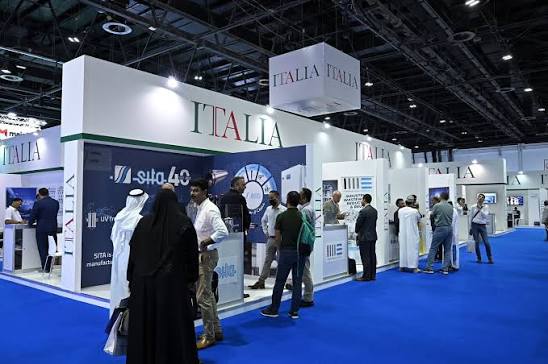
The global plastics, petrochemicals, recycling, packaging and rubber industries will gather at Dubai World Trade Centre from 24 to 26 March 2027 when ArabPlast returns for its 18th edition.
The biennial trade show will occupy Halls 1 to 8 and is expected to bring together more than 770 exhibitors from over 30 participating countries, building on an established international audience spanning manufacturers, processors, converters, machinery companies, raw-material suppliers, recyclers and industrial buyers.
ArabPlast arrives at a complicated moment for the industry.
Demand for plastics remains enormous.
Packaging companies need lightweight materials.
Construction depends on polymers.
Healthcare uses sterile disposable products.
Automotive manufacturers use plastics to reduce vehicle weight.
Electronics contain numerous polymer components.
At the same time, governments, consumers and businesses are putting increasing pressure on manufacturers to reduce waste, increase recycling and build a more circular plastics economy.
That tension sits at the heart of ArabPlast 2027.
The challenge is no longer simply producing more material.
It is producing, using, recovering and recycling materials more intelligently.
Five Industries Meet Under One Roof
ArabPlast covers several closely connected sectors.
Plastics.
Recycling.
Petrochemicals.
Packaging.
Rubber.
Each has its own supply chain, but they overlap constantly.
Petrochemical producers create many of the raw materials used in plastics.
Machinery manufacturers build equipment that converts those materials into finished products.
Packaging companies use films, containers and specialist polymers.
Recycling businesses recover waste and attempt to return material into production.
Rubber manufacturers supply automotive, construction and industrial markets.
Bringing these sectors together allows companies to examine the full material lifecycle rather than only one production stage.
Plastics Remain Essential to Modern Industry
Plastic is often discussed primarily as an environmental problem.
Its industrial role is much broader.
Medical syringes need reliable materials.
Electrical cables require insulation.
Food packaging extends shelf life.
Pipes transport water.
Cars contain lightweight polymer components.
Buildings use insulation, flooring and membranes.
Electronics rely on engineered plastics.
Removing plastics entirely would create serious problems in many industries.
The more realistic challenge is deciding where plastic provides genuine value and where unnecessary use can be reduced.
ArabPlast gives industry participants in Dubai and across the region a place to examine how that transition is developing commercially.
Recycling Is Becoming a Core Business Rather Than a Side Sector
Recycling is increasingly central to the plastics industry.
Manufacturers face pressure to use more recycled material.
Governments are introducing waste and packaging regulations.
Major consumer brands have announced recycled-content targets.
Investors are funding recycling infrastructure.
This creates demand for sorting systems, washing lines, shredders, extruders and advanced recycling technologies.
The economics remain challenging.
Recycled material needs sufficient quality.
Contamination reduces value.
Collection systems need to work.
Virgin resin prices affect competitiveness.
A recycling plant cannot succeed simply because recycling is environmentally desirable.
It also needs reliable feedstock and customers willing to purchase its output.
Mechanical Recycling Remains the Main Approach
Mechanical recycling generally involves collecting, sorting, cleaning and reprocessing plastic waste into usable material.
The technology is widely established.
PET bottles are one common example.
Certain polyethylene and polypropylene products can also be recycled mechanically.
The challenge is maintaining material quality.
Repeated processing can affect performance.
Mixed polymers create problems.
Food contamination increases complexity.
Colours and additives may limit applications.
Better sorting is therefore essential.
AI and Computer Vision Can Improve Sorting
Modern recycling facilities increasingly use optical technologies and artificial intelligence to identify materials.
High-speed cameras can analyse objects travelling along conveyor belts.
Automated systems distinguish between different plastics.
Robotic equipment can separate material.
Improved sorting creates cleaner waste streams.
Cleaner waste can produce higher-value recycled resin.
This demonstrates how digital technology can improve a very physical industrial process.
AI does not recycle plastic by itself.
It helps recycling plants identify what they are processing more accurately.
Chemical Recycling Is Attracting Investment
Chemical or advanced recycling attempts to break certain plastics down into smaller chemical components.
In theory, this can allow material that is difficult to recycle mechanically to return to petrochemical production.
Supporters believe it could help close the loop for complex waste streams.
Critics point to cost, energy consumption and the need to demonstrate environmental benefits at scale.
The technology remains a major area of industrial research and investment.
ArabPlast provides an environment where producers, technology suppliers and investors can compare approaches directly.
Circular Economy Is a Central 2027 Theme
The traditional industrial economy often follows a linear model.
Extract resources.
Produce products.
Use them.
Discard them.
Circular-economy models aim to keep materials in use for longer.
Products can be designed for reuse.
Packaging can use fewer materials.
Recycled content can replace some virgin feedstock.
Manufacturers can design products that are easier to separate at end of life.
Waste can become a secondary raw material.
For plastics, circularity requires coordination across the entire value chain.
A packaging company cannot create a circular system alone if collection infrastructure does not exist.
Packaging Is Under Strong Pressure to Change
Packaging represents one of the most visible uses of plastic.
It protects products.
Extends food shelf life.
Prevents contamination.
Reduces damage during transportation.
At the same time, disposable packaging contributes heavily to waste.
Manufacturers therefore face competing requirements.
Use less material.
Improve recyclability.
Maintain product protection.
Control costs.
Preserve shelf life.
Comply with regulation.
A package that uses less plastic but causes more food to spoil may not deliver the environmental improvement expected.
The entire system needs consideration.
Mono-Material Packaging Is Growing
One approach involves designing packaging from fewer material types.
Multi-layer packages can offer excellent performance but may be difficult to recycle because layers use different polymers or materials.
Mono-material structures aim to preserve required performance while simplifying recycling.
This creates significant technical challenges.
Barrier properties need to remain strong.
Packages need to survive transportation.
Printing and sealing performance matter.
Materials science is therefore central to sustainable packaging development.
Bioplastics Add Another Option
Bioplastics include materials derived partly or entirely from biological feedstocks, as well as certain plastics designed to biodegrade under specific conditions.
The terminology can be confusing.
Bio-based does not automatically mean biodegradable.
Biodegradable does not mean a product disappears instantly in nature.
Some materials require industrial composting facilities.
Buyers need to understand actual material properties rather than relying on green-sounding labels.
ArabPlast exhibitors increasingly operate within this emerging category.
Petrochemicals Remain Economically Important
Many plastics begin with petrochemical feedstocks.
The Gulf is a major global petrochemical production region, giving ArabPlast a natural connection with upstream producers.
Companies across Saudi Arabia, the UAE and other regional markets manufacture polymers that are exported globally.
The sector contributes to industrial diversification by turning hydrocarbon resources into higher-value materials.
Future competitiveness will increasingly depend on efficiency, lower-carbon production and the ability to support circular-material systems.
Advanced Polymers Enable Modern Products
Not all plastics are simple commodity materials.
Engineering polymers can withstand high temperatures.
Some provide exceptional chemical resistance.
Others are designed for medical use.
Automotive materials need strength with low weight.
Electronics require flame resistance or electrical properties.
Specialist polymers can therefore command substantially higher value than ordinary packaging materials.
Innovation in this area helps manufacturers move further up the industrial value chain.
Lightweighting Matters to Automotive Manufacturers
Vehicles contain increasingly sophisticated plastics and composites.
Replacing heavier materials can reduce vehicle weight.
Lower weight can improve fuel efficiency in conventional cars.
For electric vehicles, reduced weight may improve driving range.
Interior components also depend heavily on polymers.
However, automotive materials face strict requirements around durability, heat, fire performance and crash safety.
Suppliers need reliable quality and long-term consistency.
Electric Vehicles Are Creating New Material Requirements
EVs introduce additional opportunities.
Battery packs need electrical insulation.
Charging systems use specialist materials.
Thermal management is important.
Lightweight structures become even more valuable.
High-voltage systems require appropriate safety characteristics.
The shift toward electric mobility therefore changes demand within the plastics and rubber industries rather than simply reducing it.
Rubber Remains Critical to Transportation
Tyres represent one of the most visible rubber applications.
But rubber is used much more widely.
Seals.
Hoses.
Gaskets.
Vibration-control components.
Industrial equipment.
Construction products.
Medical devices.
Manufacturers continually develop compounds with different durability, heat resistance and flexibility characteristics.
Recycling rubber also remains an important environmental challenge because discarded tyres create substantial waste streams.
Tyre Recycling Creates Secondary Materials
Used tyres can be processed into rubber granules and other materials.
Applications include sports surfaces, construction materials and certain industrial products.
Pyrolysis and other technologies are also being explored.
As vehicle ownership increases globally, managing end-of-life tyres becomes more important.
Regulation and economics will determine which recycling methods scale most effectively.
Manufacturing Machinery Is a Major Part of ArabPlast
Plastics manufacturing depends on specialised equipment.
Injection moulding machines.
Extrusion lines.
Blow moulding.
Film production.
Thermoforming.
Printing.
Robotics.
Material handling.
Testing.
Manufacturers evaluate equipment based on productivity, precision, energy consumption and flexibility.
A machine may operate for years.
Purchasing decisions therefore have long-term consequences.
Live industrial exhibitions allow buyers to compare machinery much more effectively than ordinary online research.
Automation Can Reduce Manufacturing Costs
Factories are increasingly automated.
Robots remove finished parts from machines.
Vision systems inspect products.
Material is fed automatically.
Production data is collected continuously.
Predictive maintenance systems monitor equipment.
Automation can improve consistency and productivity.
It also changes workforce requirements.
Factories need fewer repetitive manual tasks but more technicians capable of operating sophisticated equipment.
Industrial skills therefore need to evolve alongside machinery.
Energy Efficiency Is Becoming More Important
Plastics processing can consume significant electricity.
Heating materials.
Cooling equipment.
Running hydraulic systems.
Operating compressors.
Efficient machinery can reduce both emissions and operating costs.
Electric injection moulding systems are one example of technology aimed at improving efficiency in certain applications.
As energy costs and environmental targets become more important, equipment manufacturers increasingly compete on resource performance rather than only production speed.
Digitisation Is Reaching Plastics Factories
Industry 4.0 concepts are entering polymer processing.
Machines connect with central systems.
Production managers monitor output.
Quality data can be analysed.
Maintenance becomes more predictable.
Customers increasingly expect traceability.
Digital manufacturing can improve transparency across production.
The challenge for older factories is integrating new platforms with existing machines that may have operated for decades.
Recycled Content Needs Reliable Quality
One obstacle to increasing recycled-plastic use is consistency.
Manufacturers want raw materials with predictable properties.
Colour variation.
Contamination.
Mixed polymers.
Changes between batches.
All can affect production.
Recycling companies therefore need stronger quality-control systems.
Standardisation could help recycled resin compete more effectively with virgin material.
Industrial buyers will increase recycled content faster when they can trust supply quality.
Regulation Is Reshaping Packaging Markets
Extended producer responsibility, recycled-content requirements and single-use-plastic restrictions are expanding across various jurisdictions.
Companies selling products internationally may therefore face several regulatory systems simultaneously.
A package compliant in one market may require redesign elsewhere.
Manufacturers increasingly need environmental and regulatory expertise alongside engineering.
This creates opportunities for suppliers able to help clients adapt quickly.
770+ Exhibitors Create a Serious Industrial Marketplace
ArabPlast’s current fact sheet lists more than 770 exhibitors and over 27,000 total footfall, with visitors coming from more than 140 countries in its established event metrics.
These numbers show the event’s international reach.
A raw-material producer can meet processors.
Machine manufacturers can reach factories.
Recyclers can find buyers.
Packaging companies can identify technology partners.
Distributors can search for new suppliers.
The value lies in bringing an entire industrial ecosystem together rather than treating each segment separately.
Three Days Focused on the Future of Materials
Plastic is one of the most useful and controversial materials ever created.
Its durability makes products safer and lighter.
That same durability creates problems when waste is badly managed.
ArabPlast 2027 arrives as the industry attempts to resolve this contradiction.
Produce efficiently.
Design better packaging.
Recycle more.
Reduce unnecessary waste.
Use advanced materials where they genuinely add value.
Create business models capable of supporting circularity.
From 24 to 26 March 2027, Halls 1 to 8 at Dubai World Trade Centre will bring together the companies responsible for making that transition real.
The future of plastics will not be defined simply by whether society uses the material.
It will be defined by how intelligently it manages the complete lifecycle.