


The Community Development Authority Showcases Innovative Solutions Shaping The Future Of Social Services At Dubai Future Week 2026
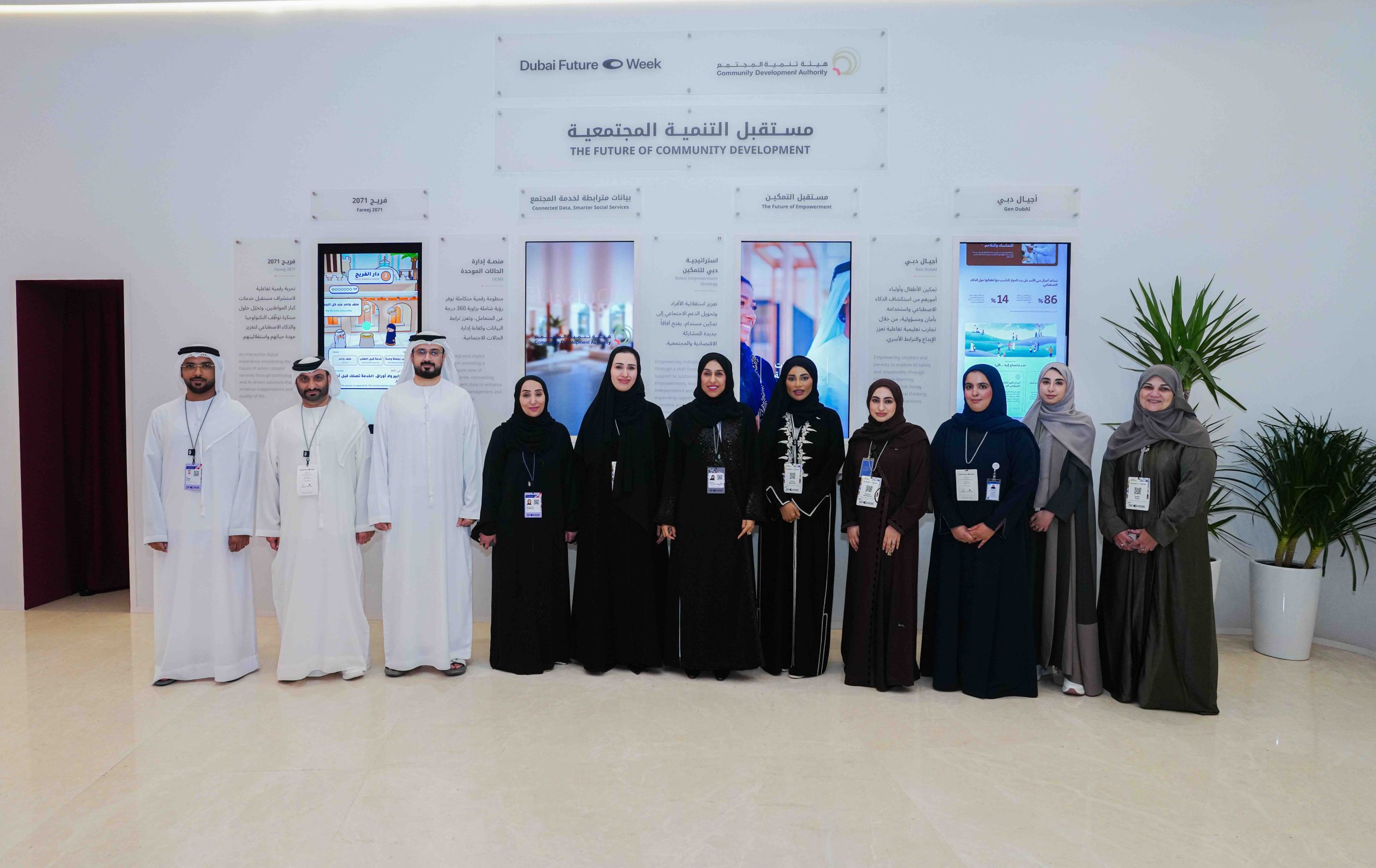
As part of its ongoing efforts to anticipate the future of social development and deliver more proactive services, the Dubai Community Development Authority (CDA) in Dubai concluded its participation in Dubai Future Week 2026, held from 18 to 21 November at Emirates Towers. During the event, CDA showcased a range of innovative initiatives and projects leveraging artificial intelligence and advanced technologies to develop the social services ecosystem, strengthen its ability to anticipate needs and respond to evolving community dynamics, support the objectives of Dubai Social Agenda 33, and enhance service efficiency and quality of life for all members of society.
Hessa bint Essa Buhumaid: Technological innovation is a cornerstone of developing a more proactive and integrated social ecosystem
Her Excellency Hessa bint Essa Buhumaid, Director General of the Dubai Community Development Authority, affirmed that CDA continues to lead an integrated social ecosystem built on flexible policies, proactive services and strategic partnerships, while keeping pace with future transformations in support of Dubai Social Agenda 33 and the enhancement of quality of life for individuals and families.
Her Excellency said: “Harnessing artificial intelligence and digital solutions opens up new opportunities to develop services, enhance integration and improve their capacity to respond to community needs, while expanding opportunities for empowerment and strengthening the social and financial independence of individuals and families.”
She added: “CDA’s participation in Dubai Future Week reflects its commitment to leveraging innovation in the service of people and achieving a balance between technological advancement and social responsibility. It also highlights the importance of raising awareness about the responsible use of artificial intelligence and helping families understand its applications and keep pace with its developments, thereby strengthening community readiness for the changes ahead.”
Innovation and Digital Transformation Projects
During its participation, CDA showcased four key projects through interactive screens. These included the Unified Case Management System (UCMS), which is being implemented in collaboration with 23 government entities and received first place at the British Ideas Awards, in recognition of its role in strengthening the integration of social case management and coordinating services provided to customers.
The CDA also presented the Dubai Empowerment Strategy, which is built around two complementary pathways: social empowerment and economic empowerment. Together, these pathways aim to develop the capabilities of individuals and families and strengthen their social and financial independence by creating opportunities that support their active participation in society, their transition towards self-reliance and the achievement of sustainable empowerment outcomes.
The CDA also showcased the (GenAI Platform), an interactive initiative designed to help families across the UAE understand artificial intelligence technologies and build informed conversations with their children about their applications. The platform seeks to translate knowledge into responsible everyday practices and strengthen digital awareness within the family.
Visitors were also invited to interact with the “Freej 2071” game, which presents a vision of Dubai’s future and explores what life may look like in the years ahead through an experience that brings together innovation, technology and forward-thinking.
Interactive Workshop Explores the Future of Social Services
The CDA also participated in a co-design workshop titled “How Can Artificial Intelligence Redesign Social Services?”, facilitated by Latifa Al Shehhi, Director of the Social Observatory, with the participation of experts, specialists, artificial intelligence solution developers and community representatives. The workshop explored ways to leverage data and advanced technologies to anticipate community needs, identify challenges at an early stage and develop more personalised and accessible services.
The Participants also discussed four key themes: identifying social challenges and enabling early intervention; designing proactive services that respond to pivotal stages in the lives of individuals and families; enhancing service inclusivity; and supporting family stability and quality of life. Discussions also focused on identifying practical use cases for artificial intelligence, while emphasising the centrality of people and the importance of preserving the role of professional expertise in service design and decision-making.
The CDA’s participation reflects its commitment to leading an integrated, future-ready social ecosystem that harnesses innovation and technology to advance the objectives of Dubai Social Agenda 33 and strengthen Dubai’s global leadership in social development and quality of life.