


Art Dubai 2027 Returns to Madinat Jumeirah With Five Sections Connecting Art, Technology and the Global South
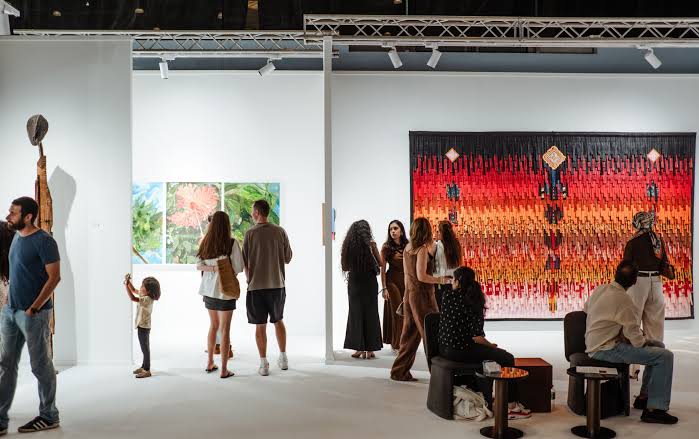
Artists, galleries, collectors, curators, museum professionals and cultural institutions from around the world will gather at Madinat Jumeirah from 7 to 11 April 2027 when Art Dubai returns for another major edition of the Middle East’s leading international art fair.
Preview days will take place on 7 and 8 April, followed by the main public fair from 9 to 11 April.
Founded in 2007, Art Dubai has developed from an annual commercial fair into a wider cultural institution connecting artistic practices from the Middle East, North Africa, South Asia and the wider Global South with international collectors and institutions.
Its regular editions convene around 120 galleries from more than 35 countries.
The 2027 fair will be structured around five distinct sections: Art Dubai Galleries, Zamaniyyat, Bawwaba, Art Dubai Digital and Art Dubai Extended.
Together, they cover contemporary art, modernism, emerging artists, digital practice, large-scale installations, performance, moving image and experimental work that does not fit comfortably inside a conventional gallery booth.
For the cultural community in Dubai and the wider region, Art Dubai is more than a marketplace for buying and selling artworks.
It has become an annual meeting point where artists, collectors, institutions and ideas move between regions that have historically received less attention within the traditional Western-centred art market.
Art Dubai Begins Its Third Decade
The 2027 fair follows Art Dubai’s twentieth-anniversary celebrations in 2026.
That milestone highlighted how much the region’s cultural landscape has changed since the fair was founded.
Twenty years ago, the Gulf had far fewer major contemporary-art institutions.
Regional gallery ecosystems were smaller.
International collectors had less exposure to artists from the Middle East, North Africa and South Asia.
Today, the cultural environment is dramatically different.
Museums have expanded.
Biennials attract international audiences.
Private collections have grown.
Galleries have matured.
Regional artists participate in major international exhibitions.
Governments increasingly view culture as part of long-term economic and urban development.
Art Dubai has developed alongside that transformation.
The Fair Has a Distinct Geographic Perspective
Many major international art fairs historically centred Europe and North America.
Art Dubai deliberately works from a different position.
The Middle East, Africa, South Asia, Latin America and other parts of the Global South play central roles in its programme.
This does not mean excluding Western galleries.
It changes the perspective.
Artists from Cairo, Beirut, Lagos, Mumbai, Karachi or Bogotá are not presented simply as peripheral additions to a Western art narrative.
Their histories and cultural contexts can become starting points themselves.
That distinction has helped Art Dubai develop a recognisable identity within the global fair calendar.
Art Dubai Galleries Forms the Commercial Core
Art Dubai Galleries brings together established commercial galleries working across contemporary and modern art.
For galleries, participation provides access to collectors and institutions.
For collectors, the fair compresses months of international travel into several days.
Paintings.
Sculpture.
Photography.
Mixed media.
Works on paper.
Installations.
Different artistic traditions can be compared within the same venue.
The commercial function matters because galleries need sales to sustain artists and programmes.
Art fairs remain one of the main environments where international collectors encounter artists outside their home markets.
Selection Matters in an Art Fair
Art Dubai does not simply accept every gallery willing to rent space.
Applications are reviewed by a selection committee examining gallery programmes, represented artists and the curatorial strength of proposed presentations.
This contributes to the fair’s identity.
A strong fair needs enough commercial variety to support the market without becoming an overwhelming shopping hall.
Curatorial selection can help maintain quality and create clearer conversations between different presentations.
Bawwaba Focuses on Discovery
Bawwaba means “gateway” in Arabic.
The section is dedicated to solo presentations of newly produced work by emerging to mid-career artists.
Its 2027 edition is curated by Amal Khalaf.
The programme centres strongly on practices from the Middle East, North Africa and South Asia while remaining open to international work that engages meaningfully with the histories and concerns of these regions.
Solo presentations allow visitors to understand one artist more deeply than they might through a booth containing many unrelated names.
That makes Bawwaba one of Art Dubai’s primary discovery platforms.
Emerging Artists Need Platforms Before Markets Fully Recognise Them
The art world often appears focused on famous artists whose work sells for millions.
Every established artist was once relatively unknown.
Emerging artists need exhibitions.
Critical attention.
Collectors willing to take risks.
Gallery representation.
Institutional exposure.
Sections such as Bawwaba create space for that earlier stage.
A collector may encounter an artist before international recognition arrives.
A curator may discover work suitable for a future exhibition.
A gallery relationship may develop.
Discovery is one of the most valuable functions an art fair can provide.
Bawwaba Also Questions What a Gallery Can Be
The 2027 framework goes beyond conventional commercial galleries.
Art Dubai has invited hybrid cultural organisations and alternative structures that support artists and audiences in different ways.
This reflects a broader change in contemporary art.
Not every important artistic ecosystem is organised around a traditional white-cube gallery selling objects from a permanent space.
Some organisations operate between exhibition-making, education, community work, publishing and artist support.
The commercial art market increasingly overlaps with wider cultural infrastructure.
Zamaniyyat Revisits Modern Art History
Zamaniyyat takes its name from the Arabic word zaman, meaning time.
The section focuses on artists and movements that shaped modernism throughout the twentieth century and into the present.
For 2027, it is curated by Dr. Sarah A. Rifky.
The programme brings together work from the Middle East, Africa, Asia and Latin America.
This is important because conventional accounts of modern art have often focused disproportionately on European and North American movements.
Modernism was never happening in only Paris, London or New York.
Artists across Cairo, Baghdad, Beirut, Casablanca, Mumbai, São Paulo and many other cities were creating distinct responses to modernity.
Modernism Looks Different From Different Places
Political independence.
Urbanisation.
Migration.
Industrialisation.
War.
Cultural identity.
Colonialism.
Nationalism.
These forces shaped artists differently across regions.
A modernist painter in postcolonial North Africa was working within a different historical environment from an artist in post-war New York.
Zamaniyyat can place these histories into conversation.
The objective is not simply to add overlooked artists into an existing Western timeline.
It is to question whether the timeline itself has been too narrow.
Rediscovery Can Transform Art Markets
Historical scholarship also has commercial consequences.
An artist overlooked during their lifetime may be rediscovered decades later.
Museums begin acquiring work.
Academic research increases.
Major exhibitions follow.
Collector interest rises.
Prices can change significantly.
Art fairs therefore participate indirectly in rewriting market histories as well as art histories.
A modern section can expose collectors to artists whose importance is only beginning to receive wider recognition.
Art Dubai Digital Has Become a Core Section
Art Dubai Digital launched in 2022 and is now positioned as the region’s anchor platform for digital art.
The 2027 section is curated by Nadine Khalil and co-curated by Ulrich Schrauth.
It brings together artists, galleries, studios, collectives and technology partners working across art and digital culture.
This is notable because digital art is no longer treated as a temporary side experiment.
It has become a permanent part of the fair structure.
Digital Art Is Broader Than NFTs
Public attention around digital art became strongly associated with NFTs during the cryptocurrency boom.
The field is much larger.
Generative art.
Video.
Interactive installations.
Artificial intelligence.
Virtual environments.
Code-based art.
Internet culture.
Immersive experiences.
Digital sculpture.
Sound.
The NFT market may rise or fall independently of these practices.
Art Dubai Digital increasingly focuses on the wider relationship between artistic practice and technology rather than only tokenised ownership.
AI Is Becoming an Artistic Medium
Generative artificial intelligence has transformed creative production.
Artists can work with models that generate images, text, sound and moving pictures.
Some use AI simply as another tool.
Others examine the technology itself.
Bias.
Training data.
Authorship.
Automation.
Surveillance.
Labour.
Identity.
The strongest AI art often does more than demonstrate that a machine can produce an attractive image.
It asks what the technology means culturally.
Authorship Becomes More Complicated
Traditional art markets often assume a clear author.
One artist creates one work.
Generative systems complicate that idea.
A model may have been trained on enormous quantities of existing cultural material.
An artist writes prompts or develops a custom system.
Software produces variations.
The artist selects, edits and contextualises results.
Who created the work?
The artist?
The model developer?
The training dataset?
These questions do not necessarily invalidate AI art.
They make authorship itself part of the artistic conversation.
Digital Art Creates New Conservation Problems
A painting can survive centuries with appropriate care.
A digital artwork may depend on software that becomes obsolete.
Hardware disappears.
Operating systems change.
Cloud services shut down.
Interactive systems stop functioning.
Museums and collectors therefore need new conservation strategies.
Source code.
Documentation.
Replacement hardware.
Emulation.
Migration.
Buying digital art can mean acquiring responsibility for maintaining a technical system over time.
Dubai Is Investing in Digital-Art Infrastructure
Art Dubai specifically links the growth of its Digital section with Dubai’s wider commitment to digital culture.
The announced Museum of Digital Art, MODA, is expected to open in 2030.
That creates the possibility of longer-term institutional support for digital practices beyond commercial fairs.
A healthy art ecosystem needs both markets and institutions.
Galleries sell work.
Museums preserve and contextualise it.
Universities research it.
Collectors support it.
Public programmes expand audiences.
Digital art needs the same infrastructure if it is to mature beyond temporary technological trends.
Art Dubai Extended Breaks Out of the Booth
One of the most interesting 2027 sections is Art Dubai Extended.
Curated by Alexie Glass-Kantor, it is devoted to work that does not fit comfortably inside a conventional booth.
Large-scale installation.
Sculpture.
Sound.
Performance.
Moving image.
Participatory projects.
Site-responsive work.
Projects can appear indoors, outdoors or across transitional areas of the Madinat Jumeirah campus.
This changes how audiences experience the fair.
Instead of moving only from booth to booth, visitors encounter art throughout the wider site.
Some Art Needs Space
Commercial fairs are usually organised around efficient booths.
That format works well for paintings and smaller sculpture.
It can restrict artists whose practices depend on architecture, duration, movement or audience participation.
A performance may unfold over hours.
A sound work changes an entire environment.
A monumental installation may need a public space.
Art Dubai Extended gives these practices a commercial-fair platform without forcing them into inappropriate formats.
Performance Challenges the Idea of Collecting
A painting can be purchased and taken home.
A performance is different.
What exactly does a collector acquire?
Documentation?
Instructions?
The right to restage the work?
Video?
Certificates?
Contemporary art has spent decades expanding beyond permanent physical objects.
Art fairs need to adapt because markets increasingly deal with ideas, experiences and time-based works as well as objects.
Madinat Jumeirah Is Part of the Experience
Art Dubai has become closely associated with Madinat Jumeirah.
The venue differs from a conventional exhibition centre.
Waterways.
Courtyards.
Hotels.
Restaurants.
Outdoor spaces.
Its architecture creates opportunities for installations and social interaction beyond the main halls.
Art fairs are intensely social environments.
Collectors meet galleries.
Artists meet curators.
Institutions organise dinners.
Ideas circulate through informal conversations.
The venue’s structure supports this broader ecosystem.
Collectors Do More Than Buy Expensive Objects
Art collecting is often portrayed as a luxury activity.
Collectors can play a wider cultural role.
Emerging artists need early buyers.
Galleries need sales to finance programmes.
Donations support museums.
Private collections can become publicly accessible.
Patrons fund commissions.
An active collector community helps create sustainable artistic infrastructure.
The challenge is encouraging collecting based on genuine engagement rather than purely speculative expectations.
Art Is Not a Guaranteed Investment
Stories about works increasing dramatically in value receive enormous attention.
Many artworks do not.
Markets change.
Artists move in and out of fashion.
Transaction costs can be high.
Liquidity is limited.
Authenticity and provenance matter.
Collectors primarily motivated by financial return need to understand that art is a specialised and relatively opaque market.
Buying work one genuinely values can provide satisfaction independent of future resale prices.
Provenance Is Crucial
The history of ownership matters particularly for valuable art.
Who owned the work previously?
Where has it been exhibited?
Is documentation complete?
Has it been exported legally?
Does the seller have clear title?
Poor provenance can create both financial and ethical problems.
Reputable galleries and institutions take these issues seriously.
As the Middle Eastern art market expands, professional standards around documentation become increasingly important.
Technology Can Support Provenance Without Solving Everything
Digital databases can improve record-keeping.
Blockchain has also been proposed as a way to create permanent ownership records.
Technology can help.
It cannot automatically prove that the initial information entered was correct.
A digital record stating that an artwork is authentic is useful only if trustworthy experts established that authenticity first.
Human expertise remains fundamental.
Freeports and Logistics Matter Behind the Scenes
International art fairs involve complicated movement of valuable objects.
Customs.
Insurance.
Climate control.
Security.
Packing.
Temporary imports.
Specialist handling.
A large painting cannot simply be checked onto an ordinary airline flight.
Dubai’s logistics infrastructure contributes to its ability to host international art commerce.
The glamorous public fair depends on a highly specialised supply chain operating behind it.
Climate Control Is Especially Important
Artworks can be sensitive to heat, humidity and light.
Paint.
Paper.
Photography.
Textiles.
Historic materials.
Transportation between climates can create risks.
Professional shippers use controlled environments and specialist packaging.
Galleries need appropriate storage.
Museums monitor environmental conditions carefully.
Preserving art is partly a technical discipline.
The Gulf Art Market Has Matured
The growth of museums and cultural institutions across the Gulf has changed regional collecting.
There are more curators.
More galleries.
More arts professionals.
More educational programmes.
Collectors increasingly operate within a stronger institutional context.
This creates opportunities for artists while also raising expectations around scholarship and professionalism.
Art Dubai has been one of the platforms connecting these different parts of the ecosystem.
Museums Can Reshape Artist Careers
An institutional exhibition often carries different significance from a commercial sale.
Museums provide scholarship.
Curators place work within broader histories.
Public collections can preserve art for generations.
Artists included in important institutional programmes gain visibility beyond private markets.
Connections between fairs and museums therefore matter greatly.
Curators attend fairs partly because they provide concentrated access to artists and galleries from many countries.
The UAE’s Cultural Institutions Increasingly Collaborate
Art Dubai’s wider programme has worked with organisations including Dubai Collection, Art Jameel, Alserkal Avenue, Barjeel Art Foundation and Sharjah Art Foundation.
These institutions have distinct missions.
Together, they demonstrate how the UAE’s cultural ecosystem has become more interconnected.
An international visitor attending the fair can also encounter museums, foundations, galleries and public programmes across the country.
The fair becomes an anchor within a broader cultural calendar.
Dubai Collection Creates a Different Institutional Model
Dubai Collection was founded in 2021 and includes more than 1,200 artworks from over 120 patrons.
Rather than relying only on permanent acquisitions owned by one institution, it uses long-term loans from private collections to bring work into public circulation.
This reflects the wider role collectors can play in cultural infrastructure.
Private ownership does not necessarily mean permanent private invisibility.
Digital archives and exhibitions can make collections accessible to wider audiences.
Education Helps Build Future Art Audiences
A sustainable art ecosystem cannot depend only on established collectors.
Children and young people need opportunities to engage with art.
Art Dubai’s wider programming has included workshops and long-term educational initiatives.
These programmes may not generate immediate commercial returns.
Their effect is longer term.
Future artists.
Designers.
Curators.
Teachers.
Collectors.
Audiences.
Cultural participation develops over years.
Art Education Becomes More Important in an AI Era
As AI makes image production extremely easy, visual literacy may become more valuable rather than less.
People need to interpret images critically.
Understand context.
Recognise manipulation.
Develop original thinking.
Art education encourages observation and questioning.
The creative process also teaches that several interpretations can coexist.
Those capabilities become useful far beyond careers in art.
The Global Art Forum Extends the Fair Into Ideas
Art Dubai’s programming historically includes the Global Art Forum, its flagship transdisciplinary summit.
The forum brings artists and cultural figures into conversations with thinkers working across technology, society, politics, media and other fields.
This expands Art Dubai beyond buying and selling.
An art fair can become a place for intellectual exchange.
That is particularly relevant because artists often respond early to technological and social changes before those issues become mainstream business topics.
Artists Frequently Work as Cultural Early-Warning Systems
Surveillance.
Migration.
Automation.
Climate change.
Identity.
Digital culture.
Artists have examined many of these subjects long before governments or corporations developed formal strategies around them.
Art does not necessarily provide solutions.
It can reveal questions differently.
A strong cultural event creates room for uncertainty and critical thinking that conventional conferences sometimes avoid.
Art Tourism Supports the Wider Visitor Economy
International collectors and cultural professionals travelling for fairs also use hotels, restaurants and transport.
They visit galleries.
Museums.
Design districts.
Other cultural events.
Art therefore contributes to tourism in a different way from conventional attractions.
Visitors may return repeatedly because cultural programmes change each year.
The economic impact spreads well beyond ticket sales.
Fairs Help Cities Build Cultural Identity
Major cities often become associated with recurring cultural events.
Venice and its Biennale.
Basel and Art Basel.
Miami and its December art week.
Dubai has gradually developed its own spring cultural calendar.
A successful fair strengthens a city’s reputation as a place where cultural exchange happens rather than simply where artworks are sold.
That reputation can attract creative professionals and institutions over time.
Commercial Success and Cultural Credibility Need Balance
Every art fair faces tension between commerce and culture.
Galleries need sales.
Sponsors need value.
Collectors want access.
Artists need serious representation.
Curators want meaningful programmes.
If commerce overwhelms everything, the fair risks becoming a luxury shopping event.
If commercial realities are ignored, galleries cannot sustain participation.
Art Dubai’s five-section structure attempts to hold both sides together.
The 2027 Fair Expands the Definition of What Belongs in an Art Market
Traditional paintings remain important.
So does modern art.
But Art Dubai 2027 also makes room for AI.
Digital installations.
Performance.
Sound.
Emerging gallery models.
Site-responsive practice.
This reflects a wider truth about contemporary culture.
The definition of an artwork keeps changing.
Markets and institutions need to change with it.
Five Days Connecting Art Across Regions and Generations
Art Dubai enters its third decade in a strong position.
Its identity is no longer based simply on bringing an international art fair to the Gulf.
The more interesting role is the reverse.
It brings the artistic histories and contemporary practices of this region into a global conversation on their own terms.
From 7 to 11 April 2027, Madinat Jumeirah will once again become a meeting point for galleries, artists, collectors and institutions.
Art Dubai Galleries will connect established commercial programmes.
Bawwaba will introduce emerging practices.
Zamaniyyat will reopen modern art history.
Digital will examine creativity inside technological culture.
Extended will move art beyond the booth itself.
Together, those five sections create a fair spanning past, present and possible futures.
Visitors may come to buy.
Others will come to discover.
Some will encounter an artist they have never heard of.
That possibility remains one of the most important reasons international art fairs continue to matter.