


Gulf Print & Pack 2027 Brings 300+ Printing and Packaging Technology Exhibitors to Dubai
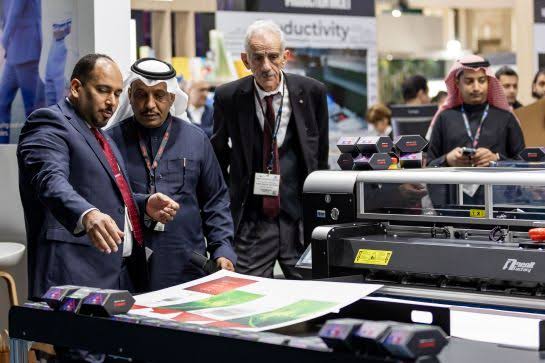
Commercial printers, packaging producers, label converters, print buyers, manufacturers and technology companies will gather at Dubai World Trade Centre from 12 to 14 January 2027 when Gulf Print & Pack returns for its 15th edition.
The specialised B2B exhibition is expected to attract more than 8,000 industry professionals and over 300 exhibitors.
Companies will showcase machinery, software, materials and production systems covering commercial printing, packaging, labels, photobooks, direct mail, posters, banners, digitally printed textiles and display graphics.
The event occupies Za’abeel Halls 4, 5 and 6 and is designed around live machinery demonstrations rather than static product displays alone.
Visitors can watch equipment running.
Compare print quality.
Evaluate production speed.
Examine substrates.
Talk directly with technology suppliers.
For printing and packaging companies operating in Dubai and across the wider MENA region, this makes Gulf Print & Pack one of the industry’s most practical technology-buying environments.
Print Is Not Disappearing
The digital age reduced demand for certain printed products.
Many documents moved online.
Newspapers lost circulation.
Corporate communication changed.
At the same time, several print categories grew.
Packaging.
Labels.
E-commerce boxes.
Decorative printing.
Personalised products.
Signage.
Textiles.
Print businesses have survived by moving toward applications where physical output still creates clear value.
Gulf Print & Pack reflects this transformation.
Packaging Is Driving Major Investment
Almost every physical product needs packaging.
Food.
Beauty.
Pharmaceuticals.
Consumer goods.
Electronics.
E-commerce.
Packaging protects products and communicates brands.
Digital commerce has increased the number of packages moving through supply chains.
Retail competition creates demand for more sophisticated presentation.
This makes packaging one of the most attractive areas for commercial printers seeking new growth.
Digital Printing Is Expanding
Traditional offset and flexographic printing remain powerful technologies.
Digital printing offers different advantages.
Short runs.
Fast setup.
Variable data.
Personalisation.
Rapid turnaround.
A company can print 500 customised packages economically in situations where conventional production may require much larger quantities.
This allows brands to experiment.
Smaller businesses can access professional packaging.
Marketing campaigns can become more targeted.
Short Runs Match Modern Consumer Markets
Product portfolios are becoming more fragmented.
Brands launch more flavours.
More colours.
Seasonal versions.
Regional editions.
Limited collections.
Each variation may require separate packaging.
Printing millions of identical items creates inventory risk.
Digital production allows companies to order smaller quantities and replenish when demand becomes clearer.
Manufacturing becomes more responsive.
Personalisation Creates Premium Value
Digital presses can make individual pieces different.
A consumer’s name can appear on packaging.
Direct mail can contain personalised offers.
Photobooks can be unique.
Event material can change by attendee.
Variable-data printing turns print into a data-driven medium.
The strongest applications use personalisation for genuine relevance rather than inserting a name purely as a novelty.
Labels Have Become Technologically Sophisticated
A label may appear simple.
Modern labels can perform many functions.
Branding.
Regulatory information.
Traceability.
Security.
Temperature indication.
QR codes.
RFID.
Promotional interaction.
Labels need to adhere to different surfaces and survive different environments.
Wine bottles.
Frozen food.
Chemical containers.
Medicine.
Industrial equipment.
Each creates distinct technical requirements.
This makes label production one of printing’s most specialised sectors.
Smart Labels Connect Physical Products to Digital Systems
QR codes and NFC technology allow packaging to connect with online information.
A customer scans a product and receives instructions.
Authentication information.
Recipes.
Promotions.
Product origin.
Recycling guidance.
Brands gain a digital communication channel after the product leaves the store.
The package becomes an interface.
This creates new opportunities for printers that can integrate digital identifiers reliably.
Traceability Is Increasingly Important
Consumers and regulators want to know more about products.
Where were they made?
Which batch?
When do they expire?
How should they be recycled?
Serialisation can also help combat counterfeiting.
Printing systems increasingly need to manage unique codes at high speed.
A duplicate or unreadable code can create operational problems.
Data management therefore becomes part of production.
Pharmaceutical Packaging Has Exceptional Requirements
Medicine packaging combines branding with safety and regulation.
Labels must be accurate.
Batch information needs clarity.
Tamper evidence may be required.
Serialisation can support traceability.
Braille may be necessary in some markets.
Errors can have serious consequences.
Printing companies serving pharmaceutical customers therefore need strong quality-control systems.
Food Packaging Needs Performance as Well as Appearance
Food packaging needs to protect products.
Control moisture.
Prevent contamination.
Preserve freshness.
Withstand freezing or heating where required.
Materials may need food-contact approval.
A beautiful package that causes food to spoil has failed.
Printing and material technology need to work together.
This is why packaging development often involves converters, printers, material suppliers and food companies simultaneously.
Flexible Packaging Is a Major Growth Sector
Pouches.
Sachets.
Wrappers.
Films.
Flexible packaging uses relatively little material compared with many rigid formats.
It is lightweight.
Transportation can be efficient.
The challenge is recycling.
Many high-performance structures combine several material layers.
Separating them can be difficult.
The industry is working on mono-material solutions designed to preserve functionality while improving recyclability.
Sustainability Is Reshaping Printing
Brands increasingly ask printers about environmental performance.
Paper certification.
Recycled content.
Ink chemistry.
Energy use.
Waste.
Packaging recyclability.
Transport.
Sustainability is no longer limited to using recycled paper.
The entire production system matters.
Equipment suppliers increasingly compete on energy efficiency and reduced material waste.
Waste Reduction Can Improve Profitability
Environmental and financial goals often align.
Less setup waste means less material cost.
Automated colour control can reduce rejected sheets.
Efficient nesting reduces substrate waste.
Shorter production runs reduce excess inventory.
Energy-efficient equipment lowers utility bills.
Sustainability becomes easier to adopt when it directly improves operating economics.
Automation Is Changing the Print Shop
A modern print job involves many stages.
Quoting.
File preparation.
Prepress.
Printing.
Cutting.
Finishing.
Packing.
Shipping.
Automation can connect these steps.
Orders enter online.
Files are checked automatically.
Jobs are scheduled.
Machines receive production information.
Finishing systems follow digital instructions.
The objective is reducing manual intervention between customer order and finished product.
Workflow Software Can Be as Important as the Press
Printers often focus heavily on production hardware.
An extremely fast press provides limited benefit if jobs spend hours waiting between administrative stages.
Workflow software can reduce these delays.
Automatic imposition.
Colour management.
Job tracking.
Inventory.
Customer portals.
Production scheduling.
Efficiency increasingly depends on how systems communicate.
AI Could Improve Production Planning
Artificial intelligence has potential across print operations.
Demand forecasting.
Maintenance.
Job scheduling.
Quality inspection.
Customer service.
Image preparation.
Quotation.
AI can analyse production patterns that would be difficult to evaluate manually.
The practical value will depend on integration with existing equipment and accurate data.
A print shop does not need AI because the technology is fashionable.
It needs it where the technology reduces cost or improves reliability.
Computer Vision Can Strengthen Quality Control
High-speed printing generates enormous quantities of material.
Manual inspection cannot examine every centimetre.
Camera systems can identify defects.
Missing print.
Colour variations.
Registration problems.
Contamination.
Automated inspection helps maintain quality without slowing production dramatically.
This is particularly important for packaging and labels where mistakes may affect entire product batches.
Finishing Creates the Final Product
Printing itself is only one production stage.
Products need cutting.
Folding.
Lamination.
Binding.
Die cutting.
Foiling.
Embossing.
Varnishing.
Gluing.
Packaging.
Finishing can dramatically change perceived value.
An ordinary printed box becomes premium through texture, metallic effects or dimensional elements.
Gulf Print & Pack includes post-press and embellishment technologies alongside printing systems.
Digital Embellishment Creates New Premium Effects
Traditional foiling and special finishing can require tooling.
Digital systems increasingly add effects without conventional plates or dies.
Short-run premium packaging becomes more practical.
Personalised foil or raised effects can be produced.
This helps printers create higher-margin products rather than competing only on basic print price.
Textile Printing Is Expanding
Digital printing has created new opportunities in textiles.
Fashion.
Interior decoration.
Sportswear.
Flags.
Soft signage.
Custom fabrics.
Designs can change quickly.
Short production runs become practical.
This connects printing with apparel and interior-design industries.
Equipment and ink need to match the textile material and intended use.
Wallpaper Is Becoming Digitally Customisable
Interior decoration offers another growth category.
Hotels.
Restaurants.
Offices.
Homes.
Digital wallpaper production allows custom designs and exact dimensions.
A designer can create a unique wall rather than selecting from a fixed catalogue.
This turns printing into part of architecture and interior design.
Commercial Print Still Has a Role
Brochures.
Reports.
Books.
Marketing material.
Direct mail.
Traditional commercial print remains relevant even if volumes have changed.
Physical materials can stand out precisely because inboxes are overloaded.
The challenge is targeting.
Printing large amounts of material nobody wants is expensive and wasteful.
Better data can make physical communication more selective.
Direct Mail Can Become More Intelligent
A generic catalogue sent to everyone may have weak performance.
Variable-data production allows more targeted content.
Different offers.
Local stores.
Relevant products.
Personalised messages.
When physical mail is based on customer data, it becomes more similar to digital marketing while retaining a tangible format.
Books Are Adapting to On-Demand Production
Digital printing allows books to be produced in smaller quantities.
Publishers can reduce warehouse inventory.
Older titles remain available.
Self-publishing becomes more accessible.
Academic material can be updated more easily.
Print-on-demand demonstrates how digital production can keep physical products viable rather than replacing them.
Photobooks Remain a Strong Personal Product
Consumers store thousands of images digitally.
Physical photobooks turn selected memories into tangible products.
Automation allows online creation and production.
Every book is unique.
This is exactly the type of application where digital printing excels.
Personalised print can carry emotional value difficult for ordinary commodity printing to match.
E-Commerce Has Changed Packaging Volumes
A product once shipped in bulk to a store may now be sent individually to a consumer.
That creates additional packaging requirements.
Shipping boxes.
Labels.
Returns documentation.
Protective materials.
Brands also want the unboxing experience to reinforce identity.
Printers increasingly serve logistics and direct-to-consumer businesses rather than only traditional retail packaging.
Security Printing Remains Highly Specialised
Certain documents and labels need protection against copying.
Holographic elements.
Special inks.
Microprinting.
Unique codes.
Tamper evidence.
Security printing serves governments, brands and regulated industries.
Digital counterfeiting tools are improving, which makes authentication technology increasingly important.
Printers in this segment compete through expertise rather than commodity pricing.
Hybrid Printing Combines Strengths
Hybrid systems combine different technologies within one production environment.
Digital printing can handle variable information.
Flexography can produce larger colour areas efficiently.
Finishing may happen inline.
Combining processes can reduce separate production steps.
The ideal setup depends on job mix.
No single printing technology is best for every application.
Flexography Remains Essential
Flexible packaging and labels often depend on flexographic printing.
The technology can produce high-speed output across many materials.
Automation and improved plate technologies continue enhancing quality.
Digital printing receives substantial attention because it is newer.
Conventional technologies continue evolving as well.
Gulf Print & Pack gives buyers the opportunity to compare rather than assume one process will replace all others.
Live Machinery Demonstrations Matter
A printing press is a major capital purchase.
Buyers need more than brochures.
They want to see output.
Speed.
Changeovers.
Waste.
Operator requirements.
Colour.
Finishing.
Live machinery allows technical teams to assess real performance.
This is one of the event’s major advantages.
A machine can demonstrate its value directly on the show floor.
Purchase Decisions Need Total-Cost Thinking
A cheaper machine is not necessarily cheaper to own.
Ink cost.
Energy.
Maintenance.
Consumables.
Operator time.
Waste.
Downtime.
Service.
All influence economics.
Printers should evaluate cost per saleable product rather than only equipment price.
A highly productive machine with strong support may create better financial results over many years.
Service Support Is Critical
Printing businesses depend on uptime.
A machine that stops cannot generate revenue.
Manufacturers therefore compete partly through service networks.
Are technicians available locally?
How quickly do spare parts arrive?
Can problems be diagnosed remotely?
Does training exist?
Regional service capability can influence equipment purchasing as strongly as technical specifications.
300+ Exhibitors Create a Major Technology Marketplace
Gulf Print & Pack expects more than 300 exhibitors and participants from around 100 countries.
The event platform targets 8,000-plus industry professionals.
That scale creates a concentrated opportunity to compare competing technologies within three days.
Visitors can evaluate full production journeys from prepress to post-press.
The 15th Edition Reflects an Industry That Keeps Reinventing Itself
Printing is one of the world’s oldest communication industries.
It has survived photography.
Television.
Computers.
The internet.
Smartphones.
It survived by changing.
Today, its future is increasingly connected with packaging, personalisation, automation, digital production and specialist applications.
From 12 to 14 January 2027, Gulf Print & Pack will bring that modern industry together in Za’abeel Halls 4, 5 and 6 at Dubai World Trade Centre.
The presses may be faster.
The software may be smarter.
The most important question remains commercial:
what physical products are customers still willing to pay for?
The companies answering that question well continue finding substantial opportunities in print.