


Spinneys Dubai 92 Cycle Challenge 2027 Returns as a UCI Gran Fondo World Championships Qualifier
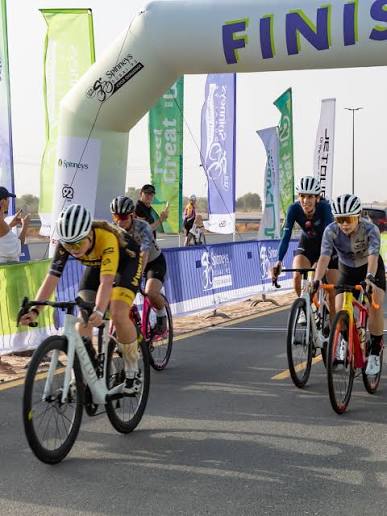
Dubai’s biggest mass-participation road cycling event returns on 7 February 2027 when the Spinneys Dubai 92 Cycle Challenge brings thousands of riders onto the city’s traffic-free roads for its 17th edition.
The 92km main event will once again operate as a qualifier for the UCI Gran Fondo World Championships, giving competitive amateur cyclists an opportunity to pursue an international championship place while recreational riders take on one of the UAE’s most established cycling challenges.
The main weekend will be based at Al Forsan Park in Expo City Dubai on 6 and 7 February.
For riders who have spent months training on Dubai’s cycle tracks, this is where preparation becomes competition.
Seventeen Editions Show How Far Dubai Cycling Has Come
When a sports event reaches its 17th edition, it becomes more than another weekend on the calendar.
It becomes part of the local sporting culture.
The Spinneys Dubai 92 has grown alongside Dubai’s cycling community.
Dedicated tracks have expanded.
Cycling groups have multiplied.
More residents use bikes for training.
Amateur racing has become increasingly sophisticated.
The Challenge gives that community a major annual target.
Some riders return every year.
Others will attempt 92km for the first time.
The same event accommodates both.
The Roads Are Closed for Cyclists
One of the biggest attractions is the opportunity to ride through Dubai on wide, traffic-free roads.
Normal road cycling requires constant attention to vehicles and intersections.
A closed-road event changes the experience completely.
Riders can focus on positioning, pace and the group around them.
The city becomes a race course.
That is a rare experience even for people who ride hundreds of kilometres every month.
For visiting cyclists, it also provides a way to see Dubai completely differently.
Ninety-Two Kilometres Requires Real Preparation
A 92km ride is not something most beginners should attempt without training.
Even on relatively flat roads, riders can spend several hours in the saddle.
Cardiovascular endurance matters.
But so do comfort, nutrition, hydration and cycling efficiency.
A cyclist may have enough fitness to continue pedalling but still struggle because the neck, lower back or hands become uncomfortable.
Long training rides prepare more than the heart and legs.
They teach the body how to remain on a bike.
A 26KM/H Average Is Required
The organiser states that riders in the main event need to maintain an average speed of 26km/h.
That requirement changes preparation.
This is not simply a 92km leisure ride where participants can continue indefinitely.
Riders need sufficient fitness to maintain the event pace.
Twenty-six kilometres per hour may sound manageable for a short ride.
Maintaining it across 92km is a very different challenge.
Wind, fatigue and group dynamics all affect the average.
Training should therefore combine endurance with periods ridden around realistic event pace.
You Do Not Need to Qualify to Enter
Although the event is a UCI Gran Fondo World Championships qualifier, riders do not need to qualify simply to participate in the Dubai 92.
That distinction is important.
The event works at two levels.
Competitive cyclists can pursue UCI qualification.
Recreational athletes can set their own objective of completing the course within the required event conditions.
This combination creates a mixed field.
Some cyclists are genuinely racing.
Others are challenging themselves.
Everyone shares the same roads.
The UCI Element Raises the Competitive Level
Gran Fondo racing occupies an interesting space between professional and recreational cycling.
Participants are amateurs, but leading age-group competitors train extremely seriously.
Qualifying for the UCI Gran Fondo World Championships gives strong riders a genuine international goal.
Age categories allow cyclists to compete against others at a comparable life stage.
A rider in their forties is not necessarily judged against someone 20 years younger.
This keeps competitive cycling meaningful across a much wider age range.
The Build-Up Rides Create a Training Pathway
One of the smartest features of the event is the Build-Up Ride series.
The 2026–27 programme gradually increases distance:
35km on 13 September 2026.
45km on 18 October.
65km on 22 November.
85km on 9 January 2027.
Then comes the 92km main event on 7 February.
This progression gives riders a ready-made training structure.
Instead of jumping straight into 92km, participants gradually increase endurance across several months.
That is exactly how sensible training should work.
The Aster BIG 5 Adds Another Challenge
Riders who complete all four Build-Up Rides plus the main event can take part in the Aster BIG 5 concept.
The series includes individual and team leaderboards.
Participants completing all five events also earn dedicated recognition.
This creates continuity across the entire cycling season.
The main race is no longer an isolated Sunday morning.
Training begins months earlier.
Results across several rides matter.
Teams can follow standings.
That keeps cyclists engaged throughout the season.
Group Riding Can Make You Faster
One of the biggest differences between solo cycling and mass road racing is drafting.
A rider following closely behind others experiences less aerodynamic resistance.
That can reduce the energy required to maintain speed.
Over 92km, the difference is enormous.
Strong cyclists therefore need more than individual fitness.
They must understand how to ride safely in a group.
Hold a predictable line.
Avoid sudden braking.
Communicate hazards.
Maintain appropriate spacing.
A nervous or unpredictable rider can create danger for everyone nearby.
Do Not Learn Group Riding on Race Day
Anyone planning to participate should practise riding with others beforehand.
Dubai has many cycling groups and dedicated tracks where these skills can be developed.
Learning how a paceline behaves is useful.
Understanding how wind affects group positioning is useful.
Knowing how to drink from a bottle without drifting across the road is useful.
These are simple abilities, but they need practice.
A large seeded event is not the ideal environment for learning them for the first time.
Wind Can Be More Important Than Hills
Dubai’s route is not known for major mountain climbing.
That does not guarantee an easy ride.
Flat cycling can become extremely demanding when wind appears.
A headwind increases energy cost significantly.
Crosswinds can split groups.
Riders exposed at the front use more energy than cyclists sheltered behind.
This turns group positioning into a tactical issue.
Strong riders understand that they do not need to fight the wind alone unnecessarily.
Nutrition Begins Before Hunger
A 92km cyclist needs to think about fuel.
Waiting until intense hunger appears is usually too late.
Carbohydrates consumed regularly can help maintain performance.
Exactly how much depends on the athlete and expected finish time.
Training provides the opportunity to test strategies.
Energy bars.
Gels.
Sports drinks.
Bananas.
Different riders tolerate different foods.
The best nutrition plan is the one that has already worked during long rides.
Hydration Is Equally Important
February provides favourable cycling weather compared with Dubai summer, but riders still need fluid.
Long periods of exercise create steady losses.
A cyclist moving quickly may not always feel how much they are sweating because airflow provides cooling.
Bottles should be part of the race plan from the beginning.
Electrolytes may also be useful depending on conditions and individual needs.
Bike Fit Can Make or Break 92KM
Small bike-position problems become large after several hours.
A saddle slightly too high may irritate the knee.
Poor handlebar position can create neck or hand discomfort.
Incorrect cleat setup can cause problems.
Cyclists planning the event should address fit well before February.
Making major changes in the final days before the race is risky.
The body needs time to adapt to position.
Mechanical Preparation Is Free Performance
A poorly maintained bicycle wastes energy and creates avoidable risk.
Before the event, tyres should be inspected.
Brakes need to function properly.
Gears should shift smoothly.
The chain needs appropriate maintenance.
Bolts should be checked.
Nothing about this is glamorous.
But a mechanical failure can end months of training within minutes.
A reliable bicycle is faster than a broken expensive one.
Seeding Helps Organise the Field
The Dubai 92 is a seeded event.
This helps place riders with others of broadly similar performance levels.
That improves flow and safety.
Faster groups can operate efficiently without constantly passing slower cyclists.
Recreational riders feel less pressure from elite age-group competitors.
Participants should provide realistic performance information.
Starting in the correct group improves the experience for everybody.
Expo City Provides the Main Event Base
Al Forsan Park at Expo City Dubai provides the base for the main event weekend.
The post-ride village adds food, activities and social space after the cycling finishes.
This is an important part of mass participation events.
After months of training and several hours of riding, the finish should feel like more than a timing line.
Teams meet again.
Families gather.
Results are discussed.
The social side becomes part of the memory.
February 7 Is the End of a Five-Month Journey
For riders entering the first 35km Build-Up Ride in September, the 2027 main event is almost five months away.
That is plenty of time to improve.
The progression from 35km to 45km, 65km, 85km and finally 92km gives riders measurable milestones.
Fitness becomes visible.
Distances that once felt intimidating gradually become normal.
By February, the rider who struggled with 35km may be ready to complete more than twice that distance.
That is what makes a structured challenge powerful.
The 92km race is important.
The transformation required to reach it may matter even more.
On 7 February 2027, thousands of cyclists will take over Dubai’s closed roads once again.
Some will chase a UCI World Championships qualification.
Others will chase nothing more complicated than the finish.
Both have spent months earning their place on the start line.